
The Day After (1983 television film)
A 1983 American television film that dramatized a fictional nuclear exchange and its aftermath. Broadcast on ABC and viewed by millions, it provoked wide public debate about nuclear war and preparedness.
Overview
The Day After is an American television film first broadcast on ABC on November 20, 1983. Presented as a dramatic depiction of a hypothetical nuclear conflict, the film follows the immediate effects and short-term aftermath experienced by residents in and around Lawrence, Kansas and Kansas City, Missouri. When it premiered it attracted a very large audience—reported at over 100 million viewers—and generated intense public discussion and controversy.
Image gallery
3 Images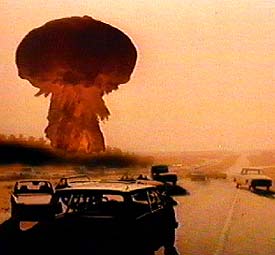


Content and themes
The narrative centers on ordinary civilians, medical workers and families as they confront blast damage, fire, collapse of services and radiation sickness. Rather than focusing on military strategy, the film emphasizes human consequences: injury, displacement, disrupted infrastructure and the challenges of medical triage. Its realistic tone and graphic scenes were intended to prompt reflection on the humanitarian and social costs of nuclear war.
Production and release
Produced for American television, the movie was promoted and scheduled as a major network presentation. Its release provoked debate about the suitability of such graphic material for a prime-time audience. Some critics saw it as a sober warning about the dangers of nuclear escalation, while others criticized its depiction as alarmist or sensational. The film’s subject — a simulated exchange between the United States and the Soviet Union — placed it squarely within Cold War-era concerns.
Reception and impact
Responses ranged from praise for raising awareness to calls for restraint. Civic groups, media commentators and political figures discussed its potential effects on public opinion and policy. The broadcast ignited conversations about civil defense, emergency planning and arms control, and it has been cited in discussions of how popular culture can influence public attitudes toward security issues.
Notable facts and legacy
- Air date and network: November 20, 1983 on ABC; national audience estimates were unusually large for a made-for-TV movie.
- Controversy: the film prompted debate over media responsibility and the depiction of mass suffering; see contemporary news coverage and later analyses for varied perspectives via critical commentary.
- Setting and focus: concentrates on Midwestern communities such as Lawrence and Kansas City, using local impact to illustrate broader consequences.
- Distribution and formats: originally a network television event and subsequently circulated in other formats and retrospectives; details on releases and archival materials can be found through institutional and media archives (reference, resources).
Although rooted in its Cold War moment, the film remains a frequently cited example of dramatic media that engages public debate on war, policy and humanitarian concerns. For further context and scholarly discussion consult contemporary reviews and later historical studies that examine its cultural and political effects (background, analysis).
Related articles
Author
AlegsaOnline.com The Day After (1983 television film) Leandro Alegsa
URL: https://en.alegsaonline.com/art/97856
Sources
- news.google.com : "Tipoff"