
The Defiant Ones (1958): film about race, survival, and forced cooperation
A 1958 black-and-white drama about two escaped convicts—one white, one Black—shackled together who must cooperate to survive. Noted for performances, social themes, and its influence on later films.
Overview
The Defiant Ones is a 1958 American black-and-white film that dramatizes the tense, often humane relationship between two escaped convicts who are physically chained together. The central premise — two men of different races forced to rely on one another — makes the picture both an adventure tale and a pointed social drama about prejudice, survival, and reluctant solidarity.
Image gallery
3 Images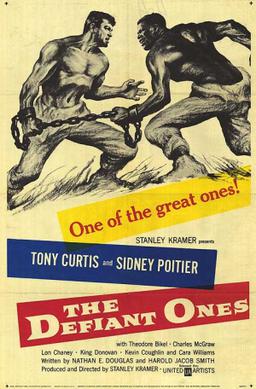


Premise and characters
The story revolves around a pair of escaped prisoners, one a white man and the other a black man, who must cooperate despite mutual suspicion and external hostility. The film builds tension from their physical constraint and cultural distance, allowing both characters to reveal fears, strengths, and moral choices as they travel through hostile terrain.
Cast and production notes
The leads are played by Tony Curtis and Sidney Poitier, supported by a cast that includes Theodore Bikel and Cara Williams alongside other character actors of the era. Shot in stark black-and-white, the film uses tight framing and landscape to emphasize claustrophobia and the distance the pair must bridge. Stunt work and on-location shooting contribute to a raw, immediate feeling of danger.
Themes and significance
At its core, the film explores racial prejudice, human dignity, and the possibility of empathy under pressure. The shackles serve as a literal and symbolic device: while they constrain movement, they also force conversation and cooperation that might not otherwise occur. Released in the late 1950s, the film resonated with contemporary debates about race and equality and helped broaden mainstream cinema's willingness to portray interracial dynamics seriously.
Reception and legacy
Critics praised the performances and the moral seriousness of the story. Its influence can be seen in later "buddy" and social-issue films that pair opposites to expose social tensions. Over time the picture has been studied for its portrayal of race relations, its acting, and its place in postwar American cinema.
Further reading
- For cast and credits, contemporary reviews, and production context, consult film overviews and historical film guides. Many resources discuss the film's impact on both genre and social commentary.
Related articles
Author
AlegsaOnline.com The Defiant Ones (1958): film about race, survival, and forced cooperation Leandro Alegsa
URL: https://en.alegsaonline.com/art/97869