
The Day the Earth Stood Still (1951 film)
1951 American science-fiction film directed by Robert Wise, adapted from Harry Bates's story, noted for its Cold War themes, Bernard Herrmann score, Gort, and selection to the US National Film Registry.
The Day the Earth Stood Still is a 1951 American black-and-white science-fiction film produced by 20th Century Fox. Directed by Robert Wise, it was adapted by Edmund H. North from Harry Bates's 1940 short story "Farewell to the Master" and produced by Julian Blaustein. The film introduced the alien Klaatu and his powerful robotic companion Gort, and it became widely discussed for its moral message about violence, international tension and the consequences of uncontrolled technological power. For an overview of the motion picture and its place in 1950s science fiction cinema see film overview.
Image gallery
9 Images





Plot summary
The narrative begins when a flying saucer lands in Washington, D.C. An extraterrestrial emissary named Klaatu emerges, accompanied by the humanoid robot Gort. After a violent first encounter with military forces, Klaatu adopts human disguise to learn about Earth's societies and to deliver a warning: aggressive behavior and the misuse of advanced weapons threaten the planet's future. The film follows Klaatu's attempts to communicate his message, his relationship with a widow and her young son, and the escalating suspicion and hostility from authorities that complicate his mission.
Production and adaptation
The screenplay by Edmund H. North retains the central conceit of Bates's short story while shifting emphasis toward an explicit moral and diplomatic appeal. Robert Wise's direction favored economical storytelling, deliberate pacing and visual clarity; production values and set design emphasized an austere, almost clinical vision of an alien visit. The choice to shoot in black and white enhanced contrasts and allowed light and shadow to underscore key moments, such as the presence of the spacecraft and the figure of Gort. For information about Robert Wise's career and methods consult materials on Robert Wise.
Cast and music
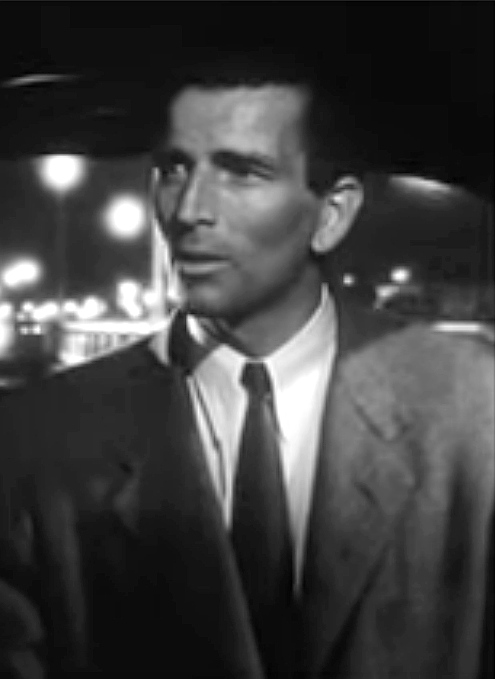
Michael Rennie plays Klaatu, delivering a restrained performance that emphasizes the character's alien perspective. Patricia Neal portrays the principal human contact, Helen Benson, with a grounded, humanizing presence. The cast also includes child actor Billy Gray as Helen's son, along with supporting roles by Hugh Marlowe and Sam Jaffe. The film's score was composed by Bernard Herrmann, whose music contributed a tense, otherworldly atmosphere that has been widely discussed in studies of film composition. See composer analyses at Herrmann studies. Cast and performer profiles are available at Michael Rennie profile, Patricia Neal profile, Billy Gray profile, Hugh Marlowe profile and Sam Jaffe profile.
Themes and interpretation
Although presented as a science-fiction adventure, the film is frequently interpreted as an allegory of Cold War anxieties and a plea for international restraint. Its central demand—that humanity curb violent impulses or face isolation or destruction—resonated with contemporary audiences in the nuclear era. The phrase "Klaatu barada nikto," spoken within the story, has attained iconic status in popular culture, cited in later films and other media as a shorthand reference to this film's themes and to the idea of a decisive command that averts catastrophe.
Reception and legacy
Contemporary reviews highlighted the film's thought-provoking premise, visual design and Herrmann's score; while opinions varied, the work's reputation has grown over decades. Scholars and critics have examined its impact on subsequent science-fiction cinema and on public discussions about technology and global governance. The picture influenced filmmakers and storytellers who sought to combine speculative elements with social commentary. In 1995 the film was selected for preservation in the United States National Film Registry as "culturally, historically, or aesthetically significant"; see the registry entry at National Film Registry.
Adaptations, remakes and continued presence
The core story has been revisited and debated in essays, retrospectives and a later high-profile feature adaptation released in 2008, which reimagined elements of plot and characterization for a modern audience. The contrast between Bates's original short story and the 1951 screenplay continues to be a subject of study: the film expands moral and diplomatic themes and reconfigures character dynamics to fit the cinematic medium and the political concerns of its time. For comparative readings consult historical accounts and critical studies linked from archival film resources at archival collections and scholarly introductions at academic profiles.
Notable facts
- The film is credited with popularizing a vision of benevolent but judgmental extraterrestrial intervention in human affairs.
- Gort, the robot, is designed to embody unstoppable force and to function as both protector and enforcer within the film's moral framework.
- Elements of the screenplay diverge from Harry Bates's short story to emphasize diplomacy and moral responsibility rather than the original narrative details.
- Bernard Herrmann's score is frequently cited in discussions of mid-century film music for its textural and atmospheric qualities.
Further study can be pursued through production histories, director interviews and musicological analyses. General reference material and curated collections can be found via film study guides and national archives, including entries and bibliographies available at supporting cast archives and broader filmography listings at studio and archive.
Related articles
Author
AlegsaOnline.com The Day the Earth Stood Still (1951 film) Leandro Alegsa
URL: https://en.alegsaonline.com/art/97860
Sources
- loc.gov : "Films Selected to The National Film Registry, Library of Congress 1989-2009."
- imdb.com : "'The Day the Earth Stood Still': Award Wins and Nominations."