
The Color Purple (1985 film)
1985 period drama directed by Steven Spielberg, adapted from Alice Walker's novel. It follows Celie's life amid abuse, racism and poverty; acclaimed for performances and later adapted for stage and screen.
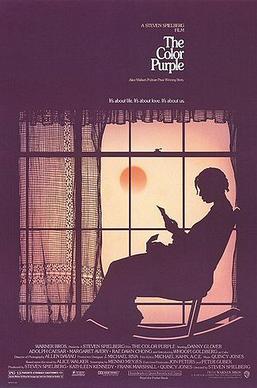
The Color Purple is a 1985 American period drama film directed by Steven Spielberg. The screenplay by Menno Meyjes adapts Alice Walker's 1982 novel, which won the Pulitzer Prize. The film chronicles the life of Celie, a Black woman in the early 20th-century American South, whose trajectory from adolescence into adulthood is shaped by poverty, sexual and domestic abuse, and rigid social hierarchies. Whoopi Goldberg's performance as Celie established her as a major screen actor and is central to the film's emotional force.
Image gallery
6 Images


Plot summary
Set across several decades, the narrative follows Celie as she copes with separation from family, an abusive marriage and the marginalization that many Black women faced during the era. The film portrays Celie's gradual emergence from silence, aided by friendships and personal connections that foster her sense of identity and self-worth. Secondary characters provide both hardship and support, and their interactions with Celie explore complex interpersonal dynamics and survival strategies in a segregated, patriarchal society.
Production
Spielberg — until then best known for large-scale commercial films — took a deliberate, character-focused approach that emphasized intimate scenes and period detail rather than spectacle. Principal photography was shot in rural locations in North Carolina, including Anson and Union counties, chosen for their ability to evoke the film's historical setting. Notably, long-time Spielberg collaborator John Williams did not compose the score for this picture; the soundtrack uses spirituals and period-style arrangements to support the film's atmosphere.
Cast and performances
The ensemble cast includes Whoopi Goldberg, Danny Glover, Margaret Avery, Oprah Winfrey, Rae Dawn Chong, Desreta Jackson, Willard Pugh and Adolph Caesar. Critics widely praised the depth and emotional honesty of many performances, and the casting helped bring attention to stories about Black women that were then underrepresented in mainstream American cinema.
Themes and interpretation
The film deals candidly with themes such as domestic violence, incest and the exploitation of children, and it interrogates how racism and sexism intersect with economic hardship. Its depiction of female solidarity and resilience is often cited as a core strength: the relationships between women provide both narrative momentum and emotional redemption for the protagonist. Scholars and critics have examined how the adaptation handles the novel's epistolary form and interiority, and how cinematic choices affect representation.
Release and reception
Upon release the film was a commercial success, earning substantial box office receipts compared with its modest production budget. Reviews were broadly positive for acting, production design and emotional impact, though some commentators criticized the film for a perceived sentimental tone or for simplifying complex characters. It received multiple major award nominations, including a notable number of Academy Award nominations, and Whoopi Goldberg won a Golden Globe for her performance.
Controversy and critical debate
The film generated debate around representation and adaptation choices. Some viewers and critics argued that certain portrayals reinforced stereotypes or smoothed difficult aspects of the novel for broader audiences, while others defended the film's faithfulness to core themes and its amplification of marginalized voices. These conversations have continued in academic and popular discussions about race, gender and cinema.
Legacy and adaptations
Over time the film has retained cultural significance as an influential mainstream picture centered on Black women's lives. It brought wider attention to Alice Walker's work and inspired further adaptations: the story has been adapted for the stage as a musical and revisited in later screen versions, keeping the novel and its concerns in public conversation. Critics and film historians, including prominent commentators, have continued to assess its place in American film history.
Further reading and related topics
- Period drama context and genre
- Steven Spielberg: direction and career
- Alice Walker and the Pulitzer Prize
- The original novel by Alice Walker
- Spielberg's shift from summer blockbusters
- Music and scoring choices
- Whoopi Goldberg: breakout film role
- Danny Glover and supporting performances
- Margaret Avery and critical response
- Oprah Winfrey's involvement and profile
- Filming locations: North Carolina
- Historical setting: early 20th-century American South
- Depictions of domestic abuse
- Family abuse and narrative impact
- Controversial material and reception
- Poverty as a structural theme
- Race and social structures in the film
- Gender roles and sexism
- Awards recognition and nominations
- Critical appraisals and longer-term influence
Questions and answers
Q: What is the title of the movie?
A: The Color Purple.
Q: Who directed the movie?
A: Steven Spielberg.
Q: Who wrote the screenplay for the movie?
A: Menno Meyjes.
Q: Who composed the music for The Color Purple?
A: John Williams did not compose the music for The Color Purple; it was Spielberg's first movie without a score by Williams.
Q: What is the main plot of The Color Purple?
A: The Color Purple tells the story of an young African American girl named Celie Harris and shows the problems African American women faced during early 20th century, including domestic violence, incest, pedophilia, poverty, racism, and sexism. Celie finds her self-worth through two strong female friends.
Q: How much money did The Color Purple make at the box office?
A: The Color Purple grossed $142 million against a budget of $15 million at box office.
Q: What awards did The Color Purple receive? A:The Color Purple received eleven Academy Award nominations including Best Picture; it also received four Golden Globe Award nominations with Whoopi Goldberg winning Best Actress in a Drama. Steven Spielberg received a Directors Guild of America Award for Outstanding Directorial Achievement and a Golden Globe nomination but no Academy Award nomination for his directing.
Related articles
Author
AlegsaOnline.com The Color Purple (1985 film) Leandro Alegsa
URL: https://en.alegsaonline.com/art/97790
Sources
- time.com : "Cinema: The Three Faces of Steve the Color Purple"
- articles.latimes.com : "'Out of Africa' Ties as Oscar Nominees: 11 Citations; Spielberg Not Named"
- articles.latimes.com : "Academy Hits Racism Accusation"
- festival-cannes.com : "Festival de Cannes: The"