
The Adventures of Ichabod and Mr. Toad (1949 animated film)
A 1949 Walt Disney package film pairing two literary adaptations — a comic take on The Wind in the Willows and a spooky retelling of The Legend of Sleepy Hollow.
Overview
The Adventures of Ichabod and Mr. Toad is a 1949 animated feature produced by Walt Disney Productions and released to theaters on October 5, 1949 by RKO Radio Pictures. Rather than a single continuous story, the film is a two-part package that adapts well-known works of English and American literature into separate animated segments. It mixes humor, music and atmospheric storytelling, offering a contrast between a lighthearted comic adventure and a gothic folktale.
Image gallery
3 Images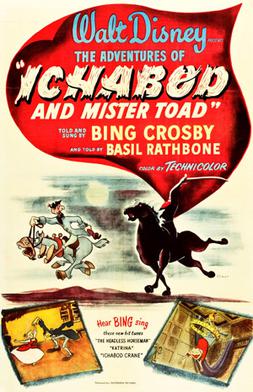


Structure and source material
The film presents two distinct narratives. The first adapts the escapades of an impulsive, motor-obsessed character often called Mr. Toad, drawn from Kenneth Grahame’s Kenneth Grahame novel The Wind in the Willows. The second reimagines the tale of an awkward schoolmaster and a spectral pursuer in an American village, taken from Washington Irving’s short story The Legend of Sleepy Hollow by Washington Irving. Each segment retains the tone of its source: comic folly and friendship for Mr. Toad, and suspenseful, atmospheric horror for Ichabod Crane.
Production and style
Created during a period when Walt Disney Studios often packaged shorter adaptations into feature releases, the film blends traditional hand-drawn animation with musical narration and orchestral scoring. The two segments differ in visual palette and pacing: the Toad sequence favors fast motion, slapstick and bright colors to convey manic energy, while the Ichabod story uses shadow, dramatic timing and sound to heighten tension and create a memorable chase sequence that remains emblematic of animated spooky storytelling.
Reception and legacy
Upon release the film was noticed for its faithful yet economical adaptations and for bringing classic literary characters to a wide family audience. Over time it has become a staple of classic animation, often cited for its effective tonal contrast and for introducing generations of viewers to the original stories. Both segments have influenced later portrayals of their characters in film, television and seasonal programming.
Notable aspects
- Two contrasting tones: comic farce versus gothic suspense.
- Literary roots: connects children’s animation to established 19th- and early-20th-century fiction.
- Memorable sequences: the motorcar mayhem and the midnight ride remain cultural touchstones.
- Continued availability: the film appears in retrospectives, home video editions and curated broadcasts.
Together, the two segments demonstrate how animation can condense and reinterpret classic narratives for new audiences while preserving the essential spirit of their source material.
Questions and answers
Q: What is "The Adventures of Ichabod and Mr. Toad"?
A: "The Adventures of Ichabod and Mr. Toad" is a 1949 animated movie made by Walt Disney Productions.
Q: When was the movie released?
A: The movie was released to theaters on October 5, 1949 by RKO Radio Pictures.
Q: How many parts are there in the movie?
A: There are two parts in the movie.
Q: What is the story of Mr. Toad based on?
A: The story of Mr. Toad is based on Kenneth Grahame's The Wind in the Willows.
Q: What is the story of Ichabod Crane and the Headless Horseman based on?
A: The story of Ichabod Crane and the Headless Horseman is based on Washington Irving's The Legend of Sleepy Hollow.
Q: Who produced the movie?
A: The movie was produced by Walt Disney Productions.
Q: Who released the movie to theaters?
A: The movie was released to theaters by RKO Radio Pictures.
Related articles
Author
AlegsaOnline.com The Adventures of Ichabod and Mr. Toad (1949 animated film) Leandro Alegsa
URL: https://en.alegsaonline.com/art/97470
Sources
- goldenglobes.org : goldenglobes.org