
Terminal velocity (falling objects and fluids)
Terminal velocity is the steady speed a falling object reaches when drag balances weight. It depends on mass, shape, cross‑section, fluid density and flow regime; important in engineering and nature.
Terminal velocity is the constant speed an object attains as it falls through a fluid when its acceleration ceases because opposing forces balance. In ordinary language it describes the moment a falling body stops getting faster: the downward pull of force from gravity (its weight) is exactly offset by upward resistance from the surrounding fluid, usually air. When those forces sum to zero, the object continues to descend but with zero net acceleration.
Image gallery
1 Image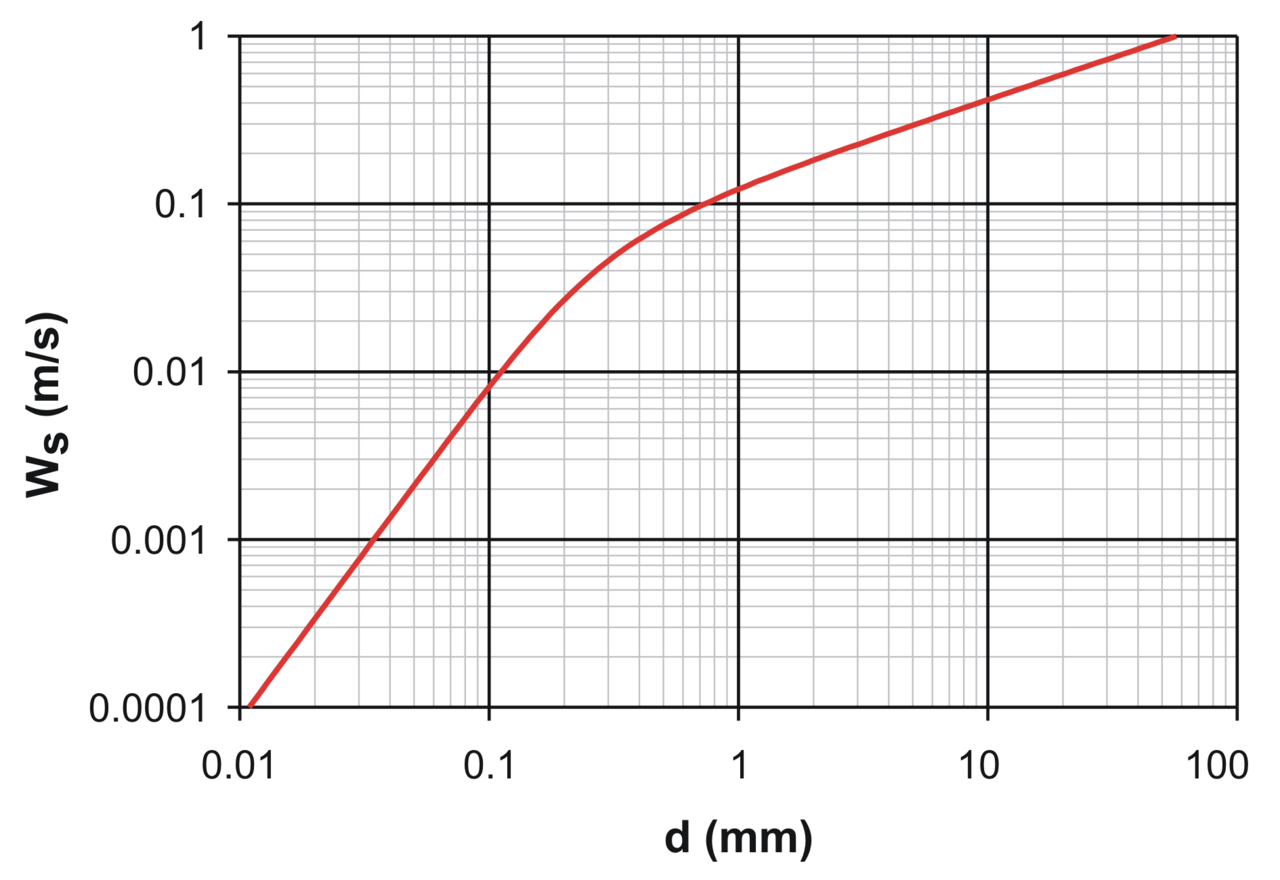
Basic physics and formulas
Two opposing influences determine terminal speed: the gravitational force that depends on mass, and the drag force that increases with speed. For many practical situations in air at moderate speeds, drag is modeled as proportional to the square of speed and depends on fluid density, cross‑sectional area and a dimensionless drag coefficient. A frequently used result for an object falling through a fluid is v_t = sqrt((2 m g)/(rho C_d A)), which shows terminal velocity rises with mass and falls with projected area, fluid density and drag coefficient. For very small spherical particles in viscous (low Reynolds number) flow, Stokes' law applies and gives v_t proportional to the square of particle radius and inversely proportional to fluid viscosity.
Factors that affect terminal velocity
- Mass and density: heavier or denser objects accelerate more forcefully and tend to reach higher terminal speeds for the same drag.
- Shape and orientation: streamlined shapes and smaller cross‑sectional area reduce drag; posture matters for living jumpers like skydivers.
- Fluid properties: denser or more viscous fluids increase resistance; objects fall differently in water than in air.
- Surface roughness and flow regime: roughness and turbulence change the effective drag characteristics; the Reynolds number distinguishes laminar from turbulent behavior.
- External conditions: altitude, temperature and humidity alter air density and hence terminal speed.
Examples and typical ranges
Common examples illustrate the range of terminal velocities. A compact, stable skydiver in a belly‑to‑earth position typically reaches a steady speed tens of metres per second; changing posture to head‑down or using a wingsuit alters the value dramatically. Small raindrops fall much more slowly than large drops because drag grows relative to weight as size decreases. Engineers and scientists use these principles to design parachutes, predict sedimentation rates in suspensions, size droplet sprays and model particle transport in the atmosphere.
History, measurement and applications
Recognition that falling bodies do not always accelerate indefinitely goes back to early studies of motion, but quantitative drag laws and terminal‑speed formulas were developed as fluid mechanics matured. Stokes' work on viscous flow provided tools for tiny particles; later work addressed turbulence and high‑speed flows. Terminal velocity is important in meteorology, ballistics, aerospace reentry planning, industrial separation processes and in safety equipment design such as parachutes and impact protection.
Notable distinctions
Terminal velocity differs from free‑fall in a vacuum where no resistance exists; in vacuum all objects fall with the same acceleration regardless of mass. In a fluid, however, terminal speed depends on object and fluid properties. Measuring terminal velocity can be done in wind tunnels, drop tests or by tracking in natural conditions; such measurements often use instruments that estimate friction and aerodynamic forces. For authoritative technical treatments consult fluid mechanics texts or specialized references on drag and particle dynamics (gravity overview, weight concepts, air properties).
Related articles
Author
AlegsaOnline.com Terminal velocity (falling objects and fluids) Leandro Alegsa
URL: https://en.alegsaonline.com/art/97089
Sources
- greenharbor.com : "The influence of weight on terminal velocity"
- hypertextbook.com : "Speed of a skydiver (terminal velocity)" · web.archive.org