
Ctenophore (comb jellies)
Ctenophores, or comb jellies, are gelatinous marine animals with eight rows of cilia and sticky colloblasts. They occur worldwide, from surface plankton to deep seas, and occupy important ecological roles.
Ctenophores, commonly called comb jellies, form the phylum Ctenophora, a small but widely distributed group of gelatinous marine animals. Superficially they resemble jellyfish, yet they differ in anatomy, behaviour and evolutionary history. Most ctenophores drift as part of the plankton and are found through the water column from coastal estuaries to the deep ocean. Their translucent bodies, rows of beating cilia that produce a rainbow shimmer, and delicate structure make them distinctive members of marine ecosystems.
Image gallery
7 Images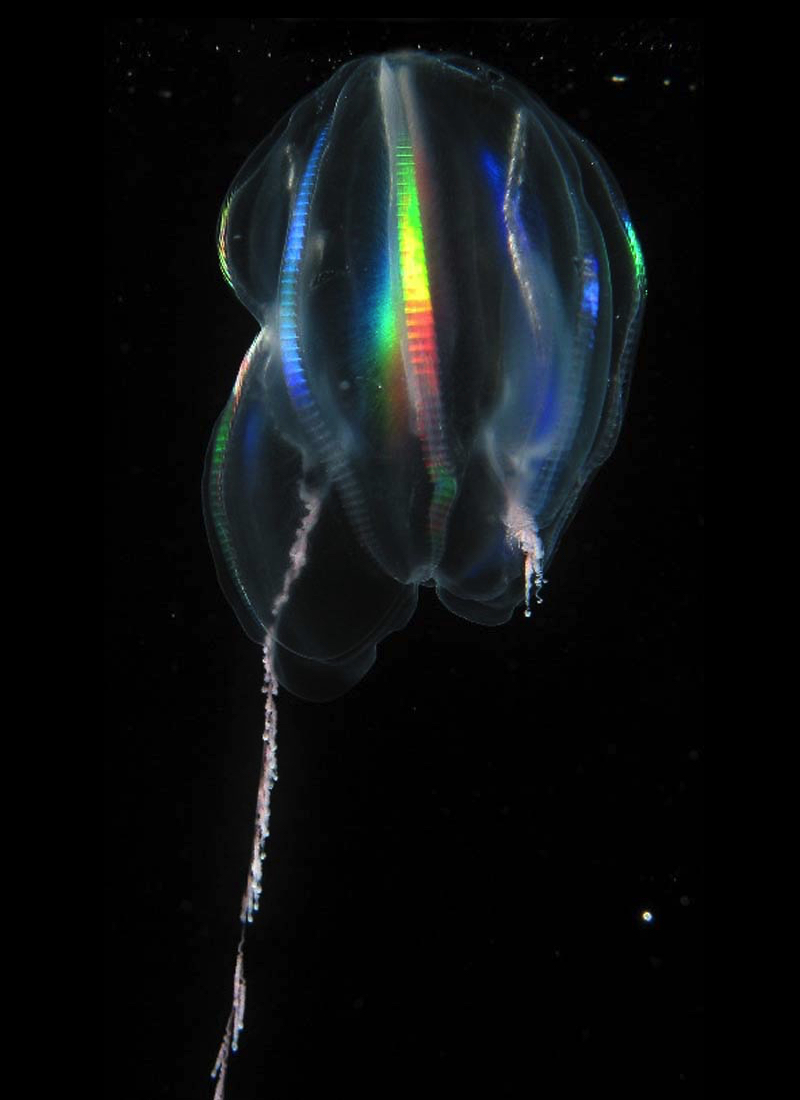


Anatomy and distinguishing features
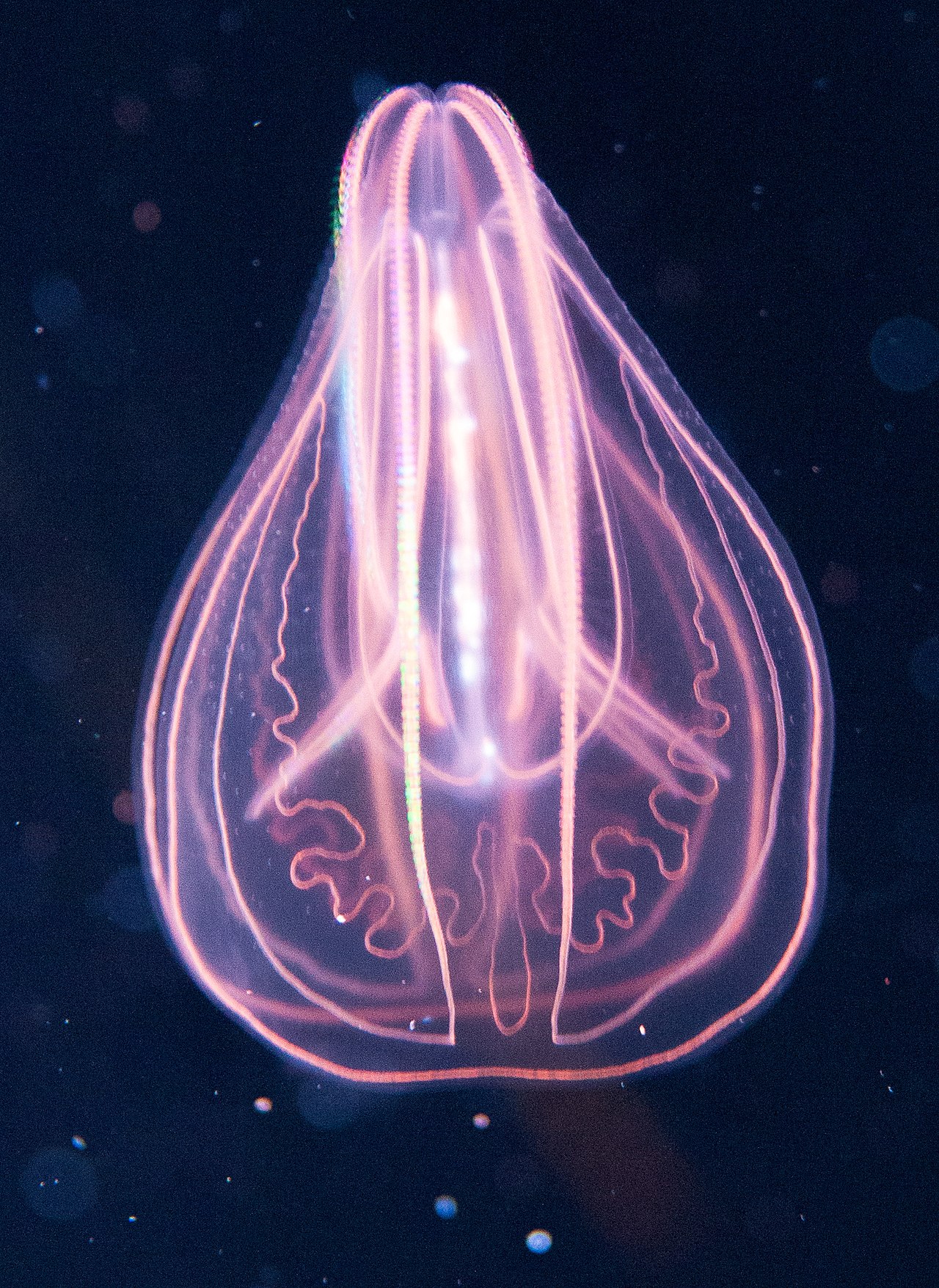
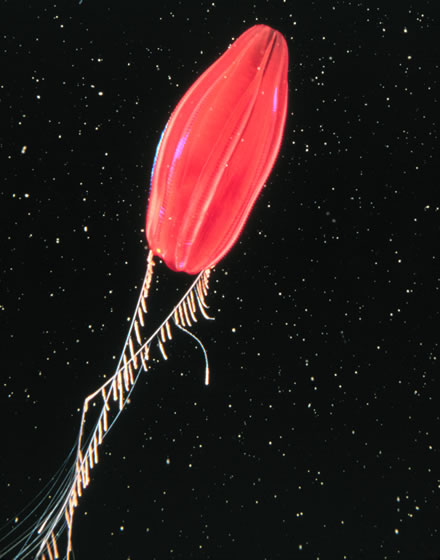
Ctenophores are characterized by eight longitudinal bands of ciliary plates—often called "combs"—that beat in coordinated waves to propel the animal. These cilia differ from the tentacles and stinging cells of true jellyfish: ctenophores lack nematocysts and instead capture prey with specialised sticky cells called colloblasts. Their bodies are gelatinous with an internal system of canals for distributing nutrients, a diffuse nerve net, and an apical sensory organ that helps coordinate swimming and balance.
Diversity, size and notable species
About 150 described species inhabit the world's oceans, ranging from tiny forms a few millimetres long to large pelagic types that can reach substantial lengths. Well-known examples include the compact sea gooseberry and the ribbon-like Venus' girdle; both names are used frequently in field guides and marine overviews. For lists and taxonomic summaries see species resources. The group includes mostly free-swimming species, though a few benthic or bottom-associated forms exist.
Ecology and life history
Ctenophores are mainly predators of zooplankton, capturing copepods, larvae and small crustaceans with sticky tentacles or direct engulfment. Many are transparent or lightly pigmented and some display bioluminescence. Reproduction varies across taxa: many species are simultaneous hermaphrodites that release eggs and sperm into the water, while others show brooding or asexual reproduction. Lifespan is generally short and difficult to determine in the wild because of fragility, but individuals can reach reproductive maturity quickly.
Evolutionary position and historical classification
Historically ctenophores were grouped with cnidarians under the outdated collective name Coelenterata. Modern molecular and anatomical studies place ctenophores as one of the earliest-branching animal lineages, distinct from the Cnidaria (the true jellyfish and their relatives). That basal position has prompted renewed interest because it bears on hypotheses about the origin of nervous systems and tissues in animals.
Human interactions and research challenges
Because some species can occur in very large numbers, they occasionally interfere with fishing gear and aquaculture operations—an effect reported in regions such as the North Sea. Certain ctenophores have also become invasive in new seas, disrupting food webs and local fisheries. Scientific study is hampered by their delicate bodies: sampling and keeping live specimens for laboratory work require specialised methods. Researchers study their ciliated locomotion, the adhesive mechanism of colloblasts, and their role in transferring planktonic biomass—topics often referenced in broader assessments of marine planktonic biomass.
Notable anatomical and biological facts
- Comb rows: eight bands of fused cilia that produce locomotion and iridescence; see also discussions of cilia.
- Feeding cells: colloblasts—sticky rather than stinging—are unique to ctenophores.
- Movement and sensory systems: a diffuse nerve net plus an apical organ coordinate swimming and orientation.
- Research resources: taxonomic checklists and field guides are available through various portals (jellyfish comparison pages).
In summary, ctenophores are a distinct, ecologically important group of gelatinous marine animals. Their unusual combination of comb-like cilia, colloblast prey-capture, and an early-branching evolutionary position make them a continuing focus of marine biology and evolutionary research.
Related articles
Author
AlegsaOnline.com Ctenophore (comb jellies) Leandro Alegsa
URL: https://en.alegsaonline.com/art/24493
Sources
- faculty.washington.edu : faculty.washington.edu/cemills/Ctenophores.html
- perso.fundp.ac.be : "Optical properties of the iridescent organ of the comb-jellyfish Beroe cucumis (Ctenophora)"
- doi.org : 10.1103/PhysRevE.73.041916
- biolbull.org : "Not all ctenophores are bioluminescent: Pleurobrachia"
- doi.org : 10.2307/1542153