
Teide National Park
Protected volcanic landscape on Tenerife centered on Mount Teide (3,718 m); a UNESCO World Heritage Site noted for dramatic geology, endemic plants, astronomy facilities and high visitor numbers.
Overview
Teide National Park occupies a large portion of central Tenerife in the Canary Islands. It is centered on Mount Teide, a stratovolcano whose summit reaches 3,718 metres above sea level and makes it the highest peak in Spain. The park is widely regarded as one of the most visited protected areas in Spain and one of the better known volcanic national parks worldwide (most visited national park in Spain).
Image gallery
10 Images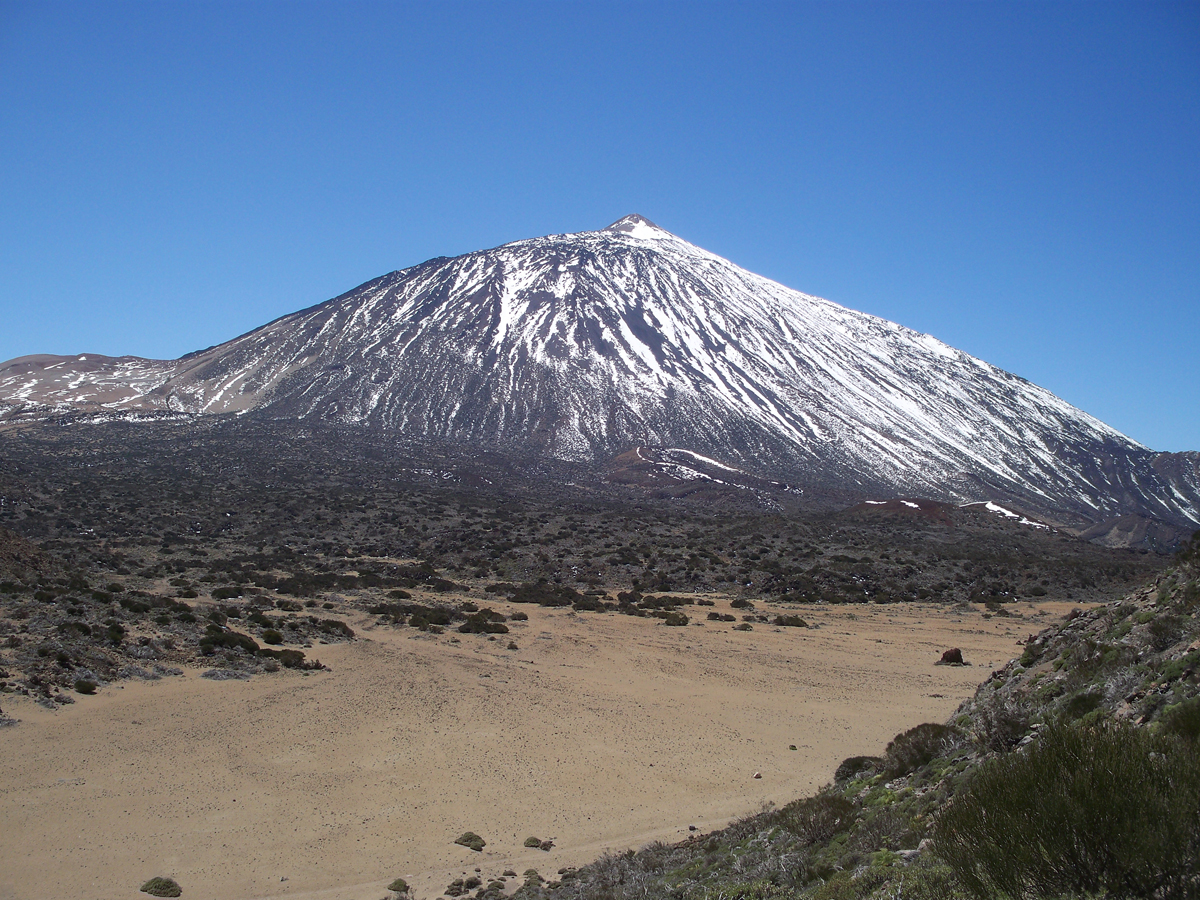


Landscape and geology
The park protects a varied volcanic landscape shaped by repeated eruptions and long periods of erosion. At its heart lies the Las Cañadas caldera, a large depression surrounded by escarpments and dotted with lava fields, pumice deposits and volcanic cones. Visitors often recognize distinctive rock formations such as the Roques de García. From its submarine base to its summit Teide is frequently described as one of the world’s largest volcanoes by total height, a measure that accounts for the portion below sea level.
Biodiversity and ecology
Despite an austere, high-elevation environment, the park supports a range of plant communities adapted to dry, sunny and sometimes frosty conditions. Endemic species include the Teide violet (a small alpine violet) and the tower-like red tajinaste (Echium species). Scattered stands of Canary Island pine and shrubland communities occupy lower slopes, while exposed ridges and lava fields host specialist lichens and insects. Conservation focuses on protecting these endemics and fragile soils from trampling and invasive species.
History, protection and recognition
The area received national park status in the mid-20th century and remains one of Spain’s older protected areas. Its international significance was recognized in 2007 when it was inscribed as a World Heritage Site by UNESCO. The park’s boundaries fall within the municipality of La Orotava, and its status guides visitor management, scientific research and habitat restoration projects.
Human use and access
Teide National Park is a major attraction for hikers, naturalists and astronomers. A cable car provides access near the summit and a network of trails leads through the caldera and to viewpoints. Midway up the mountain the Observatorio del Teide hosts telescopes and atmospheric instruments, taking advantage of stable skies and low light pollution. Visitor centers and guided services explain geology, indigenous cultural links and safety precautions for altitude and sun exposure.
Notable facts and distinctions
- Area: the park covers a large area of Tenerife and protects both geological and biological values. (Commonly cited area figures are used in official descriptions.)
- Tourism: it is among Spain’s most visited parks and contributes substantially to Tenerife’s nature tourism economy (visitor prominence).
- Cultural recognition: since 2007 it has held World Heritage status and has been featured among national lists of notable natural sites (12 Treasures of Spain).
- Science: the location is important for astronomical and atmospheric observation; the island’s climate and summit conditions are favourable for such work.
For practical planning and conservation guidelines, readers often consult local park authorities and visitor centers on Tenerife, which provide updated trail information, restrictions and seasonal advice. Additional resources and scientific publications offer more detailed accounts of the park’s geology, endemic species and management history (Mount Teide, UNESCO reports and national park documentation).
Related articles
Author
AlegsaOnline.com Teide National Park Leandro Alegsa
URL: https://en.alegsaonline.com/art/96763