
Teide (Mount Teide)
Teide is an active stratovolcano on Tenerife in the Canary Islands, Spain. At 3,718 m it is the highest point in Spain and a major natural, cultural and scientific landmark within Teide National Park.
Overview
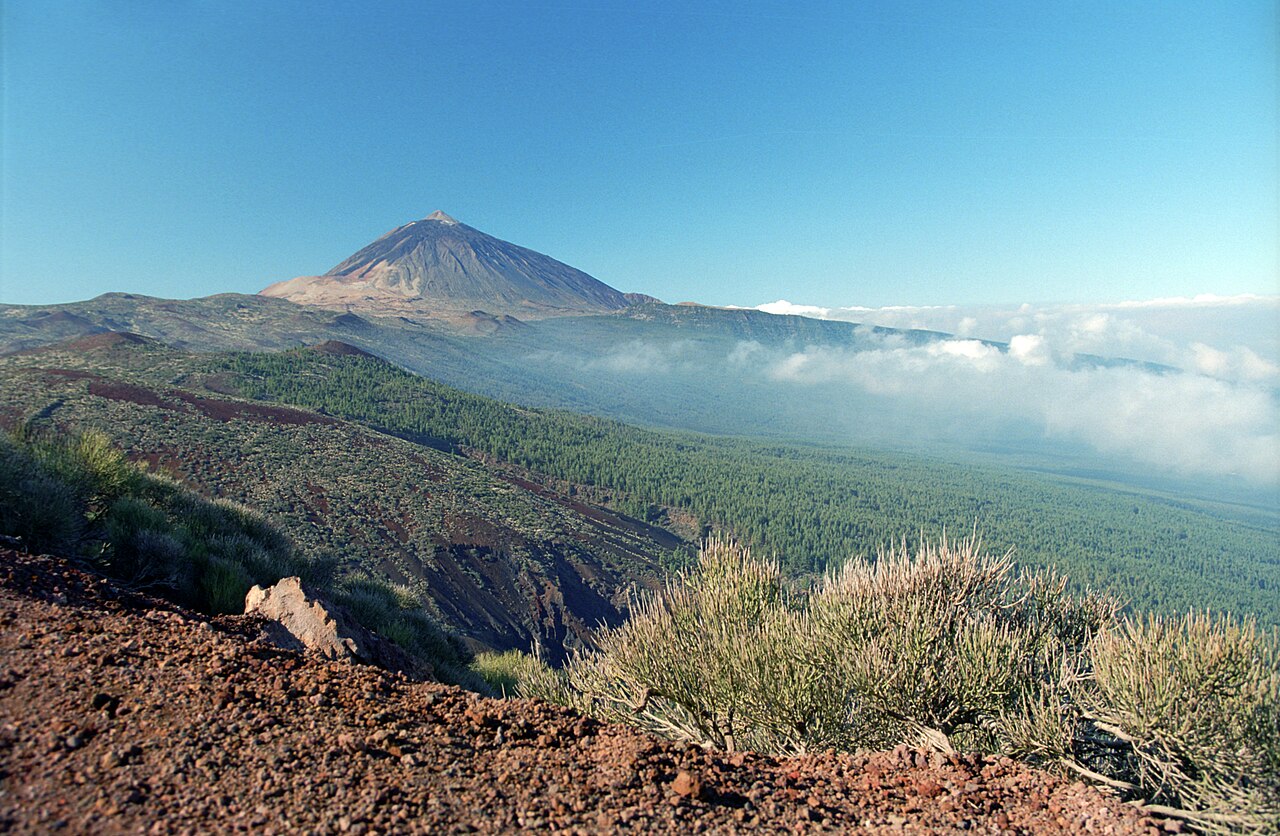
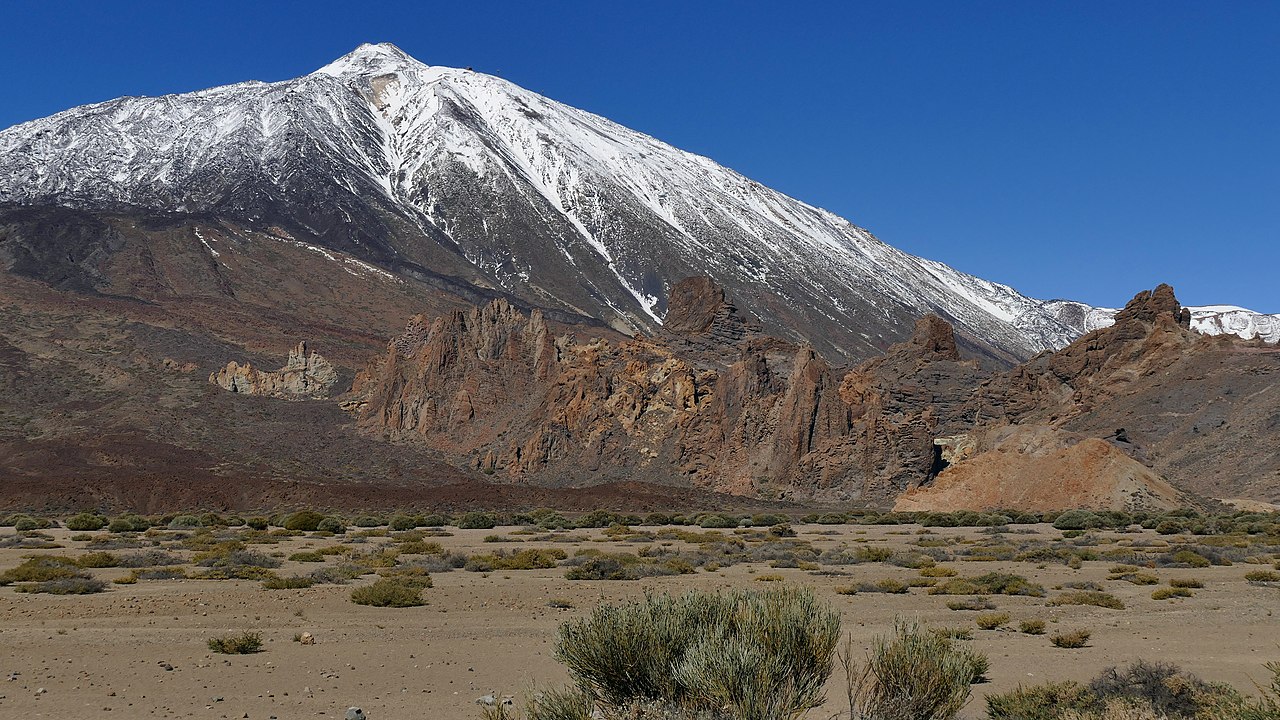
Teide, commonly called Mount Teide, is an active volcano rising on the island of Tenerife in the Canary Islands, part of Spain. Its summit reaches 3,718 metres above sea level, making it the highest peak in Spain and the loftiest mountain on any island in the Atlantic Ocean. Teide dominates Tenerife’s central landscape and is an important reference point for geology, ecology and tourism.
Image gallery
10 Images





Characteristics
Teide is a volcanic complex rather than a simple single cone. It consists of a central stratovolcano that sits within older volcanic structures and is accompanied by nearby cones such as Pico Viejo. Measured from its base on the ocean floor, the massif rises roughly 7,500 metres, which places it among the world’s largest volcanoes when measured from base to summit. The mountain remains active; historic volcanic activity has continued into the modern era.
- Type: Stratovolcano and volcanic complex (volcano).
- Summit elevation: 3,718 m above sea level.
- Apparent height from ocean floor: ~7,500 m.
- Status: Active, with historical eruptions and fumarolic activity.
Geology and formation
Teide formed through repeated eruptions over hundreds of thousands of years as the Canary Islands were built by volcanic activity associated with a hotspot beneath the Atlantic plate. Layers of lava, ash and volcanic debris produced the present edifice; later eruptions and collapses shaped the summit area and surrounding caldera. The volcano’s structure records a sequence of eruptive styles and magma compositions that are of interest to volcanologists.
Teide National Park and recognition
The mountain stands at the heart of Teide National Park, an area noted for its dramatic volcanic landforms, endemic plant species and contrasting ecosystems. In 2007 the park received international protection as a World Heritage Site awarded by UNESCO, recognizing its geological significance and natural beauty.
Human importance and use
Teide has long been important to human communities: it featured in the beliefs of the indigenous Guanches and later became a focus for scientific study, mountaineering and recreation. Today the area attracts hikers, photographers and visitors who reach the upper slopes by trail or cable car. The mountain’s high altitude and stable atmosphere have also made the island region valuable for astronomical observation and environmental research. Conservation efforts aim to balance tourism with protection of rare plants and fragile volcanic landscapes.
Questions and answers
Q: What is Teide?
A: Teide is an active volcano on the island of Tenerife (Canary Islands, Spain).
Q: How high is Teide above sea level?
A: Teide is 3,718 meters above sea level.
Q: Is Teide the highest mountain in Spain?
A: Yes, Teide is the highest mountain in Spain.
Q: Is Teide the highest mountain on any island in the Atlantic Ocean?
A: Yes, Teide is the highest mountain on any island in the Atlantic Ocean.
Q: How tall is Teide from its base?
A: Teide is the third largest volcano in the world from its base at 7,500 meters above the ocean floor.
Q: Where is Teide National Park located?
A: Teide National Park is located on the island of Tenerife in the Canary Islands, Spain.
Q: Was Teide National Park declared as a World Heritage Site by UNESCO?
A: Yes, Teide National Park was declared as a World Heritage Site by UNESCO in 2007.
Related articles
Author
AlegsaOnline.com Teide (Mount Teide) Leandro Alegsa
URL: https://en.alegsaonline.com/art/96764
Sources
- lpi.usra.edu : "Pico de Teide, Tenerife"
- whc.unesco.org : "Teide National Park"