
Ted Stevens Anchorage International Airport
Major Alaskan airport serving Anchorage; important passenger, cargo, diversion and military facility named for Senator Ted Stevens and classified by the FAA as a medium-hub.

Overview
Ted Stevens Anchorage International Airport is the principal civil airport serving the city of Anchorage in the U.S. state of Alaska. It lies roughly five miles southwest of the downtown core and operates as both a commercial passenger airport and a major air cargo gateway. The airport is commonly referenced by its IATA code, ANC, and is included in the Federal Aviation Administration's planning documents as a medium-hub primary commercial service airport (FAA).
Image gallery
7 Images



Facilities and operations
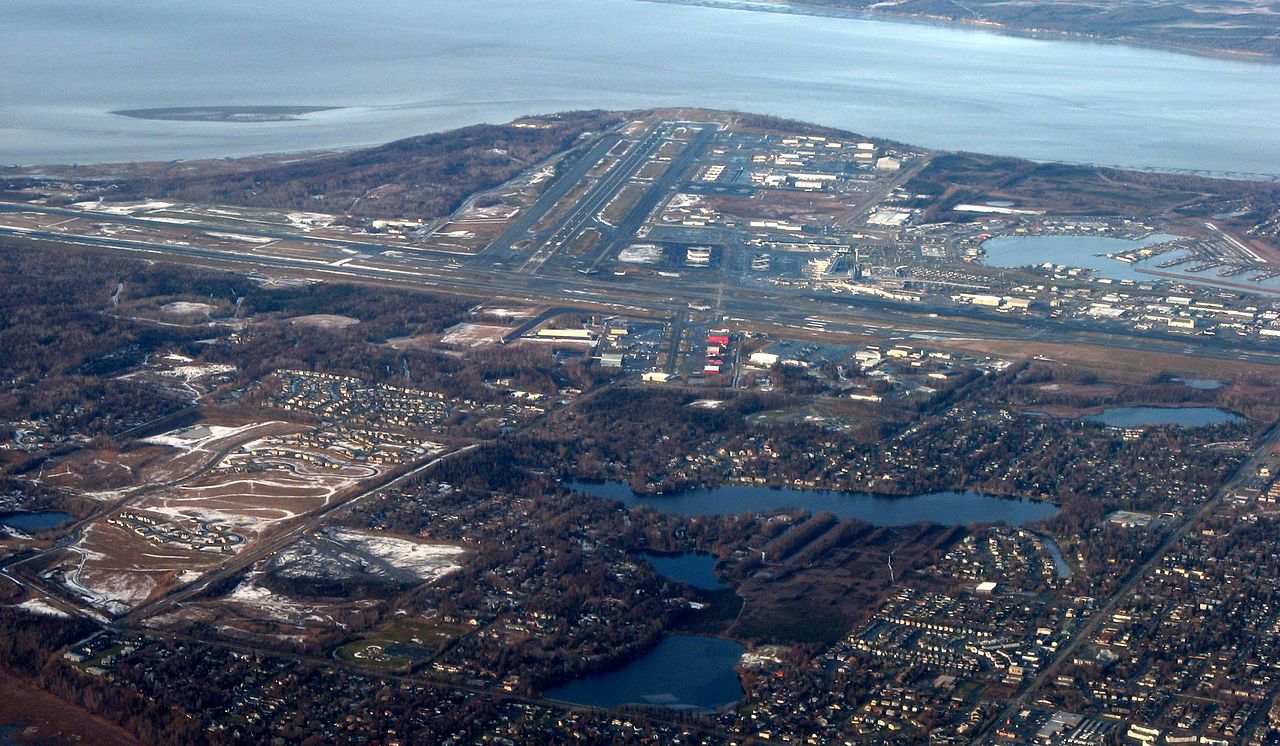
The field has long runways and infrastructure capable of accommodating large widebody freighters and long‑range passenger jets. Facilities include passenger terminals with domestic and international processing, extensive cargo ramps and warehouses, and support services used by airline, freight and general aviation operators. A nearby military presence and joint operations add to the airport’s operational complexity and resilience.
History and name
The airport was renamed to honor Senator Ted Stevens, who represented Alaska in the U.S. Senate for several decades. Its development tracked Alaska’s growth as a state and the evolution of trans‑Pacific and polar air routes; Anchorage’s geographic position made it a natural refueling and technical stop on many long international flights.
Importance and uses
Anchorage functions as a major cargo hub because its location lies near great-circle routes connecting North America and Asia. Freight carriers use it for scheduled cargo operations and for technical stops; passenger airlines use it for domestic connections and occasional international services. The airport also serves as a diversion field for aircraft needing an alternate landing site between North America and Asia.
Notable facts and distinctions
- Strategic mid‑Arctic location that shortens many trans‑Pacific flight tracks.
- Combination of commercial, cargo and military activity in a single complex.
- Recognized in federal planning as a medium‑hub primary airport (FAA), reflecting its role in the national system.
- Proximity to downtown Anchorage area — roughly five miles — gives convenient access for travelers and freight handlers.
For readers seeking schedules, cargo statistics or historical archives, consult official airport publications and national aviation resources via the airport’s information pages and federal aviation guidance (ANC, FAA). Further local context about the city and region may be found through municipal and state resources (Alaska, Anchorage).
The airport’s name and legacy reflect both its local importance to Alaska and its broader role in international air transportation across the North Pacific and Arctic corridors.
Related articles
Author
AlegsaOnline.com Ted Stevens Anchorage International Airport Leandro Alegsa
URL: https://en.alegsaonline.com/art/96722