
Taxi Driver (1976 film): overview, production, reception, and legacy
Martin Scorsese's 1976 crime drama about an alienated New York taxi driver. Covers plot, production, cast, awards, controversies and the film's cultural influence.
Taxi Driver is a 1976 American crime drama thriller that helped define a new, grittier tone in 1970s cinema. The picture was conceived and shaped by two central collaborators: the director credited on early scripts and publicity, Martin Scorsese, and its principal writer, Paul Schrader. Scorsese's authorship and public profile appear frequently in discussions of the film; contemporary and later accounts emphasize his role in visual style and performance direction, including his collaboration with the film's editor and cinematographer. Many accounts and references identify Martin Scorsese by name when discussing the work.
Image gallery
3 Images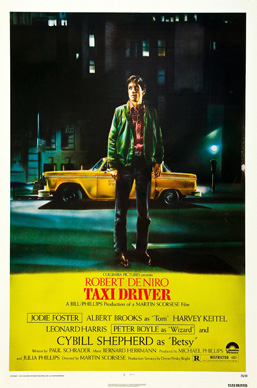


Plot and themes
The story centers on Travis Bickle, a solitary cab driver who navigates late-night streets of a worn and crime-ridden New York City. A Vietnam veteran haunted by alienation and insomnia, Travis becomes obsessed with cleansing the city of what he perceives as moral decay—a mood shaped in part by the backdrop of the Vietnam War era and its aftermath. The film explores themes of loneliness, urban isolation, vigilante fantasy, and the unstable line between civic conscience and violent fanaticism. Its narrative is less a conventional plot than an interior descent, rendered through close performances, night-time cinematography, and a sparse but effective score.
Cast and production
The cast blends established and emerging performers. The lead role was given to Robert De Niro, whose interpretation of Travis is frequently cited as a career-defining part. Supporting roles include a young Jodie Foster, Cybill Shepherd, Harvey Keitel, Peter Boyle, and Albert Brooks. Production choices—on-location shooting, a focus on nighttime urban textures, and a restrained but unsettling soundscape—helped create the film's distinctive atmosphere. Directors, writers, actors and crew have often discussed how rehearsal, improvisation and collaborative decision-making shaped key scenes.
Release, reception, and honors
Upon release the film drew strong critical attention and significant box-office interest for an adult-oriented drama of its time. It received multiple Academy Award nominations, including for Best Picture, Best Actor (for De Niro), and Best Supporting Actress (for Foster), among a total of four nominations. Internationally, it was awarded the Palme d'Or at the 1976 Cannes Film Festival. The film has been the subject of many later reassessments: critics' surveys and polls have repeatedly ranked it among the most important films of its era, sometimes compared to other landmark works such as The Godfather Part II. In recognition of its cultural and historical significance, the US Library of Congress selected the film for preservation in the National Film Registry.
Controversies and cultural influence
Taxi Driver provoked debate on several fronts. Its stark depictions of urban violence and the casting of a twelve-year-old actor in a role involving prostitution drew public scrutiny and enduring discussion about ethics in filmmaking and the responsibilities of directors and producers. The film also entered wider cultural conversations when an individual who had seen it repeatedly attempted to assassinate a sitting President; the 1981 attack on Ronald Reagan was linked in part to the assailant's obsession with the movie and one of its young performers. That incident intensified debate about the relation between violent art and real-world acts, a conversation that continues to resurface in media studies and public discourse.
Legacy and continued relevance
Decades after its premiere Taxi Driver remains widely studied and referenced. Its portrayal of an alienated antihero and a decaying metropolis has influenced filmmakers, writers, and performers. The film is frequently cited in academic discussions of post-Vietnam American cinema, urban representation on screen, and the ethics of depicting violence and vulnerable characters. Whether considered as a character study, a social critique, or a stylistic milestone, its impact on film language and popular culture is substantial and enduring.
- Principal cast: Robert De Niro, Jodie Foster, Cybill Shepherd, Harvey Keitel, Peter Boyle, Albert Brooks.
- Key recognitions: Palme d'Or; multiple Academy Award nominations including Best Picture, Best Actor, Best Supporting Actress.
- Preservation: Selected by the US Library of Congress for the National Film Registry.
The film’s complex legacy—its aesthetic achievements coupled with ethical controversies and its unexpected intersections with real events—ensures that Taxi Driver remains a frequent subject of study, debate and artistic reference.
Related articles
Author
AlegsaOnline.com Taxi Driver (1976 film): overview, production, reception, and legacy Leandro Alegsa
URL: https://en.alegsaonline.com/art/96576