
The Godfather Part II — overview, structure, production and legacy
1974 crime film by Francis Ford Coppola; a sequel and prequel to The Godfather, notable for its dual narrative, critical acclaim, and lasting influence on cinema and popular culture.
Overview
The Godfather Part II is a 1974 American crime film that builds on the story introduced in the original movie. Directed and produced by Francis Ford Coppola, it continues the Corleone family saga while expanding its scope and period. The picture intercuts two timelines: the rise of the young Vito Corleone and the consolidation and decline of his son Michael Corleone's power. The screenplay draws on material from Mario Puzo's novel and original series ideas, adapting them for a larger cinematic canvas; the novel itself is associated with Mario Puzo.
Image gallery
3 Images
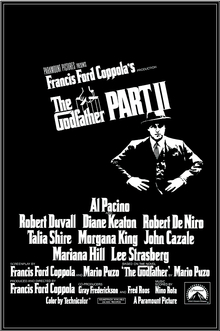

Structure and principal cast
Unlike a straightforward sequel, this film functions partly as a prequel and partly as a sequel to The Godfather (1972), juxtaposing scenes of immigrant life and ambition with scenes of political maneuvering and personal betrayal. The cast includes major performances by Al Pacino as Michael Corleone and Robert De Niro as the young Vito Corleone, alongside Diane Keaton and Robert Duvall. Key performers and supporting players contribute to a dense ensemble portrait of organized crime and family obligation.
- Lead actor: Al Pacino
- Young Vito: Robert De Niro
- Supporting cast: Diane Keaton, Robert Duvall
The film sits in the middle of the larger trilogy of films often referred to as the Godfather trilogy. Its successor, The Godfather Part III, completes the cinematic narrative years later.
Production, style and themes
Filmmaking choices in Part II emphasize contrast: black-and-white and color photography, cross-cutting between eras, and a controlled, atmospheric use of music and silence. Coppola's direction and the production design aim to convey both the intimate family dynamics and the wider social and political forces at work. Recurring themes include power and its corrupting influence, the immigrant experience in America, loyalty versus self-preservation, and the cost of maintaining a legacy. The movie's deliberate pacing and attention to character psychology set it apart from more conventional crime dramas.
Reception, awards and legacy
On release the film received widespread critical praise for its ambition, performances, and craftsmanship. It won multiple major awards, including the Academy Award for Best Picture; its recognition cemented the film's status among the most cited examples of American cinematic achievement. Viewers and scholars often highlight Robert De Niro's performance as a breakthrough depiction of the young Vito and Al Pacino's continued portrayal of a leader becoming increasingly isolated.
Notable facts and distinctions
The Godfather Part II is frequently discussed in lists of greatest films for its narrative complexity and influence on later filmmakers and popular culture. It is notable for successfully expanding a film's world while deepening character study rather than merely repeating earlier beats. For more detailed production notes, cast biographies, and critical essays, consult primary references and archives associated with the film's release and ongoing scholarship (genre context, awards history). For information about the original novel and the broader franchise, see material linked to Mario Puzo and the cinematic series (trilogy overview, first film, third film).
Scholars and film enthusiasts continue to examine the movie for its narrative innovations and moral complexity. Additional resources and archival materials are available through a variety of film history collections and interviews with the filmmakers (director, lead actor, notable supporting actor, principal actress, ensemble member).
Related articles
Author
AlegsaOnline.com The Godfather Part II — overview, structure, production and legacy Leandro Alegsa
URL: https://en.alegsaonline.com/art/98056
Sources
- rottentomatoes.com : "The Godfather Part II (1974)"