
Tasmanian devil (Sarcophilus harrisii)
A small, carnivorous marsupial native to Tasmania, known for its powerful jaws, nocturnal scavenging, distinctive vocalizations and current conservation challenges.
Overview
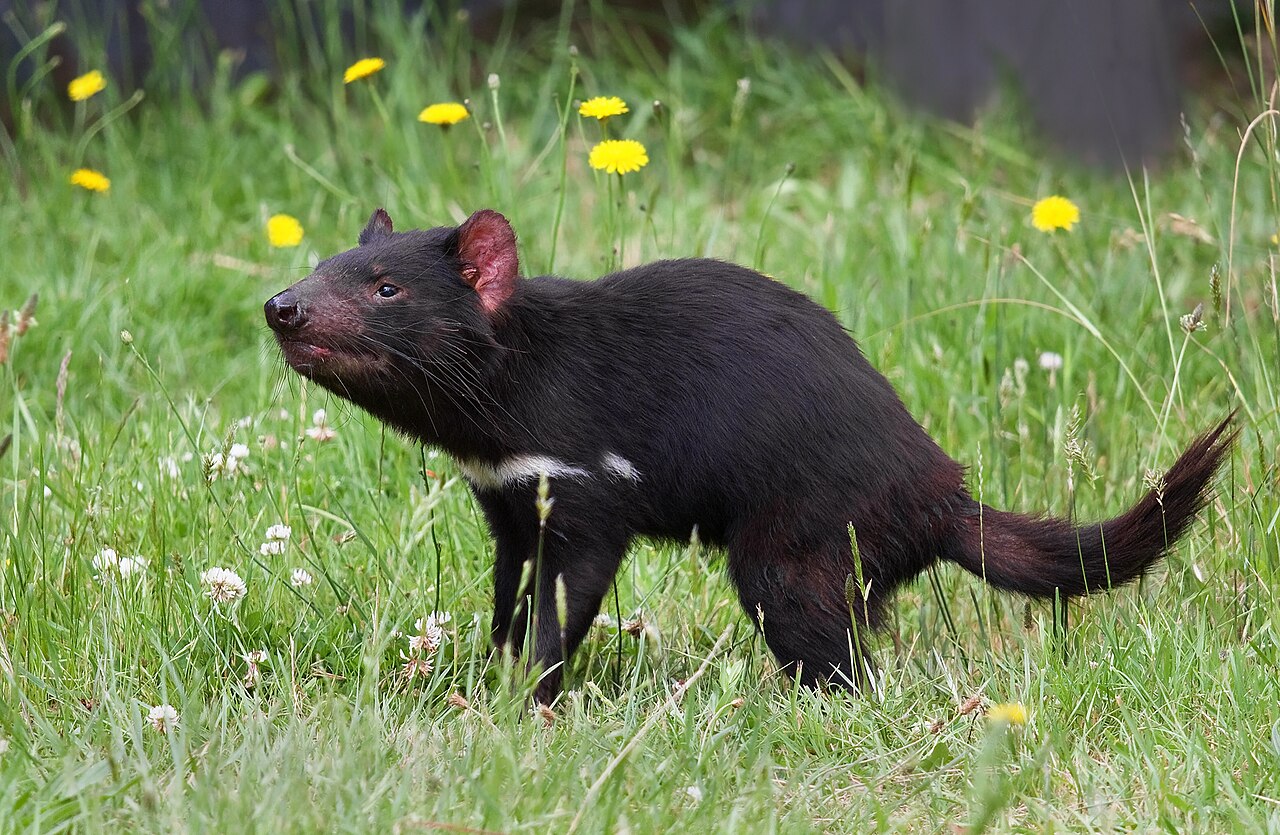
The Tasmanian devil (Sarcophilus harrisii) is a carnivorous marsupial native to the island of Tasmania. It is the largest meat-eating marsupial alive today and occupies a role as both predator and scavenger in Tasmanian ecosystems. Devils are mainly nocturnal and are noted for their stocky build, black fur with occasional white markings, and loud, harsh vocalizations.
Image gallery
10 Images




Physical characteristics
Adults are roughly the size of a small dog with a broad head, muscular neck and a short, thick tail used for fat storage. Males are generally larger and heavier than females. Their strong jaws and teeth allow them to crush bone and consume most parts of a carcass, an adaptation that helps them exploit carrion. The species is a true marsupial: females possess a pouch in which underdeveloped young, called joeys, continue to develop after birth.
Behavior and diet
Tasmanian devils are largely solitary feeders. They travel and forage at night, feeding on live prey such as small mammals, birds and reptiles, and scavenging roadkill and other carrion. Social interactions occur at feeding sites, where devils display a range of vocalizations, teeth-baring, and body postures to establish dominance and reduce physical conflict. Their efficient consumption of carrion helps limit the spread of disease and recycles nutrients into the environment.
Reproduction and lifecycle
Breeding typically occurs once a year. A mother may give birth to many tiny young, but only a few survive because the pouch has a limited number of teats. Young spend several months in the pouch before emerging and later ride on the mother's back. Juveniles disperse as they grow; wild lifespans are usually only a few years because of environmental pressures, disease and road mortality.
History, threats and conservation
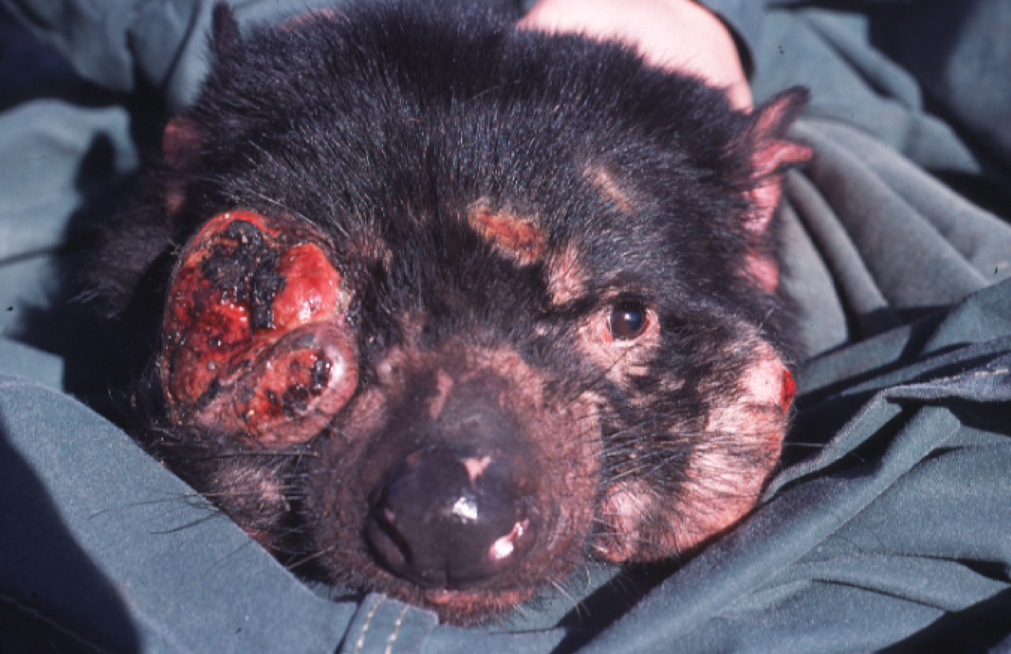
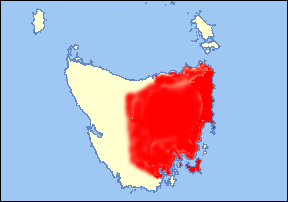
The species was once found on the Australian mainland but became extinct there several thousand years ago and now survives only in Tasmania. During the 20th century devils were persecuted as pests in some areas, but legal protection and changing attitudes have reduced direct killing. Since the late 20th century a transmissible cancer known as devil facial tumour disease (DFTD) has caused dramatic population declines and triggered major conservation responses. Current efforts include monitoring, captive breeding and insurance populations, research into disease transmission, and measures to reduce road deaths and maintain habitat.
Notable facts and distinctions
- Largest extant carnivorous marsupial.
- Powerful bite allows consumption of bone and tough tissues.
- Highly vocal at feeding sites—screeches, growls and snorts are common.
- Important scavenger role with ecological benefits.
Further reading
For concise species accounts, conservation updates and educational resources, see the following links:
- Species overview and identification
- Marsupial biology and reproduction
- General marsupial information
- Tasmania: geography and bioregions
- Island ecosystems and conservation
- Australian fauna and biodiversity
- Typical adult size and sexual dimorphism
- Measurements and physical descriptions
- History of human interactions and protection
Questions and answers
Q: What is a Tasmanian devil?
A: The Tasmanian devil is a meat-eating marsupial native to Tasmania, the largest meat-eating marsupial in the world.
Q: What does it mean to be nocturnal?
A: Being nocturnal means that the Tasmanian devil is awake during the night and sleeps during the day.
Q: What does the Tasmanian devil look like?
A: The Tasmanian devil is the same size as a small dog with a wide head, short tail, and black fur. Male devils can weigh up to 12 kg and be 30 cm tall.
Q: What kind of noise does the Tasmanian devil make?
A: The Tasmanian devil makes a loud and very scary screeching noise.
Q: What does the Tasmanian devil eat?
A: The Tasmanian devil will hunt other animals and also feed on dead animals. It has strong teeth and jaws and will eat all its prey, even bones and fur.
Q: Why did the Tasmanian devil become extinct on the Australian mainland?
A: The Tasmanian devil became extinct on the Australian mainland about 3,000 years ago before European settlement in 1788. They were hunted in Tasmania.
Q: When did the Tasmanian devil become officially protected?
A: The Tasmanian devil became officially protected in 1941 after being hunted in Tasmania for many years.
Related articles
Author
AlegsaOnline.com Tasmanian devil (Sarcophilus harrisii) Leandro Alegsa
URL: https://en.alegsaonline.com/art/96478
Sources
- species.wikimedia.org : Sarcophilus
- commons.wikimedia.org : Tasmanian devil
- iucnredlist.org : "Sarcophilus harrisii"
- parks.tas.gov.au : "Parks & Wildlife Service -"
- dpiw.tas.gov.au : Department of Primary Industry and Water.
- doi.org : 10.1111/j.1365-294X.2004.02239.x
- sanger.ac.uk : Completed genome is first step to tackling Tasmanian devil facial tumours (16th September 2010 )
- nature.com : "Endangered species: time to raise the devil"
- doi.org : 10.1038/439530a
- pubmed.ncbi.nlm.nih.gov : 16452951