
Tan Son Nhat International Airport
Primary civil airport serving Ho Chi Minh City, Vietnam; the country's largest airport and a major domestic and international gateway with two terminals and urban location challenges.
Tan Son Nhat International Airport (Vietnamese: Sân bay quốc tế Tân Sơn Nhất) is the principal civil airport serving Ho Chi Minh City in Vietnam. Located close to the city center, it functions as the busiest aviation hub in the country and the main international gateway for southern Vietnam. The facility handles both domestic and international flights and supports a mix of scheduled passenger, cargo and general aviation operations.
Image gallery
6 Images


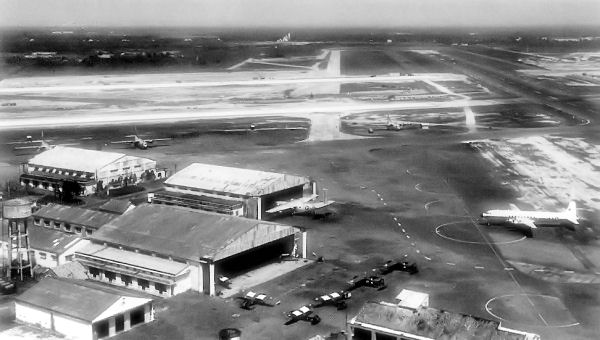
Layout and facilities
The airport complex includes two main passenger terminals—one for domestic services and one for international traffic—and multiple aprons and taxiways. It occupies about 850 hectares (2,100 acres) and operates parallel runways that serve a variety of aircraft types. The terminals are designed to separate arriving and departing flows and to provide standard passenger services such as check-in, customs, lounges and retail concessions. The two-terminal arrangement and a combination of piers and concourses set the operational pattern for most flights.
History and development
Tan Son Nhat began as a military airfield and later evolved into a civil airport as commercial aviation expanded in Vietnam. Over decades it has been adapted and enlarged to accommodate growing traffic, shifting from primarily military use in earlier periods to a mixed civilian hub. Major modernization efforts in the 2000s included a substantial international terminal, which opened on 14 August 2007 to improve capacity and passenger experience.
Traffic, capacity and operations
The airport has seen rapid passenger growth in the 21st century. It served around 8.5 million passengers in 2006 and about 11 million in 2007, reflecting its role as the dominant airport within Vietnam’s network. Official planning figures have at times cited an annual handling capability in the range of tens of millions of passengers across both terminals, though actual throughput varies by year and by infrastructure upgrades.
Importance and challenges
Tan Son Nhat is a vital transport link for business travel, tourism and air freight to and from southern Vietnam. Its proximity to Ho Chi Minh City center is convenient for travelers but has also created constraints: limited space for expansion, noise and environmental concerns, and complex traffic management inside a dense urban area. These limitations have prompted ongoing debates and projects focused on capacity increases and improving ground access.
Quick facts
- IATA/Code: commonly referred to in schedules and tickets as SGN; also identified as an international civil airport (airport).
- Terminals: domestic and international terminals with combined processing capacity; upgrades and operations described at the terminal complex level (terminals and capacity).
- Role: primary gateway for southern Vietnam and major hub for domestic connections.
- Location: within a few kilometers of central Ho Chi Minh City, enabling short transfers to the urban core.
For current schedules, airline services and details on development plans consult official airport publications and national aviation authorities through designated information channels and resources (Vietnam transport pages and related sources).
Related articles
Author
AlegsaOnline.com Tan Son Nhat International Airport Leandro Alegsa
URL: https://en.alegsaonline.com/art/96238