
Symmetry: concepts, types, history and applications
Overview of symmetry in mathematics, science, art and nature — types (reflection, rotation, translation), symmetry elements, historical development, uses, and key distinctions like exact vs approximate symmetry.
Overview
Symmetry describes invariance under a set of transformations: a figure, pattern, equation or physical system is symmetric if some operation leaves it unchanged. This general idea appears across mathematics, art, biology and physics. In everyday language it often means a pleasing balance, while in formal settings it denotes specific operations such as reflections, rotations, translations or combinations that map an object onto itself.
Image gallery
10 Images


Basic types and elements
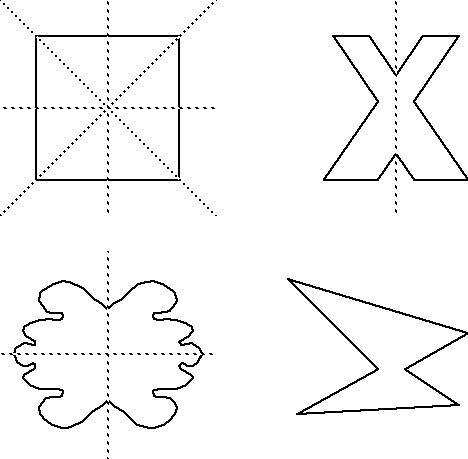
Common symmetry operations include reflection (mirror) symmetry, rotation, translation and glide reflection. Reflection symmetry involves a mirror line or plane that divides a shape into two congruent halves; see reflectional symmetry. Rotational symmetry means an object coincides with itself after a rotation by a fixed angle about a center. Translational symmetry moves a pattern along a vector without changing its appearance. Symmetry elements — axes, planes, centers and translation vectors — are the geometric loci associated with these operations. The study of how these operations combine leads to the concept of a symmetry group.
Historical and mathematical development
Ideas of geometric balance go back to antiquity, but the modern mathematical treatment of symmetry emerged with group theory and crystallography. Algebraic groups formalize the set of transformations that preserve a structure. In crystallography the classification of symmetry in three-dimensional lattices resulted in a discrete list of space groups used to categorize crystal structures. In theoretical physics the connection between continuous symmetries and conservation laws—one of the field’s central insights—was established through mathematical analysis of invariance principles.
Applications and examples
- Biology: many animals show bilateral symmetry (left/right) while some organisms like starfish display radial symmetry.
- Art and architecture: designers use symmetry for balance, rhythm and ornament; tessellations exploit translational and rotational symmetries.
- Chemistry and materials: molecular symmetry determines spectral properties and chemical behavior; crystal symmetry underpins material classification.
- Physics and mathematics: symmetry guides model building, solution techniques and conservation laws.
Distinctions and notable facts
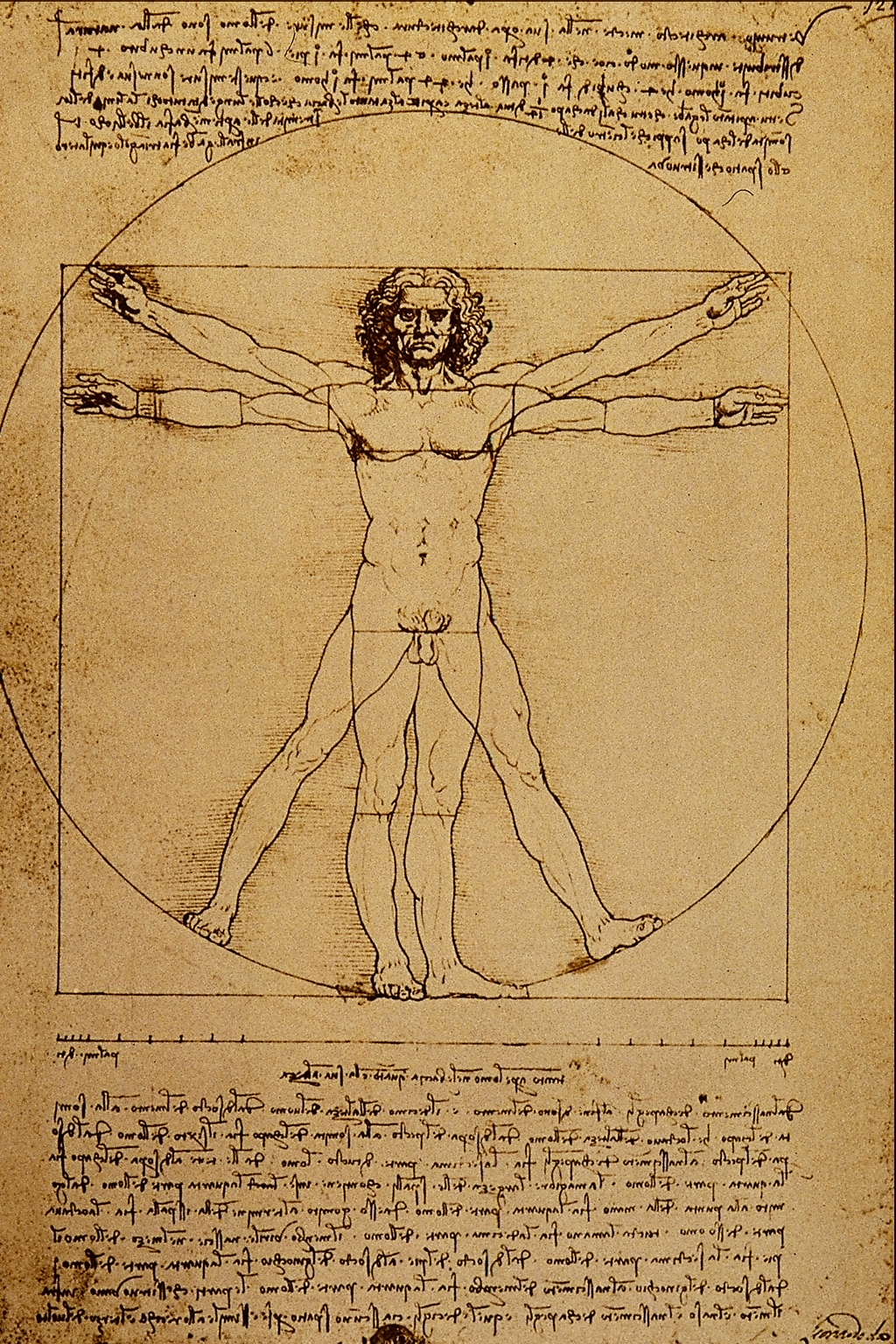
Symmetry can be exact or approximate. Natural systems often exhibit near-symmetry broken by small perturbations; such symmetry breaking is important in phase transitions and biology. There are also differences between local and global symmetries and between discrete and continuous types. Practical analysis uses visual inspection, algebraic description (groups) and numerical measures of asymmetry. For further reading on geometric examples and formal definitions see discussions of geometrical objects, how shapes appear mirrored, and how forms are reflected in different contexts.
Related articles
Author
AlegsaOnline.com Symmetry: concepts, types, history and applications Leandro Alegsa
URL: https://en.alegsaonline.com/art/95631
Sources
- commons.wikimedia.org : Category:Symmetry