
T (letter)
T is the twentieth letter of the English alphabet, representing a voiceless alveolar stop and appearing widely in writing, phonetics, typography, and symbolic notation.
Overview
The letter T is the twentieth character of the modern Latin script, often written as uppercase T and lowercase t. In English it commonly represents a voiceless alveolar stop sound, as in the words top and cat. The position of the letter is the 20th in sequence and it is identified as a letter of the English alphabet.
Image gallery
1 Image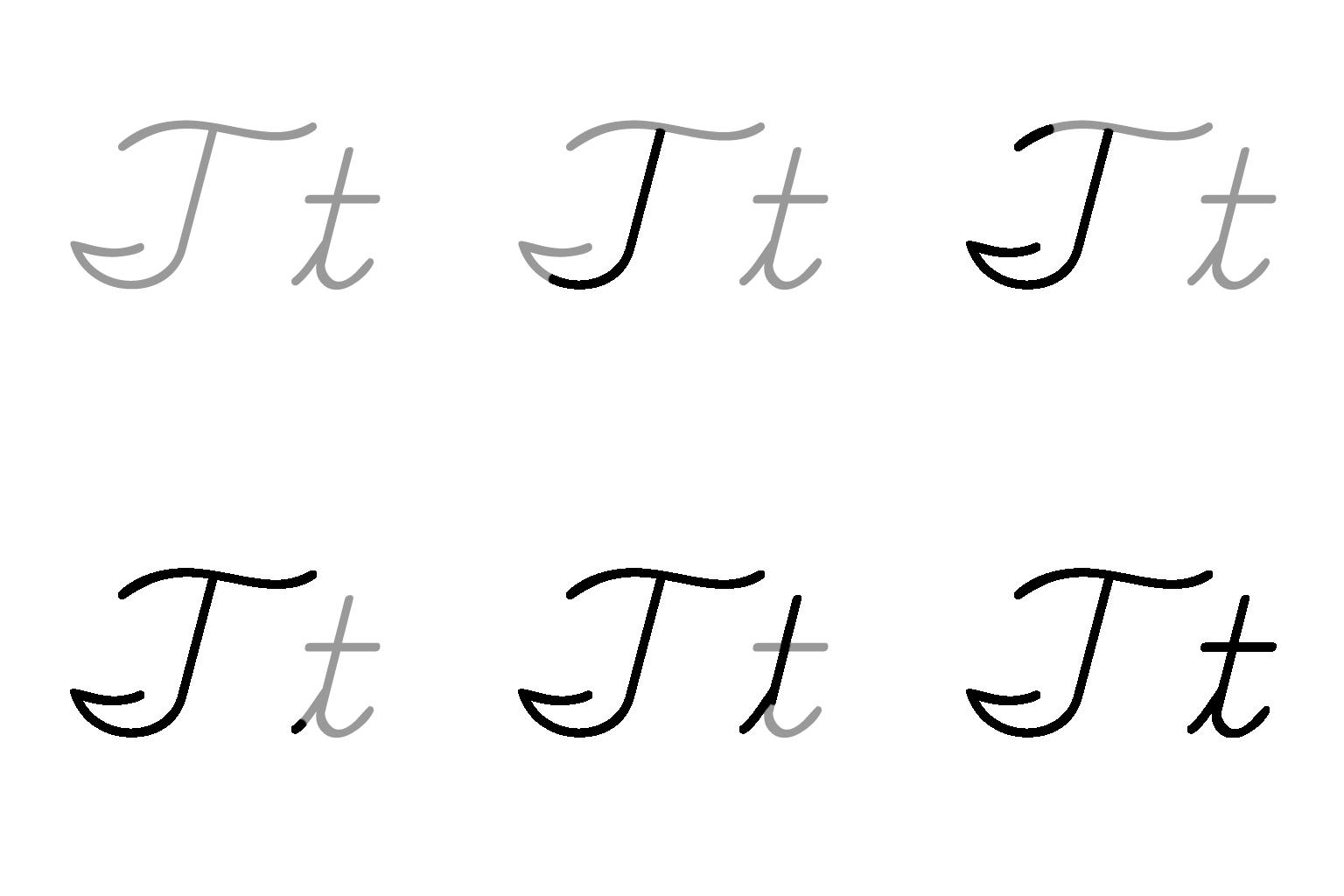
History and development
T descends from the Phoenician letter taw and passed into Greek as tau (Τ, τ) before being adopted into the Etruscan and Roman alphabets. The basic form — a vertical stroke topped by a horizontal crossbar — has been stable since antiquity, though styles vary across typefaces, handwriting, and calligraphic traditions.
Characteristics
- Phonetics: typically denotes a voiceless alveolar stop, written as t in phonetic descriptions.
- Orthography: forms digraphs such as th, tt, and appears in clusters like tr and st.
- Typography: many fonts differentiate serif and sans-serif shapes, with a variety of crossbar widths and tail shapes for the lowercase.
Uses and examples
T is extremely common in English words and appears in many grammatical endings and inflections (for example past-tense -ed often pronounced with a final t). In spelling, combinations such as tch signal specific phonetic outcomes. Beyond language, the letter is used symbolically: an uppercase T can denote transpose in mathematics, temperature in some contexts, while a lowercase t often stands for time in physics and engineering.
Notable facts
- In computing standards, the uppercase and lowercase characters correspond to Unicode code points U+0054 and U+0074 and to ASCII codes 84 and 116.
- T is among the more frequent letters in English text, making it important for cryptographic and frequency analyses.
- Its simple geometry makes it a stable element across alphabets derived from Latin and Greek.
For further reference on the letter's sequence number, historical forms, and usage across languages, see related entries on alphabet order and letter history via the provided links.
Related articles
Author
AlegsaOnline.com T (letter) Leandro Alegsa
URL: https://en.alegsaonline.com/art/95770