
Sydney (Kingsford Smith) Airport — overview, layout, history and operations
Major international and domestic airport serving Sydney, Australia. Known as Kingsford Smith Airport (SYD), it is Australia’s busiest airport, with multiple terminals, three runways and extensive domestic/international links.
Overview
Sydney (Kingsford Smith) Airport, commonly called Sydney Airport or Kingsford Smith Airport, is the principal air gateway for the city of Sydney, New South Wales, Australia. Its IATA code is SYD. The airport sits in the suburb of Mascot, close to Botany Bay and a short distance from the central business district, and is managed by Sydney Airport Corporation Limited. It serves both international and domestic traffic and is a primary hub for major Australian carriers such as Qantas, with significant operations by Virgin Australia and Jetstar.
Image gallery
10 Images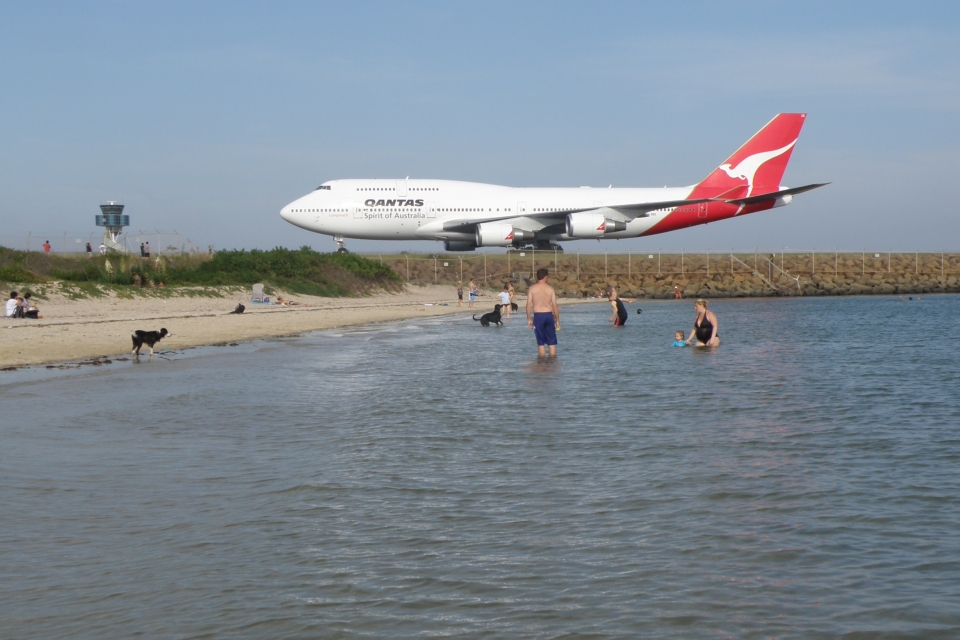


Location and layout
Located in Mascot, within the metropolitan area of Sydney, the airport occupies land adjacent to Botany Bay and is connected to the city by road and rail. The domestic and international passenger facilities are arranged across multiple terminals: the international terminal often referred to as T1 and domestic terminals commonly called T2 and T3. These terminals accommodate check‑in, security, baggage handling and retail services for a mix of domestic and long‑haul international flights. See local maps and transport options for terminal details and transfers to the city centre via the airport rail link and coach services.
Runways and operations
Sydney Airport operates three paved runways, frequently described by their orientations: the east–west runway, the north–south runway, and a third runway added to increase capacity. The runway layout and airspace constraints require careful scheduling and air traffic control coordination; the airport handles a high volume of movements each year and supports a mix of short‑haul domestic, regional and long‑haul international services.
History and development
The site has been used for aviation since the early 20th century and is among the world’s older continuously operating airports. It was later named after pioneering Australian aviator Sir Charles Kingsford Smith. Over decades the airport has evolved from a small aerodrome to a major international hub, with multiple terminal expansions, runway projects and modernization of passenger facilities to meet growing demand.
Airlines, destinations and importance
Sydney Airport is Australia’s busiest airport by passenger numbers and aircraft movements. It links Sydney with all parts of Australia and with international destinations across Asia, the Pacific, Europe, the Americas and the Middle East. Historically it handled tens of millions of passengers in the 21st century; for example, earlier published figures recorded around 36 million passengers in 2010 and hundreds of thousands of aircraft movements in preceding years. The airport is a key hub in the networks of national carriers and a gateway for tourism, commerce and freight.
Ground transport and connections
Ground access includes dedicated road links, express and regular bus services, and a suburban rail connection that links the terminals to central Sydney and suburban stations. These connections are important for daily commuters, transfer passengers and freight movements. The airport’s proximity to the city makes it convenient for business travellers and tourists alike.
Notable facts and future outlook
Sydney Airport’s long history, central city location and role as Australia’s busiest international gateway make it a focal point for transport planning and infrastructure investment. Ongoing discussions about capacity, noise management and future runway or terminal projects shape its development. For airline-specific schedules and corporate information visit carrier and airport pages for up‑to‑date details: hub information is available through hub references, local area context via Mascot and Sydney, environmental or bay details at Botany Bay, and statistical or historical summaries at authoritative sources (statistics and reports).
Questions and answers
Q: What is the IATA code for Sydney Airport?
A: The IATA code for Sydney Airport is SYD.
Q: How many runways does Sydney Airport have?
A: Sydney Airport has three runways - the "east–west", "north–south" and "third" runways.
Q: How many passengers did Sydney Airport handle in 2010?
A: In 2010, Sydney Airport handled 36 million passengers.
Q: What airlines are based at Sydney Airport?
A: Qantas, Virgin Australia and Jetstar Airways are all based at Sydney Airport.
Q: How many aircraft movements were there in 2009?
A: In 2009, there were 289,741 aircraft movements at Sydney Airport.
Q: Who manages the airport?
A: The airport is managed by the Sydney Airport Corporation Limited (SACL).
Q: Are there direct flights to other cities in Australia from Sydney?
A: Yes, there are direct flights to 47 Australian cities and towns from Sydney.
Related articles
Author
AlegsaOnline.com Sydney (Kingsford Smith) Airport — overview, layout, history and operations Leandro Alegsa
URL: https://en.alegsaonline.com/art/95578
Sources
- sydneyairport.com.au : "Archived copy"
- annualreport.sydneyairport.com.au : Annual Report 2014
- bitre.gov.au : "Airport Traffic Data"
- ecquants.com : "Sydney airport – Economic and social impacts"
- airservicesaustralia.com : YSSY – SYDNEY/(Kingsford Smith)
- gnb.nsw.gov.au : "Geographical Names Register Extract: Sydney (Kingsford Smith) Airport"
- sydneyairport.com : Fact Sheet
- airports.org : Passenger Traffic 2009 FINAL
- sydneyairport.com : Sydney Airport – An Overview
- theaustralian.com.au : "Bullock paddock grew to nation's busiest air hub"
- sydneyairport.com : "Ownership"
- sydneyairport.com : "International Terminal – Expansion and Upgrade"
- smh.com.au : "ACCC slams price gouging at Sydney Airport"