
Surface-area-to-volume ratio
The relationship between an object's surface area and its volume; explains how size and shape affect heat transfer, diffusion, reaction rates, biology, and engineering through scaling principles.
Overview
The surface-area-to-volume ratio (often written SA:V or sa/vol) expresses how much external surface is available per unit of internal volume. It is calculated by dividing an object's total surface area by its volume. The ratio quantifies the relative prominence of boundary area versus enclosed material and changes with size and shape: small or thin objects have relatively large SA:V, while bulky objects have relatively small SA:V.
Image gallery
8 Images




Mathematical relationship
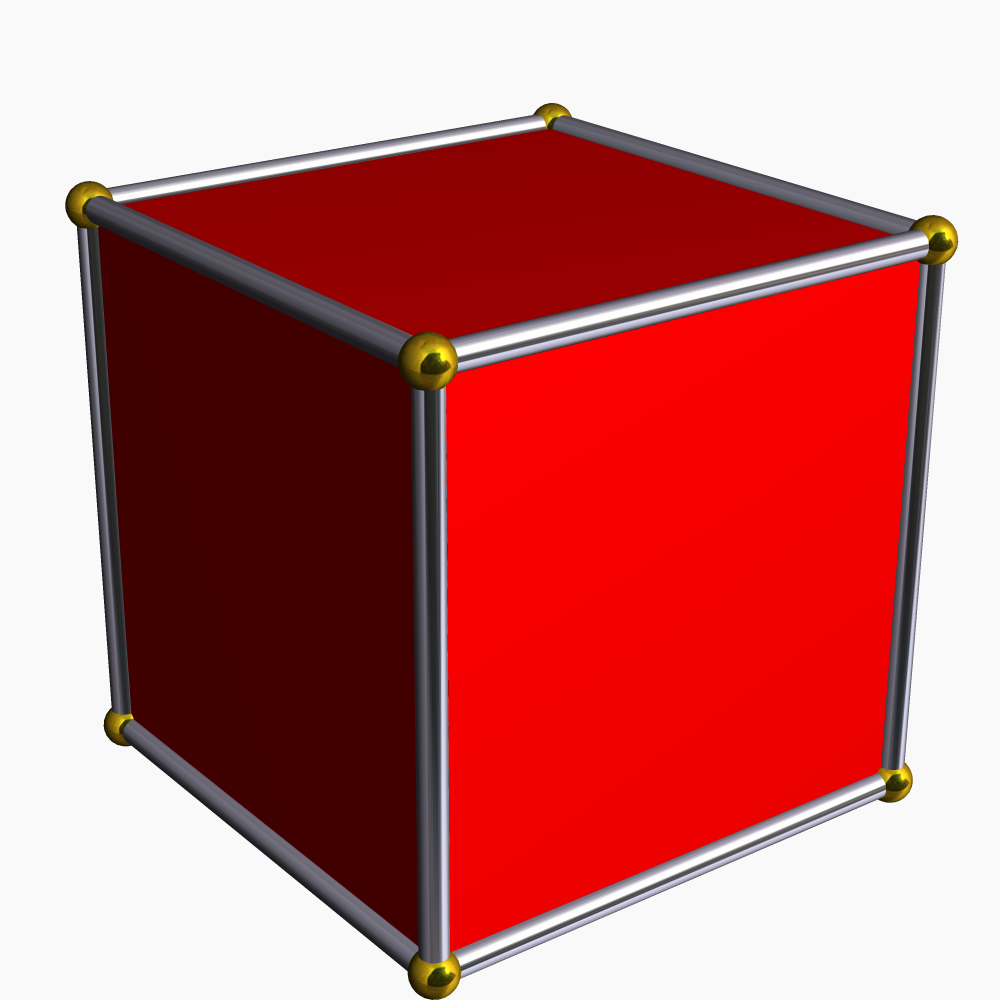
Surface area grows with the square of a characteristic length, while volume grows with the cube of that same length. As a result, scaling up a shape reduces SA:V and scaling down increases it. For simple shapes the ratio can be written explicitly: for a sphere, SA = 4πr^2 and V = 4/3πr^3, so SA:V = 3/r. For a cube of side a, SA:V = 6a^2 / a^3 = 6/a. These formulas illustrate why halving linear dimensions roughly doubles SA:V; conversely, doubling linear dimensions reduces SA:V by half or more depending on geometry.
Historical and conceptual background
Awareness of how size affects function dates back centuries and appears in classical studies of mechanics and biology. Observers and scientists have long used scaling arguments to explain why animals, structures, and materials behave differently at different sizes. The concept underlies dimensional analysis and remains a fundamental consideration in fields that connect physical geometry to rates of exchange or stress.
Consequences and notable effects
- Heat and mass transfer: High SA:V increases the rate at which heat or molecules pass between an object and its surroundings, so thin or finely divided materials warm, cool, or dissolve faster.
- Biology: Cells and small organisms rely on high SA:V to support diffusion of gases and nutrients; larger organisms employ circulatory systems and folded surfaces (lungs, intestines) to increase effective surface area.
- Mechanical strength: Scaling changes stress distribution: as size increases, volume (and weight) grows faster than supporting surface area, affecting strength and stability in structures and bones.
Applications and examples
Practical uses of SA:V appear across disciplines. In chemistry and catalysis, finely powdered catalysts provide large surface for reactions per unit mass. In food science, grinding increases surface area to alter drying or dissolving properties. In engineering, microelectronic devices exploit large surface areas for heat dissipation and sensor performance. In medicine and pharmacology, drug dissolution and absorption rates are influenced by particle surface area. Environmental processes such as soil-water interactions and pollutant sorption also depend on available surface relative to volume.
Distinctions and practical notes
Surface-area-to-volume ratio is a geometrical property independent of material composition but intimately connected to functional outcomes. Effective surface area may differ from geometric area when surfaces are porous or folded, so measurements for practical systems often consider accessible or reactive surface rather than simple external geometry. When seeking more technical treatments or measurement standards, consult specialized resources or reviews for methods that quantify real-world surface area and its implications: further reading and standards.
Related articles
Author
AlegsaOnline.com Surface-area-to-volume ratio Leandro Alegsa
URL: https://en.alegsaonline.com/art/95150