
SummerSlam (2009) — WWE pay-per-view in Los Angeles
WWE's 22nd SummerSlam, held August 23, 2009 at Staples Center in Los Angeles. A brand-inclusive pay-per-view featuring eight matches with talent from Raw, SmackDown and ECW.
Overview
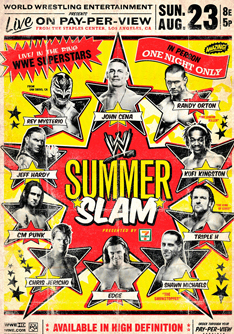
SummerSlam (2009) was a professional wrestling pay-per-view event produced by World Wrestling Entertainment (WWE). It took place on August 23, 2009 at the Staples Center in Los Angeles, California. The show was the 22nd edition of the SummerSlam series and featured a mix of championship bouts and storyline-driven matches drawn from WWE's roster.
Image gallery
8 Images


Format and card
The 2009 card comprised eight matches and included performers from all three brands active at the time: the SummerSlam series traditionally showcased talent across Raw, SmackDown and ECW. The event combined title contests with personal rivalries, a format common to major WWE pay-per-views and designed to appeal to both live audiences and home viewers.
Typical matches at SummerSlam mix in-ring athleticism with long-running storylines. Prominent stars of the era appeared on the card and the show continued SummerSlam's reputation as one of WWE's marquee annual events, often billed alongside WrestleMania and the Royal Rumble in terms of importance.
History and significance
First staged in 1988, SummerSlam grew into a summer counterpart to WWE's winter and spring spectacles. By 2009 the event had developed into a high-profile stop on the yearly calendar, drawing major feuds into a single-night climax. Its positioning in late August made it a consistent showcase for headline talent and an opportunity to advance or conclude prominent storylines ahead of the autumn television cycles.
Production and reception
As with other major WWE shows, SummerSlam (2009) combined arena staging, entrance production and broadcast elements to create a spectacle for both the live crowd and pay-per-view audience. Reviews of specific matches varied, but the event was noted for featuring top-tier performers and for reflecting WWE's then-current brand structure. The show was later available through WWE's distribution platforms and periodic home-video or streaming releases.
Notable aspects
- The event continued the annual SummerSlam tradition and added to the series' legacy as a major WWE event (event page).
- It illustrated WWE's brand extension model and the use of cross-brand booking to build marquee cards (WWE).
- Held in a major media market, the show benefited from the Staples Center's capacity and Los Angeles' entertainment infrastructure (Staples Center, Los Angeles).
For more details about participants, individual match results and subsequent developments, consult official WWE archival pages and comprehensive event summaries (pay-per-view listings, SummerSlam history, brand records).
Related articles
Author
AlegsaOnline.com SummerSlam (2009) — WWE pay-per-view in Los Angeles Leandro Alegsa
URL: https://en.alegsaonline.com/art/94809