
WWE Raw
WWE Raw is a weekly Monday night professional wrestling television show produced by WWE, featuring live matches, scripted storylines, championship contests, and studio segments as the company's flagship program.
Overview
WWE Raw, often shortened to Raw, is a weekly professional wrestling television program produced by WWE. Broadcast on Monday nights in many markets, the program combines in-ring competition, scripted storylines, character work, and studio-based segments. It is generally regarded as the company’s flagship show and is presented as a live or live-to-tape entertainment event that advances ongoing narratives and championship feuds.
Image gallery
2 Images
Format and production
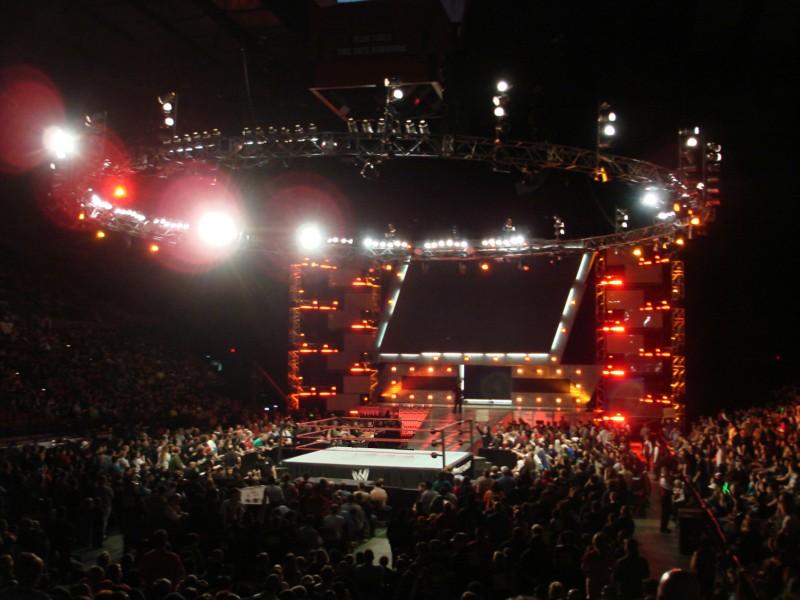
Episodes typically present a mix of singles and tag-team matches, championship defenses, backstage interviews, and promotional segments designed to build rivalries. A production crew works with announcers, ring announcers, referees, and producers to stage matches and coordinate timing. The show uses entrance music, lighting, video packages, and commentary to create a dramatic presentation that blends athletic performance with scripted storytelling.
Typical structure
- Opening segment or match to establish tone and ratings momentum.
- Short matches interspersed with backstage interviews and promos.
- Featured main-event match or championship bout toward the end.
- Run-ins, angle developments, and cliffhangers setting up future episodes or pay-per-view events.
History and development
First launched in 1993, Raw grew from a weekly wrestling show into WWE’s principal platform for long-form storytelling. Over its run it has gone through creative shifts that reflected broader changes in sports entertainment, including periods that emphasized edgier content, talent-focused character work, and structured brand divisions that separated rosters across different programs. The format has been refined with changing television standards, audience expectations, and production technology.
Importance and influence
As WWE’s flagship broadcast, Raw plays a central role in introducing new performers, building championship narratives, and promoting larger events. The show has helped launch and elevate many well-known professional wrestlers, and its weekly schedule provides a consistent platform for storyline progression. It also serves as an anchor for WWE’s broader media strategy, linking to companion programs, streaming archives, and promotional campaigns.
Notable distinctions and resources
Raw is commonly contrasted with WWE’s other programs such as SmackDown and NXT, with differences in tone, roster composition, and scheduling. For additional official information and schedules consult the company’s main channels and program pages. Further reading and related pages can be found via these resources:
Questions and answers
Q: What is WWE Raw?
A: WWE Raw is a professional wrestling television program made by WWE in 1993.
Q: Which day is WWE Raw aired on?
A: WWE Raw is aired on Monday nights.
Q: Is WWE Raw considered as WWE's flagship program?
A: Yes, WWE Raw is usually seen as WWE's flagship program over its sister programs, WWE SmackDown, WWE NXT, and WWE Main Event.
Q: Why is WWE Raw considered WWE's flagship program?
A: WWE Raw is considered as WWE's flagship program due to its longer history and the way it is promoted.
Q: When was WWE Raw first aired?
A: WWE Raw was first aired in 1993.
Q: Which other programs are associated with WWE?
A: WWE SmackDown, WWE NXT, and WWE Main Event are sister programs associated with WWE.
Q: What is the difference between WWE Raw and its sister programs?
A: WWE Raw is seen as WWE's flagship program due to its longer history and the way it is promoted, while its sister programs such as WWE SmackDown, WWE NXT, and WWE Main Event have a shorter history and are not as heavily promoted as WWE Raw.
Related articles
Author
AlegsaOnline.com WWE Raw Leandro Alegsa
URL: https://en.alegsaonline.com/art/109331
Sources
- heavy.com : "WATCH: WWE Debuts New 'Monday Night Raw' Theme Song"
- itunes.apple.com : "WWE: Dreams That I Have (Monday Night RAW) [feat. Will Roush] - Single"
- itunes.apple.com : "WWE: Stories of Greatness (Monday Night RAW) [feat. KIT] - Single"
- msnbc.msn.com : msnbc.msn.com
- nytimes.com : "Better Days, and Even the Candidates, Are Coming to W.W.E."
- wwe.com : "Nickelback and WWE team up for new Raw theme"
- corporate.wwe.com : "WWE Goes HD"
- wwe.com : WWE: Mediaplayer > WWE goes high-definition with an all new set
- skysports.com : Sky Sports | TV Guide
- fox8.tv.html : FOX8
- wwe.com : "WWE Raw 1992 on WWEClassics.com"
- 100megsfree4.com : "WWE Raw rating history"
- gerweck.net : "1999 Nielsen Television Ratings"
- gerweck.net : "2002 Nielsen Television Ratings"
- gerweck.net : "2003 Nielsen Television Ratings"