
Strepsiptera — twisted‑wing parasitic insects
Strepsiptera are a small order of endoparasitic insects (about 600 species) known for extreme sexual dimorphism and a unique life cycle that parasitizes other insects including planthoppers and bees.
Overview
Strepsiptera is an order of small insects, often called twisted‑wing parasites because of the unusual shape of the males' wings. The group contains about 600 described species and is best known for an obligate parasitic lifestyle: individuals spend much of their lives inside other insects. They occur worldwide and attack a range of host species.
Image gallery
10 Images




Characteristics
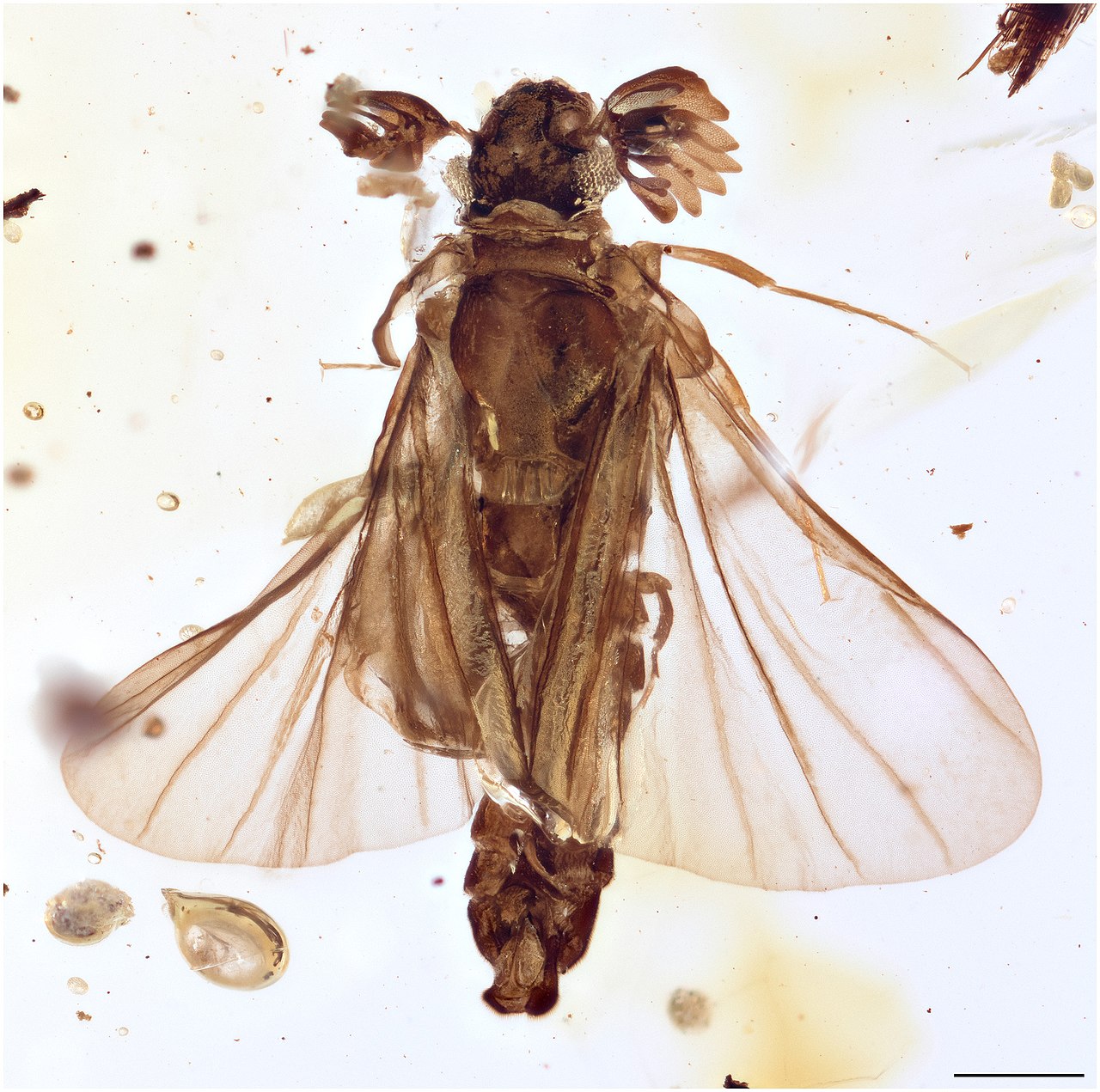
Members of this order show extreme sexual dimorphism. Adult males are winged, short‑lived, free‑flying, and bear unusual fan‑like hind wings and reduced forewings; they possess simple eyes and specialized antennae. Adult females of many species remain larva‑like (neotenic), never leaving the host, and often protrude only a small portion of their body to mate and release young. Early stages are mobile and adapted to seek hosts.
- Size: generally small, often a few millimetres long.
- Life stages: active first‑instar larvae (triungulins), endoparasitic molts, pupal male stage.
- Reproduction: many species give birth to active larvae rather than laying many eggs.
Life cycle and hosts
Young strepsipteran larvae must find and enter a suitable host, which they often do by attaching to visiting insects. Known hosts include planthoppers, leafhoppers, treehoppers and froghoppers in the Hemiptera and several groups of Hymenoptera such as solitary bees and wasps. Once inside a host the parasite grows within the body cavity, consuming host resources and sometimes altering host physiology or behaviour; in some cases infected hosts are sterile or show changed activity patterns. For general information on their parasitic strategy see parasitism in insects and for host examples see typical hosts.
Taxonomy, history and significance
The evolutionary placement of Strepsiptera was long debated among entomologists. Morphological and molecular studies during recent decades have clarified relationships within the endopterygote insects, and many analyses suggest a relatively close affinity with the beetles (Coleoptera), though some details are still discussed. Strepsipterans are of interest to scientists studying parasitism, host–parasite interactions, and extreme sexual dimorphism. For a concise species overview and classification, see overview resources and for questions about their interactions with bees consult studies on hymenopteran hosts.
Related articles
Author
AlegsaOnline.com Strepsiptera — twisted‑wing parasitic insects Leandro Alegsa
URL: https://en.alegsaonline.com/art/94262