
Sturgeon (family Acipenseridae)
Sturgeon are long-lived, primitive ray-finned fishes in the family Acipenseridae, valued for caviar and threatened by overfishing, habitat loss, and dams across the Northern Hemisphere.
Sturgeon is the common name for the fishes of the family Acipenseridae, a group of large, slow-growing species native mainly to rivers and coastal waters of the Northern Hemisphere. Often described as living fossils, sturgeons belong to an ancient lineage of ray-finned fishes distinguished by unusual skeletal and external features. Around 27 recognised species are traditionally placed in the family, varying widely in size, ecology and conservation status.
Image gallery
10 Images




Characteristics
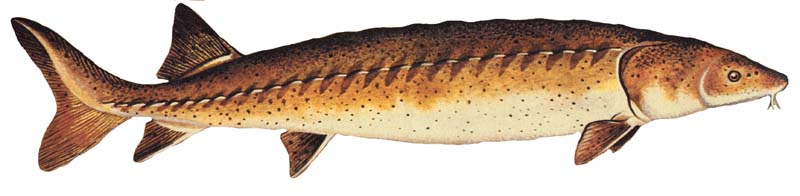
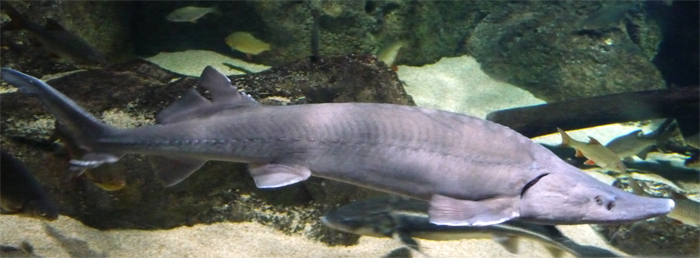
Sturgeons have elongated bodies, a heterocercal tail (upper lobe longer than the lower), and five rows of bony scutes instead of typical fish scales. Their mouths are protrusible and toothless, located on the underside of a long snout. Barbels—sensory whisker-like organs—hang in front of the mouth and help locate food on the substrate. Unlike most modern bony fishes, much of the sturgeon skeleton is cartilaginous, giving them a primitive appearance.
Life cycle and habitat
Many sturgeon species are anadromous: they live in coastal seas but migrate into freshwater rivers to spawn, while others complete their lives entirely in rivers or lakes. They tend to mature late—ranging from several years to decades depending on species and sex—and can live for many decades. Reproduction involves eggs and externally fertilised larvae; spawning typically occurs over gravel or firm substrates in flowing water.
Human uses and conservation
Sturgeons are economically and culturally important. Their roe is processed into caviar, a luxury food product that has driven intense commercial harvesting. Wild stocks declined sharply in many regions because of overfishing, illegal poaching, pollution, and barriers such as dams that block spawning migrations. As a result, numerous sturgeon species are listed as threatened or endangered and are subject to trade controls and recovery measures in various countries.
Management, notable species and distinctions
Conservation responses include fishing limits, trade regulations, habitat restoration, fish passage projects and captive breeding or aquaculture to supply caviar and reduce pressure on wild populations. Notable species include the beluga (Huso huso), white sturgeon (Acipenser transmontanus), Atlantic sturgeon (Acipenser oxyrinchus) and sterlet (Acipenser ruthenus). Sturgeons belong to the order Acipenseriformes, which also contains paddlefishes (family Polyodontidae); paddlefishes differ markedly by having a paddle-like snout and other specialised traits.
- Ecological role: benthic feeders that help recycle nutrients in river and coastal ecosystems.
- Conservation status: many species declining; recovery is slow because of life-history traits.
- Human interaction: regulated fisheries and growing aquaculture are central to management.
Related articles
Author
AlegsaOnline.com Sturgeon (family Acipenseridae) Leandro Alegsa
URL: https://en.alegsaonline.com/art/94406
Sources
- fws.gov : "Atlantic Sturgeon"
- dnr.state.mn.us : "Lake sturgeon"
- iucn.org : iucn.org/?4928