
Stratford-upon-Avon: historic market town and home of William Shakespeare
Stratford-upon-Avon is a market town in Warwickshire, England, widely known as William Shakespeare’s birthplace; it combines Tudor architecture, riverside setting and a year-round cultural tourism economy.
Overview
Stratford-upon-Avon is a market town in England that is best known as the birthplace of William Shakespeare. The town's identity rests on a blend of literary heritage, preserved historic buildings, theatres and a lively visitor economy. A compact historic core contains shops, museums, cafés and theatres which serve both residents and an international stream of visitors. The relationship between community life and cultural tourism is a continuing feature of local planning and commerce.
Image gallery
10 Images



Geography and layout
Stratford lies on the River Avon and developed around a riverside ford and later bridges that shaped its street pattern. Its compact centre and riverside gardens create a distinctive setting for walking and boating. The town is roughly 22 miles south‑east of Birmingham and close to the county town of Warwick; the main shopping streets and visitor attractions are concentrated around the river and adjacent lanes. For information on local services and attractions see the town centre links and guides.
History and development
Originally a medieval market settlement, Stratford prospered in the Tudor period and retains many timber‑framed houses and historic public buildings. The association with Shakespeare, whose family lived and worked in the town in the 16th century, has shaped its subsequent cultural and economic development. Later centuries brought further growth and preservation efforts, and many buildings are subject to conservation controls to protect their architectural and historic character.
Culture and tourism
The town is an international centre for Shakespearean studies and theatre. The Royal Shakespeare Company stages productions at multiple venues and attracts audiences throughout the year. Museums, guided walks, educational programmes and annual festivals contribute to a calendar of cultural events that supports local employment in hospitality, retail and the arts. Interpretation at houses associated with Shakespeare aims to present both the life of the playwright and the wider social history of the town.
Notable sites
- Shakespeare's Birthplace and several adjacent houses that interpret his family life and the town's 16th‑century context.
- Anne Hathaway's Cottage, a preserved thatched farmhouse traditionally linked with Shakespeare's wife.
- Holy Trinity Church, the parish church where Shakespeare was baptised and buried, which remains an active place of worship and remembrance.
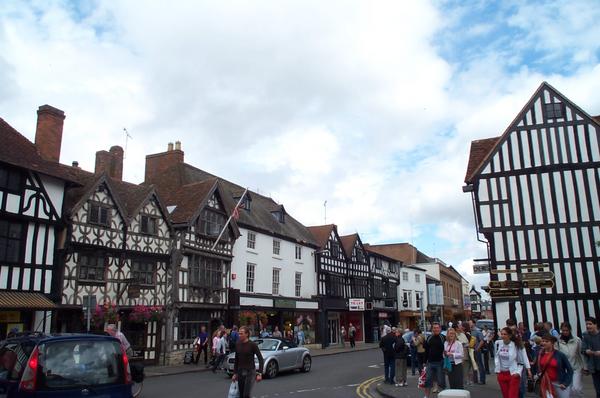
- Riverside gardens, historic inns and timber‑framed streets illustrating the town's long conservation focus and appeal to visitors.
Transport, economy and preservation
Stratford is accessible by road, rail and regional bus services and functions as a hub for visitors exploring the wider region. Its mixed economy is centred on tourism, cultural services, hospitality and local retail, with a year‑round programme of performances and events. Local planning balances the demands of conservation, visitor management and community needs, with policies that seek to protect historic buildings while supporting the town as a living place for residents as well as tourists.
Related articles
Author
AlegsaOnline.com Stratford-upon-Avon: historic market town and home of William Shakespeare Leandro Alegsa
URL: https://en.alegsaonline.com/art/94201