
Strathblane (village and parish in Stirling, Scotland)
Strathblane is a village and parish at the southern edge of the Stirling council area in central Scotland, known for its rural setting, proximity to the Campsie Fells and Blane Water, and local community life.
Overview
Strathblane (Scottish Gaelic: Strath Bhlàthain) is a village and parish situated at the southern fringe of the Stirling council area in central Scotland. The settlement occupies a sheltered valley through which the River Blane (Blane Water) flows. Historically rooted in agriculture, the village today combines rural character with commuter links to nearby towns and the Glasgow area.
Image gallery
5 Images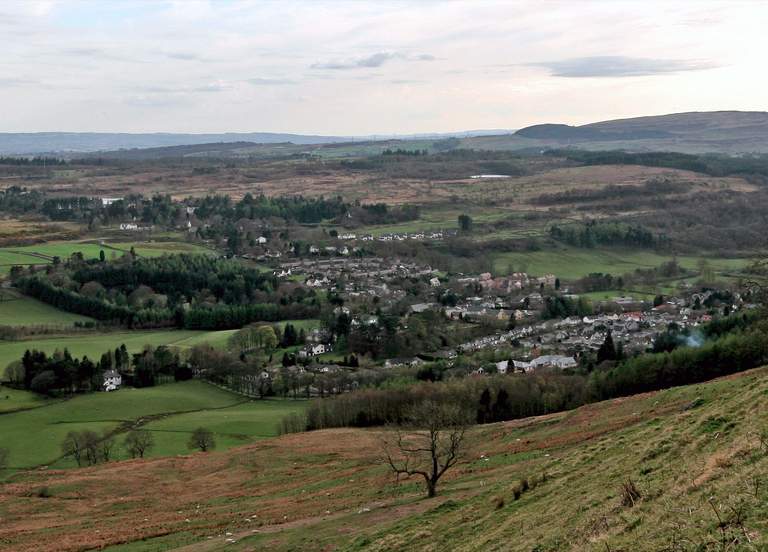


Geography and natural features
The parish lies at the base of the Campsie Fells and includes distinct local landmarks such as the conical hill of Dumgoyne and rolling farmland. Streams and small woodlands are typical, and several public footpaths and hill routes start close to the village, making it a base for walking and outdoor recreation. The river and valley give the place its name and shaped local settlement patterns.
History and development
Strathblane developed as a rural parish with scattered farms and small hamlets. Over time the village expanded modestly, especially in the 19th and 20th centuries, as transport and employment patterns changed. It was long associated with the historic county of Stirlingshire and later became administered within the modern Stirling council area. Traditional industries included agriculture and small-scale local crafts.
Community, economy and amenities
Today the community supports a range of village amenities: a parish church, primary school, local shops and community groups. Many residents commute to nearby towns for work while others are employed locally. The surrounding landscape supports tourism and leisure activities; nearby attractions and facilities include country walks, local events and, in the broader area, traditional industries such as whisky distilling at nearby sites.
Attractions and activities
- Walking routes in the Campsie Fells and around Dumgoyne.
- Riverside and woodland rambles along Blane Water.
- Local community events, fairs and seasonal activities.
- Access to regional cultural and natural sites in central Scotland.
Strathblane is often noted for its scenic valley setting, a strong sense of local identity and its role as a gateway between lowland towns and upland hill country. Visitors and residents alike value the balance of quiet rural life with reasonable access to urban services.
Related articles
Author
AlegsaOnline.com Strathblane (village and parish in Stirling, Scotland) Leandro Alegsa
URL: https://en.alegsaonline.com/art/94204