
Steuben County, Indiana: geography, history, communities, and recreation
Steuben County in northeastern Indiana centers on Angola and numerous lakes. It combines agriculture, tourism and outdoor recreation, with a 2010 population near 34,000 and a history dating to the 1830s.
Overview
Steuben County lies in the far northeastern corner of Indiana. The county seat is Angola, a small city that serves as the region’s cultural and administrative center. According to the 2010 census, the county had roughly 34,000 residents, and its economy blends farming, small manufacturing, and a sizable recreation and tourism sector built around lakes and parks.
Image gallery
3 Images

Geography and lakes
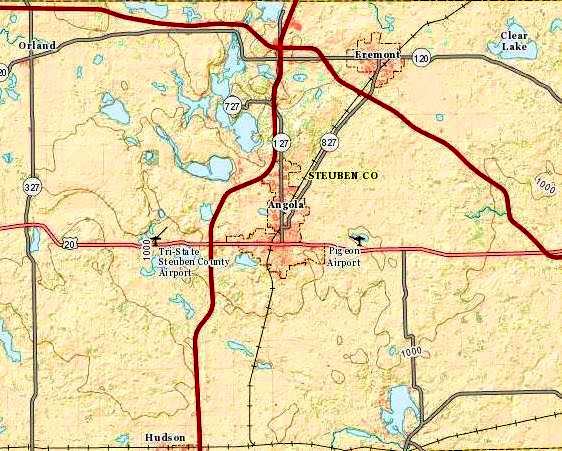
The county covers about 320 square miles and is notable for an unusually high density of natural lakes and wetlands for Indiana. These lakes—among the best known are Lake James and Crooked Lake—draw seasonal visitors for boating, fishing and lakeside cottages. The county’s location near the tri-state area gives it cross-border connections with Michigan and Ohio, while its landscape includes mixed farmland, forested tracts and protected parkland.
History and name
Steuben County was organized in the early 19th century and was named for Baron Friedrich Wilhelm von Steuben, the Prussian-born officer who served in the American Revolutionary War. Before Euro-American settlement the region was inhabited by Native American peoples; later the arrival of settlers established towns, roads and farming communities that persist today. Historical sites and small museums in the county document that layered local past.
Communities and government
The county contains a mix of small towns and rural townships. In addition to the county seat, communities such as Fremont, Orland and Ashley provide local services and businesses. Local government follows the typical Indiana county structure with an elected board and commissioners responsible for roads, public safety and zoning, and school districts that serve dispersed rural and urban neighborhoods.
Economy, recreation and culture
Agriculture remains important—corn, soybeans and livestock are common—while tourism related to boating, fishing, hiking and winter sports contributes significant seasonal income. Pokagon State Park is a well-known county attraction offering trails, campgrounds and a historic inn; community festivals, farmers’ markets and lake events shape seasonal culture. Outdoor recreation supports local lodging, dining and retail businesses.
Notable facts and distinctions
- High proportion of inland lakes in a compact area, making the county a regional recreation destination.
- Proximity to Michigan and Ohio influences commerce and travel patterns across state lines.
- Community life balances agricultural roots with tourism-driven services and conservation efforts.
For further information about local services, attractions and government resources, county and municipal pages provide up-to-date contacts and event calendars; many of those resources can be reached through regional links and official portals.
Related articles
Author
AlegsaOnline.com Steuben County, Indiana: geography, history, communities, and recreation Leandro Alegsa
URL: https://en.alegsaonline.com/art/93826
Sources
- quickfacts.census.gov : "Steuben County QuickFacts"
- naco.org : "Find a County"
- steubencony.org : "Steuben County"