
Stewart County, Georgia
Rural county in west-central Georgia established in 1830. Seat Lumpkin. Small population, agricultural landscape and pine forests, home to Providence Canyon State Park, with historic and natural attractions.
Stewart County is a rural county in the west-central portion of the U.S. state of Georgia. Created on December 23, 1830, the county seat is Lumpkin. According to the 2010 census, the population was 6,058. The county occupies a largely agricultural and forested landscape and is known for its small towns and open spaces.
Image gallery
5 Images


Geography and environment
Stewart County's terrain includes rolling hills, farmland and pine-dominated forests typical of this part of Georgia. The county's open areas support crop agriculture, pasture, and timber production. Natural highlights include scenic gullies and exposed clay that have created unusual landforms in places, attracting visitors and contributing to conservation interests.
History and origins
The county was formed in the early 19th century as part of Georgia's expansion into lands formerly held by Native American nations. It was named for General Daniel Stewart, a Revolutionary War veteran and prominent state figure. Over the 19th and early 20th centuries the county developed an economy based on plantation agriculture, then diversified into mixed farming and timber.
Communities and economy
The principal town and administrative center is Lumpkin, with smaller unincorporated communities and rural settlements scattered across the county. Economic activity is dominated by agriculture, forestry and small-scale local services. Like many rural counties in the region, Stewart County has a modest population and a local economy tied to natural resources and tourism.
Attractions and notable facts
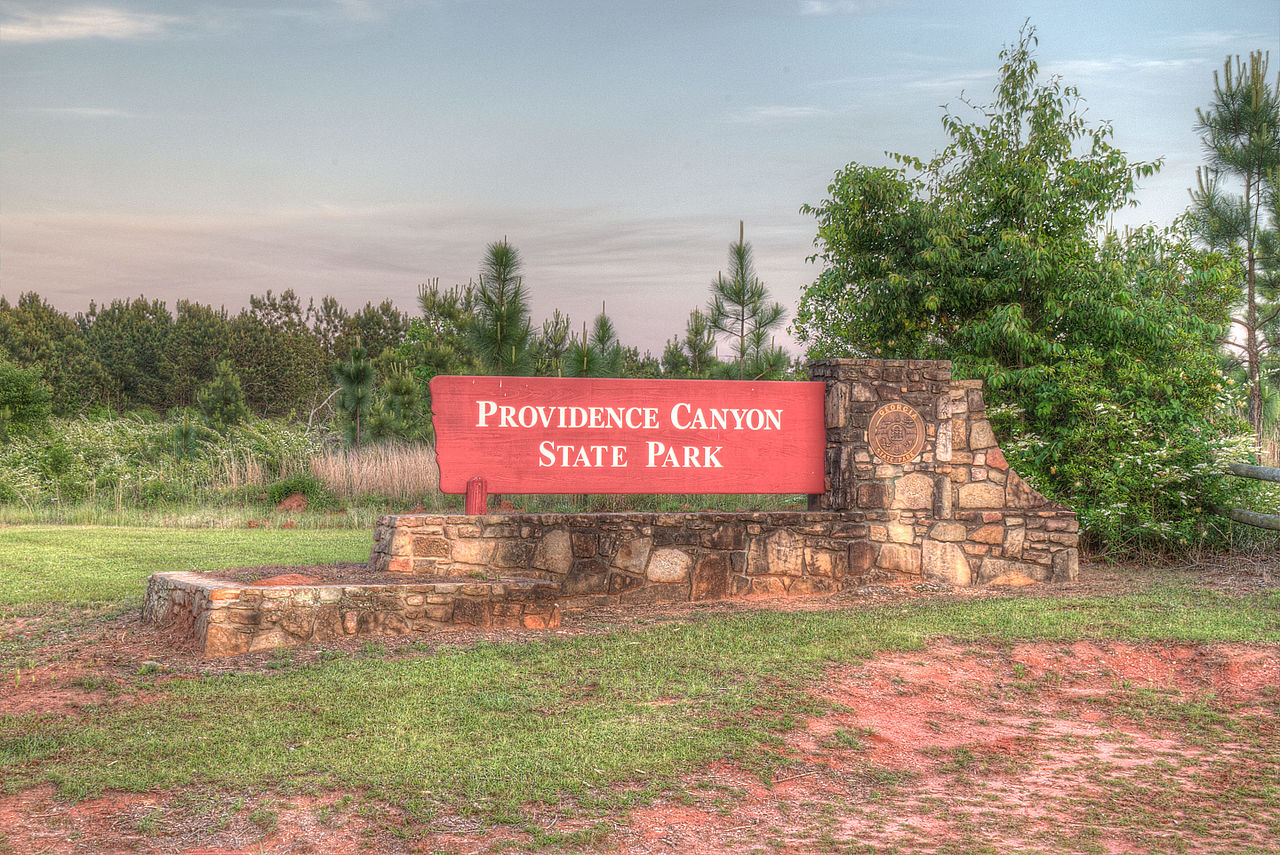
One of the county's best-known attractions is Providence Canyon State Park, often called "Georgia's Little Grand Canyon," which draws hikers, photographers and geology enthusiasts. The area also contains historic sites, rural churches and cemeteries that reflect its antebellum and postbellum history. Conservation groups and state agencies work to balance recreation, preservation and private land uses.
- Established: December 23, 1830
- County seat: Lumpkin
- Reference links: Stewart County overview, census data, state information
Stewart County remains a representative example of rural Georgia: geographically varied, historically rich and centered on land-based livelihoods, with protected natural features and small-town character that continue to shape its identity.
Related articles
Author
AlegsaOnline.com Stewart County, Georgia Leandro Alegsa
URL: https://en.alegsaonline.com/art/93895
Sources
- quickfacts.census.gov : "State & County QuickFacts"
- naco.org : "Find a County" · web.archive.org