
Star anise (Illicium verum) — spice, botany, uses and safety
Star anise (Illicium verum) is a star-shaped aromatic spice used in cooking, liqueurs, and traditional remedies. It is botanically distinct from anise and must be distinguished from the toxic Japanese star anise.
Overview
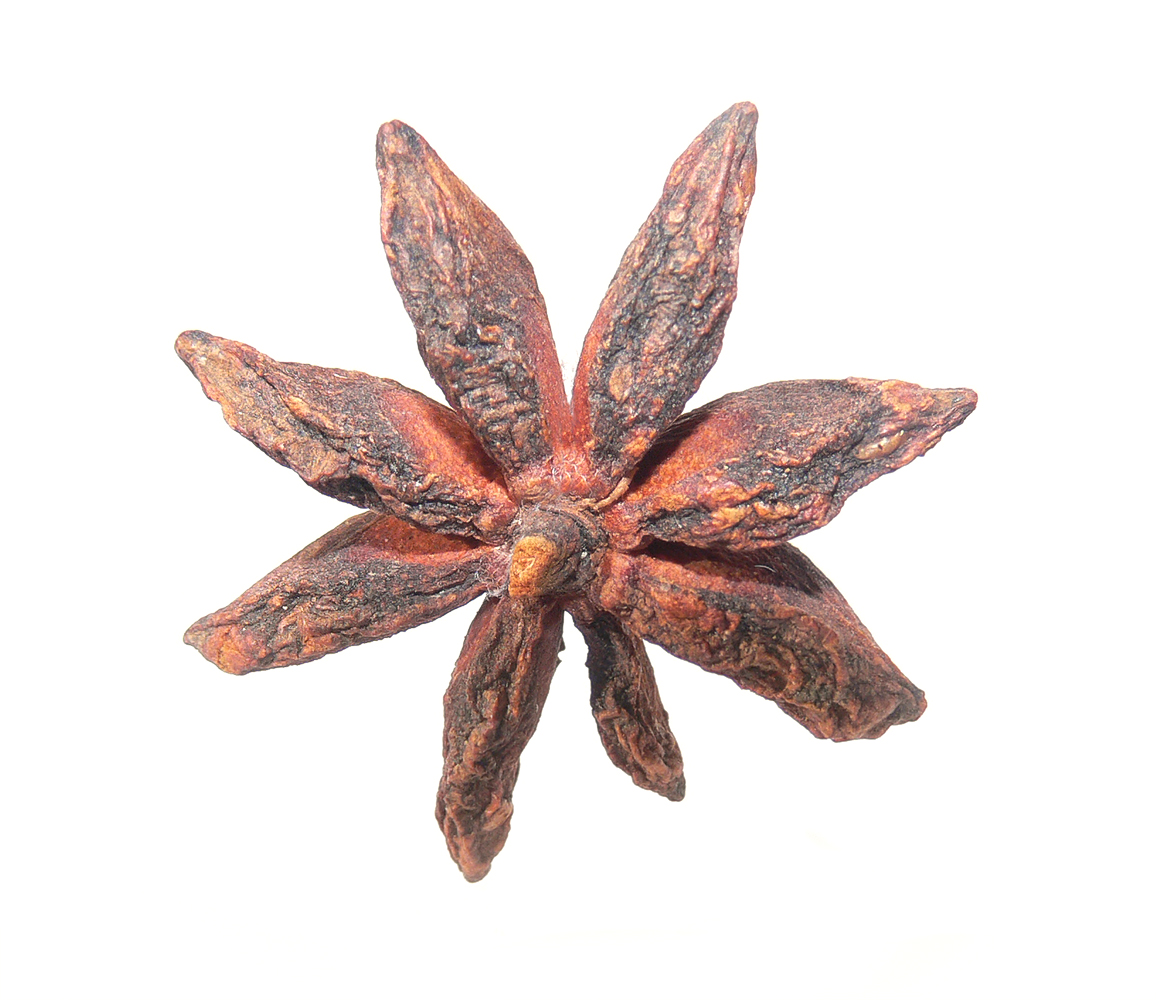
Star anise (Illicium verum) is the dried fruit of an evergreen tree native to parts of East and Southeast Asia. The spice is named for its distinctive star-shaped pods, each usually bearing eight carpels that contain glossy brown seeds. The taste is sweet, warm and licorice-like; the principal aroma compound is anethole, which it shares with true anise (Pimpinella anisum) but in a different botanical family.
Image gallery
5 Images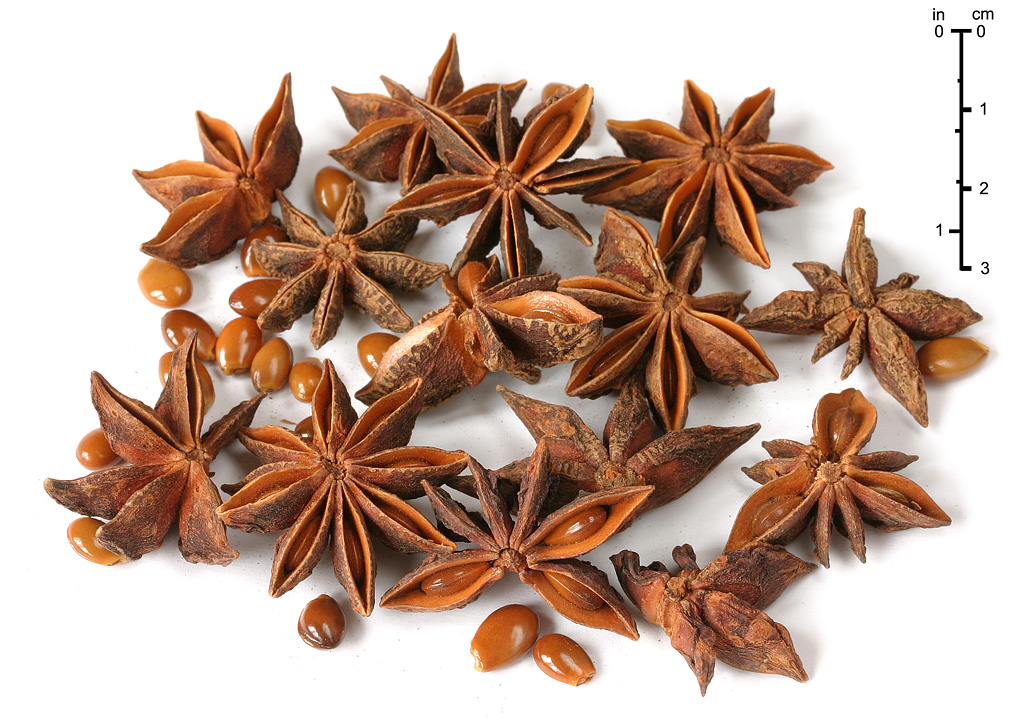


Botanical characteristics and harvesting
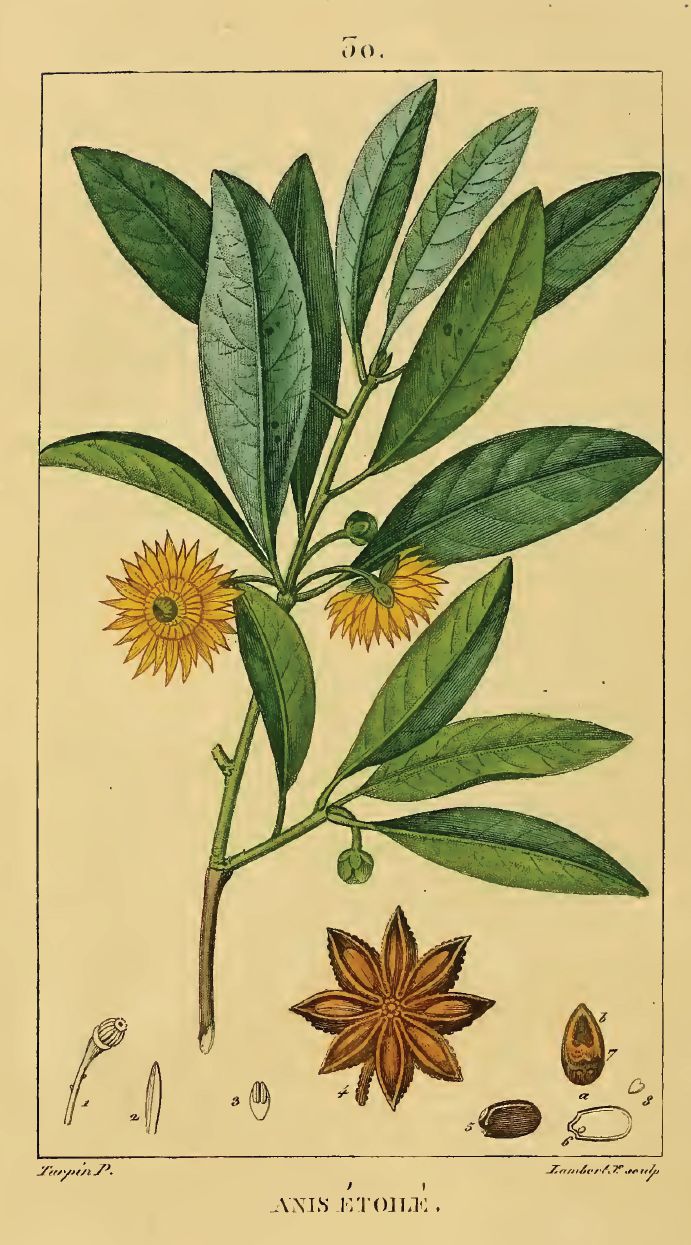
Star anise grows on a small to medium-sized tree with leathery leaves and yellowish flowers. The mature fruits are harvested whole and typically sun-dried until the pods open and release their fragrance. Important features include:
- Star-shaped pericarp composed of multiple carpels
- Each carpel enclosing a single aromatic seed
- Oily, fragrant rind used whole or ground
History and cultivation
Used for centuries in China and neighbouring regions, star anise has long been a component of traditional spice blends and herbal formulas. It is widely cultivated in China and Vietnam today for both culinary markets and extraction of essential oil. Historical trade brought its flavor into European and global cuisines, where it became valued for both sweet and savory preparations.
Uses and examples
Star anise is versatile:
- Culinary: used whole in soups, braises and slow-cooked dishes, and ground into spice mixes such as Chinese five-spice
- Beverages: flavouring for teas, mulled wines and some liqueurs
- Commercial: source of anethole for flavourings and fragrances
- Traditional medicine: used historically to relieve digestive complaints, though modern uses should follow medical advice
Safety and important distinctions
Although star anise is edible and generally safe in culinary quantities, it is important to distinguish it from other Illicium species. Japanese star anise (Illicium anisatum) and several related species are considered toxic and are not for consumption; they have been used as incense and for ritual purposes. For the consumer and manufacturer, accurate identification and sourcing are essential. When in doubt, consult reliable botanical resources or suppliers.
Further reading
For botanical profiles, culinary guidance and safety information, see: botanical profile of star anise, comparison with true anise, notes on non-edible Japanese star anise (uses as incense) and regional cultivation information (production and growing regions).
Related articles
Author
AlegsaOnline.com Star anise (Illicium verum) — spice, botany, uses and safety Leandro Alegsa
URL: https://en.alegsaonline.com/art/93421