
Statistical survey
An organized method for collecting information from a population or sample to estimate characteristics, test hypotheses, and support decision-making across science, government, and business.
Overview
A statistical survey is a structured process for gathering information about items or people in a defined population. Surveys convert aspects of reality—opinions, behaviors, measurements, or demographic facts—into data that can be summarized and analyzed. A survey may target an entire population or, more commonly, a sample selected to represent that population. For a concise primer on basic concepts and definitions, see basic survey terms.
Image gallery
1 Image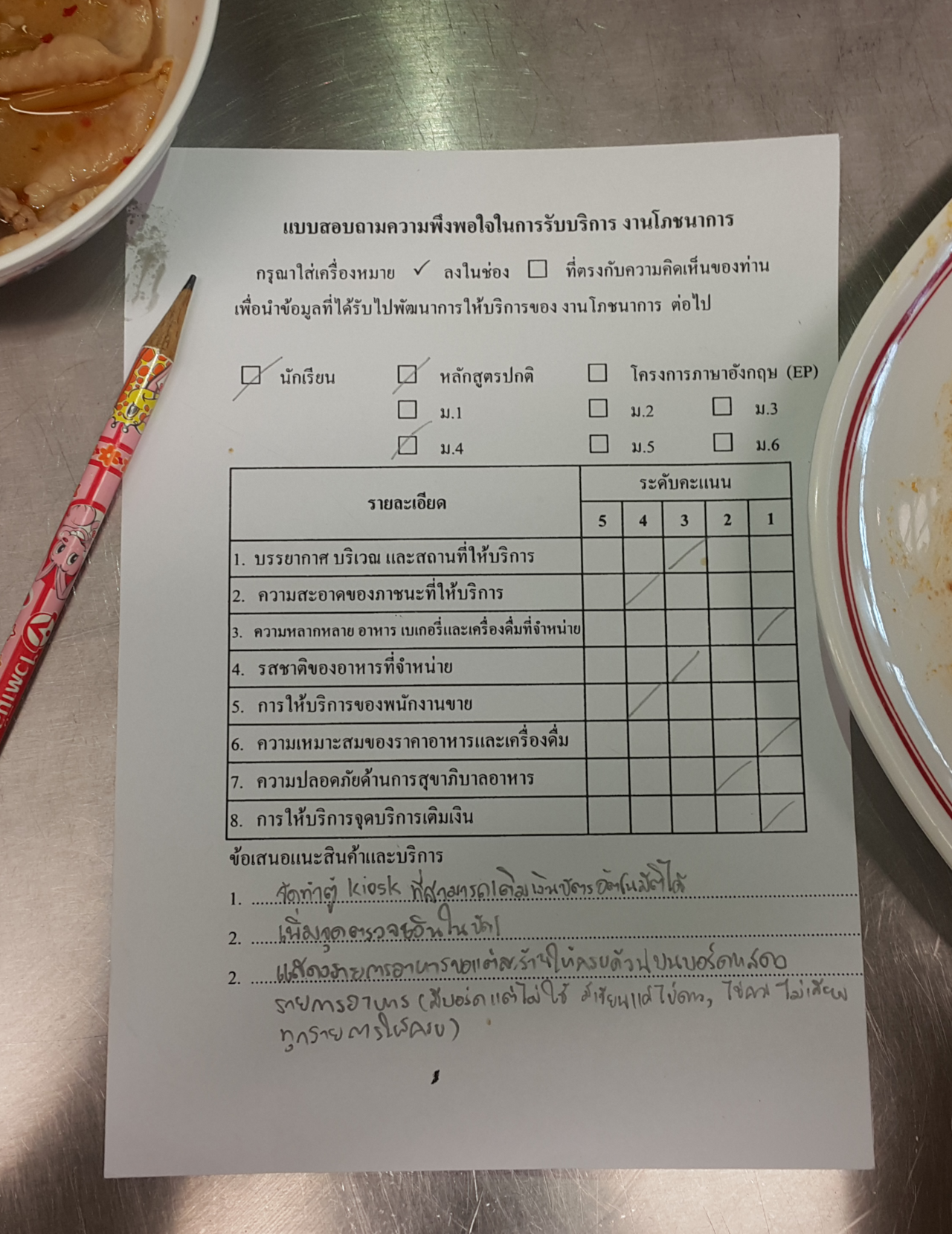
Types and measurement
Surveys differ by the kind of variable they collect. Numerical (quantitative) items yield numbers—such as counts, durations, or ratings on a scale—while categorical (qualitative) items sort responses into labels such as "favorite color" or "employment status." Design choices determine whether a question produces discrete counts, continuous measures, or ordered categories. For examples and guidance on question types, consult questionnaire examples.
Design and sampling
Good surveys begin with a clear objective, a well-defined population, and a sampling plan. Probability sampling (simple random, stratified, cluster) provides a basis for estimating sampling error and making valid inferences; nonprobability methods (convenience, quota) are easier and cheaper but limit generalizability. Survey designers must also decide on mode (face-to-face, telephone, mail, online), sample size, and weighting adjustments. Practical resources and standards are available from statistical agencies and professional organizations at institutional guidance and governmental methodology.
Questionnaire construction and measurement quality
Wording, order, and response options influence the accuracy of answers. Closed questions simplify coding; open questions allow richer content but require more processing. Validity (does the question measure what it intends?) and reliability (are responses consistent?) are core quality concerns. Pretesting, cognitive interviewing, and pilot studies can reveal problems before a full survey is fielded. Methodological toolkits and best practices can be found via health survey methods and social science resources.
Uses, examples, and importance
Surveys support a wide range of activities: public opinion polling, market research, public health surveillance, labor statistics, and academic studies. Examples include national censuses that enumerate populations, health questionnaires that track disease prevalence, and customer satisfaction surveys used by businesses. For commercial applications see marketing research and for academic examples see research study archives.
History, limitations, and ethical issues
Modern survey methods developed in the 19th and 20th centuries alongside official statistics and sampling theory. Despite their utility, surveys face limitations: nonresponse bias, measurement error, coverage gaps, and mode effects. Ethical practice requires informed consent, privacy protection, and transparent reporting of methods and error. For further discussion of common pitfalls and reporting standards, consult polling ethics and statistical reporting guidelines.
- Key components: clear objective, defined population, sampling plan, questionnaire, field operations, processing.
- Common modes: face-to-face, telephone, mail, web, mixed-mode.
- Quality checks: pretest, weighting, imputation, error analysis.
Questions and answers
Q: What are statistical surveys?
A: Statistical surveys are collections of information about items in a population.
Q: How can surveys be grouped?
A: Surveys can be grouped into numerical and categorical types.
Q: What is a numerical survey?
A: A numerical survey is to get numbers as replies. For example: How many minutes, on average, do you spend eating breakfast?
Q: What is a categorical survey?
A: An example of a categorical question is: What is your favorite color? The categories for this would be yellow, green, purple, etc... which are not numbers.
Q: Where are surveys commonly used?
A: Surveys of human populations and institutions are common in political polling and government, health, social science and marketing research.
Q: What can surveys concentrate on?
A: A survey may concentrate on opinions or factual information depending on its purpose.
Q: What is an example of a factual survey?
A: An example of a factual survey is: How many hours a week do you spend exercising? This question aims to gather factual information.
Related articles
Author
AlegsaOnline.com Statistical survey Leandro Alegsa
URL: https://en.alegsaonline.com/art/93560