
Spit (coastal landform)
A spit is a narrow ridge of sand or shingle attached to the shore at one end and extending into open water, formed by the deposition of sediment carried along the coast by waves and currents.
Overview
A spit is a linear accumulation of sand, gravel or shingle that projects from a shoreline into a bay, estuary or open sea. It remains attached to the mainland at one end and builds outward where the transport of sediment along the shore slows. Spits vary in size from short sandbanks to long, curving features hundreds of metres or more, and they are common on coasts where the configuration of the coastline and wave climate favour along-shore transport.
Image gallery
4 Images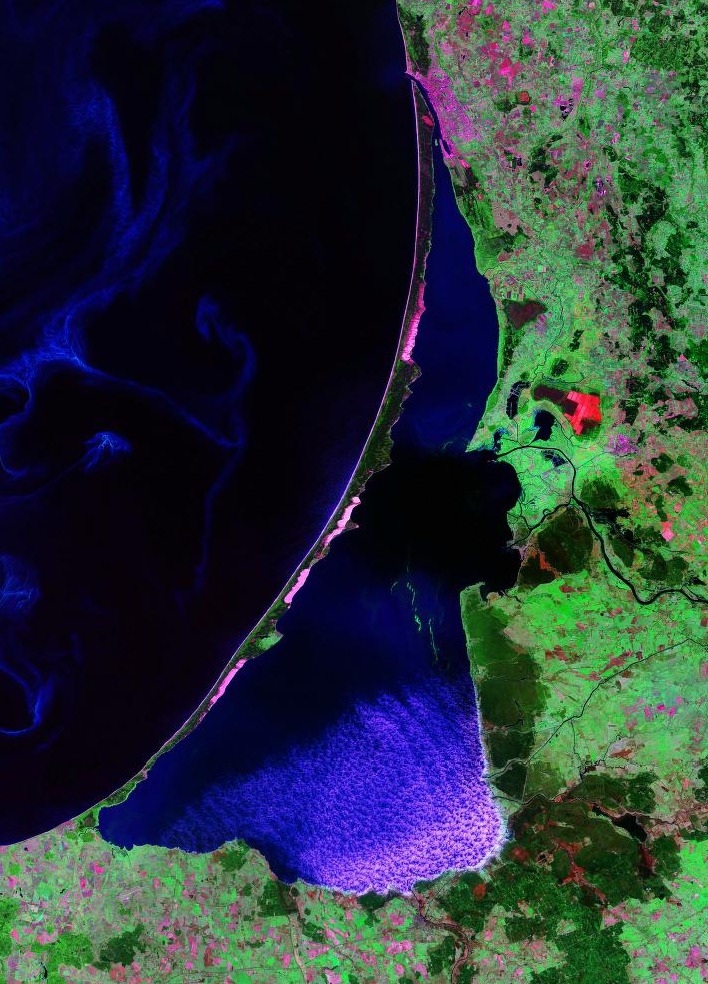


Formation and main processes
Spits form by the gradual deposition of material moved by waves approaching the shore at an angle. This oblique wave action generates a dominant direction of sediment movement known as longshore drift. Sand and pebbles are carried along the beach and deposited where energy falls — for example at the mouth of an estuary or where the shoreline changes direction. The supply of material commonly originates from the adjacent beach and nearshore zone.
Shapes and variations
As a spit grows, its tip may curve landward if wind or wave directions change, producing a hooked or recurved end. Spits can join islands to form a tombolo, or extend across a bay to create a barrier that shelters a lagoon behind it. They are distinct from barrier islands because they remain attached to the mainland at one end. Their form is dynamic: erosion, storms, tides and changes in sediment supply continually reshape them.
Ecology, uses and management
Spits often support specialized coastal vegetation, salt marshes and bird colonies in the sheltered waters behind them, making them important for biodiversity. They also act as natural buffers against waves and storm surge. Human activities — such as coastal development, dredging and construction of groynes — can disrupt sediment supply and change spit behaviour. Coastal managers may choose to protect, reinforce, or allow natural change depending on conservation and land-use goals.
Notable examples and significance
Well-known examples illustrate spit processes and management challenges; one such example is Spurn Head, which demonstrates rapid coastal change and habitat value. Spits are significant in coastal geomorphology because they record prevailing wave directions and sediment dynamics, and because they influence navigation, habitat distribution and shoreline stability.
Distinctions
- Spit: attached to the mainland at one end and projecting into the water.
- Bar: a ridge of sediment that may close off a bay, sometimes forming a lagoon.
- Tombolo: a spit or bar that connects the mainland to an island.
- Barrier island: detached from the mainland and separated by a lagoon or sound.
Related articles
Author
AlegsaOnline.com Spit (coastal landform) Leandro Alegsa
URL: https://en.alegsaonline.com/art/92730