
Space Shuttle Solid Rocket Boosters
Large, reusable solid-fuel rockets that served as the first-stage boosters for the Space Shuttle and form the basis of boosters used on the Space Launch System.
Overview
The Space Shuttle Solid Rocket Boosters (SRBs) were the two large, reusable solid-fuel motors that provided the primary thrust during the first stage of a Space Shuttle launch. Designed to lift the combined stack off the pad and through the thickest part of the atmosphere, they were among the most powerful solid rocket motors ever flown. They supported the Space Shuttle program and later influenced the design of boosters for the Space Launch System.
Image gallery
10 Images




Design and components
Each SRB was built from multiple joined segments with a steel case and contained a solid composite propellant. The basic parts included:
- Segmented casings joined by field joints and sealed with O-rings;
- An aft skirt containing attachment hardware and the main nozzle;
- An igniter system and internal insulation layers to protect the case;
- Recovery systems, including parachutes, deployed after separation.
Performance and recovery
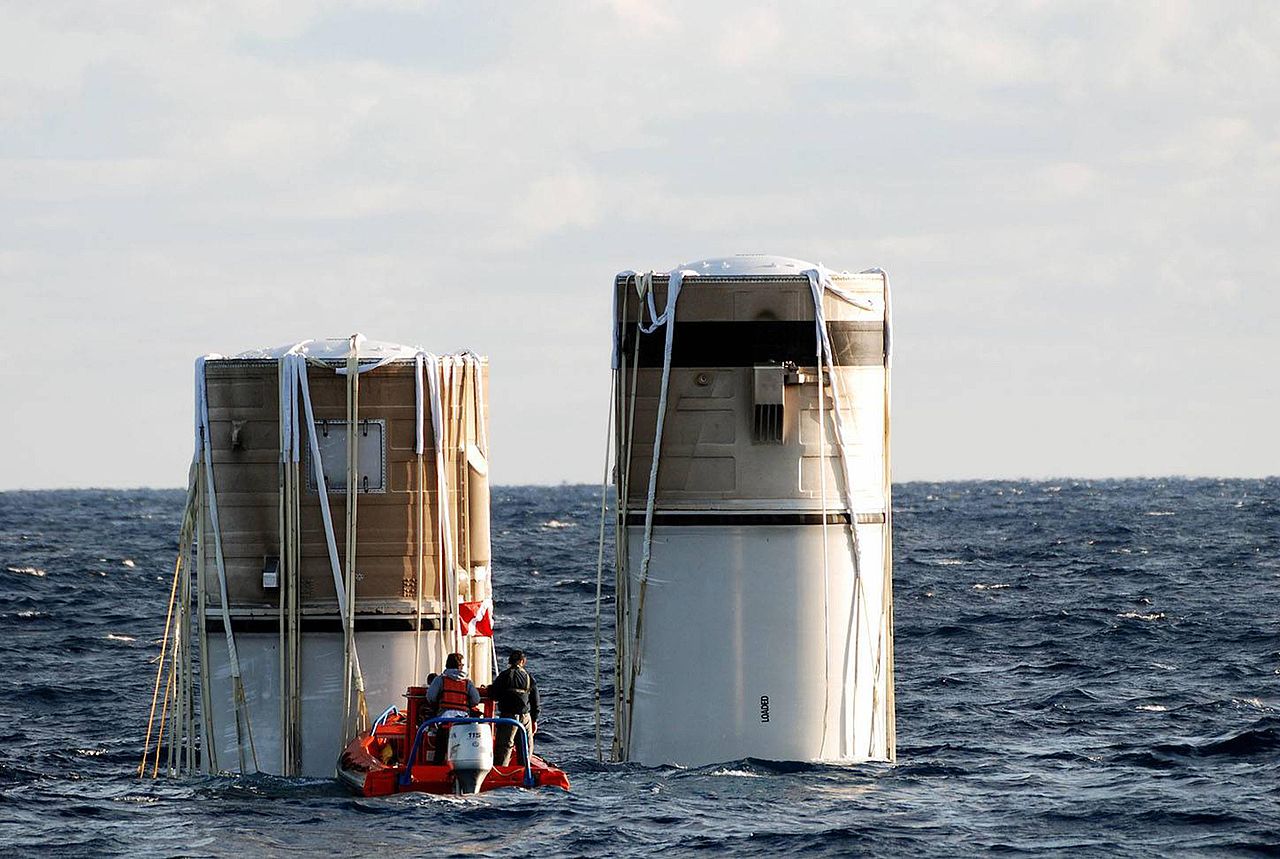
At liftoff the SRBs supplied the majority of thrust needed to escape the pad environment, burning for roughly two minutes before separation. They produced thrust on the order of millions of newtons—enough to make them some of the most powerful solid motors ever used in human spaceflight. After burnout they were jettisoned, descended under parachutes, and splashed down in the Atlantic Ocean where they were recovered, towed ashore, and refurbished for reuse for subsequent flights.
History and safety
The SRBs were developed by contractors that evolved through names such as Thiokol and later companies. Their segmented field-joint design and O-ring seals became central to investigations after the 1986 Challenger accident, which was traced to a failure of a joint seal in cold conditions. That tragedy led to redesigns, new procedures, and increased scrutiny of solid motor joints. The SRBs nonetheless flew many successful missions before the Shuttle's retirement in 2011.
Uses and legacy
Beyond their primary role on the Shuttle, SRB technology informed later heavy-lift booster designs. The Space Launch System adopted upgraded, five-segment variants derived from the Shuttle SRB architecture to provide high initial thrust for deep-space missions. The Shuttle SRBs remain notable for their scale, reuse cycle, and the lessons they contributed to rocket safety and engineering.
Notable distinctions
SRBs are distinguished from liquid-fuel first stages by their high thrust-to-weight at liftoff, simplicity of solid propellant storage, and segmented construction enabling transport and assembly. Their recovery and refurbishment made them unusual among very large solid motors, and their operational history continues to influence modern booster design and safety practices.
First-stage rockets are a broader category that includes the SRBs as a specialized, high-thrust example.
Related articles
Author
AlegsaOnline.com Space Shuttle Solid Rocket Boosters Leandro Alegsa
URL: https://en.alegsaonline.com/art/92421