
Space Invaders
Space Invaders is a seminal arcade shooter by Taito, designed by Toshihiro Nishikado. It helped define coin-operated games, introduced tense pacing and high-score culture, and influenced video game design and popular culture.
Overview
Space Invaders is a landmark video game originally developed by the Japanese company Taito Corporation and designed by Toshihiro Nishikado. First released as a coin-operated arcade cabinet, the game popularized the fixed shooter genre: players control a horizontally moving cannon and defend the Earth from descending waves of alien invaders. Its simple premise and escalating tension made it one of the best-known early electronic games and a key title in the growth of arcade culture.
Image gallery
10 Images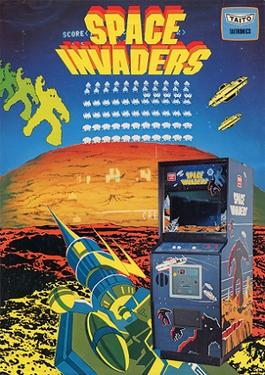


Gameplay and characteristics
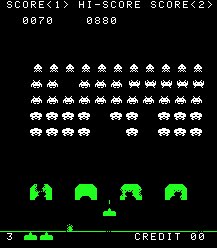
The core gameplay is straightforward but strategic. Rows of alien formations advance toward the player while periodically firing projectiles. Destroying all aliens on the screen advances the player to the next, faster wave. Several design elements define the experience:
- Player controls a single horizontally mobile shooter protected by destructible shields.
- Aliens move in formation, changing direction and descending when they reach the screen edge.
- Pacing increases as fewer enemies remain, creating a rising challenge rather than fixed difficulty.
- Emphasis on achieving a high score and prolonging survival rather than completing a narrative.
Development and influences
Toshihiro Nishikado led the project and drew inspiration from science fiction media such as Star Wars and older stories about invasions. To build the game he had to design both the software and the custom hardware inside the arcade unit, a common requirement for late-1970s game development. The result combined simple graphics, repetitive but gripping enemy patterns, and a tight control scheme that felt immediate and rewarding.
Versions, ports and platforms
Though it began as an arcade title, Space Invaders was ported to many home systems and formats, helping spread its popularity beyond arcades. Taito produced multiple official versions and licensed ports for a wide array of platforms. Typical destinations included early home computers and later dedicated games consoles. Different ports preserved the core mechanics while adapting graphics and sound to each system's capabilities.
Legacy and cultural impact
Space Invaders had a lasting effect on game design and popular culture. It helped establish the arcade business model and the social practice of chasing high scores. The game's imagery—rows of blocky aliens and the solitary cannon—became iconic and is frequently referenced in other media. It also demonstrated how simple mechanics could produce compelling, repeatable play.
Notable facts and distinctions
Several aspects make the title historically notable: it introduced a sense of rising urgency as the enemy count dwindles; it popularized scorekeeping as a primary motivation for repeated play; and it showed that a video game could achieve mass-market cultural presence. The antagonists are commonly described as aliens, and the game’s theme of defending the planet has been summed up in popular descriptions about protecting Earth. As an early exemplar of arcade success, its story is often cited alongside other milestones in the medium.
For further reading about the game's place in industry history and technical details about specific releases and ports, see dedicated retrospectives and archived interviews with the developer and publisher. Many modern collections and remakes preserve the original rules while introducing variations that pay homage to the arcade classic.
Relevant references and resources: the original manufacturer Taito, historical accounts of arcade culture and video game preservation projects. Collector and museum sites document the game's hardware lineage and the sequence of official releases for various platforms, from cabinets to console and computer ports.
Despite its age, the game's basic contest—shooting advancing invaders before they land—remains an easily understood and enduring game loop that continues to influence developers and entertain players in re-releases and homages across media.
To explore examples of ports and later releases, search sources that list iterations and licensed versions; these often note how the arcade original was adapted to different controllers, displays, and sound systems for home and public play.
Additional links: Aliens, influences, coin-op history, console ports, home computer versions.
Related articles
Author
AlegsaOnline.com Space Invaders Leandro Alegsa
URL: https://en.alegsaonline.com/art/92400