
Spider-Man: Origins, Abilities, Publication History and Cultural Impact
Overview of Spider-Man, the Marvel Comics character: origins, distinctive powers, major storylines and adaptations across comics, film and other media.
Spider-Man is a fictional superhero created for American comic books and long associated with Marvel Comics. First appearing in the early 1960s, the character introduced a new kind of costumed hero: a teenage protagonist whose personal problems and everyday life were central to the storytelling. The original Peter Parker is an orphan raised by his aunt and uncle, who gains a combination of spider-derived abilities after a chance accident and learns a moral lesson that shapes his career as a masked crimefighter. Over decades Spider-Man has become one of the best-known and most commercially successful characters in popular culture.
Image gallery
10 Images


Character concept and defining traits
At the core of the Spider-Man concept is a blend of adolescent coming-of-age drama and superhero action. The name Spider-Man refers both to the hero's orientation—pursuing criminals from the vantage of walls and rooftops like a crawling arachnid—and to the source of his abilities. The most frequently depicted Peter Parker is a scientist and photographer whose intelligence, inventiveness, and sense of responsibility are as important as his physical powers. The character is famous for a moral credo that emphasizes accountability, often paraphrased as "with great power comes great responsibility," an idea closely associated with the death of his Uncle Ben.
Abilities and gear
Spider-Man's powers vary somewhat between versions, but common attributes include:
- Enhanced strength and agility that let him lift many times his own weight and perform acrobatic feats.
- Ability to cling to surfaces, allowing vertical movement and inverted stances on walls.
- Spider-sense, a precognitive-like awareness that warns him of imminent danger and helps him react quickly.
- Web-based tactics: in the original and many modern tellings, he uses mechanical web-shooters of his own design to fire synthetic webbing; some adaptations substitute organic webbing produced biologically.
- Scientific aptitude, often shown through inventions, forensic skill, and problem solving under pressure.
Those elements together create a distinctive combat style that mixes mobility, improvisation, and nonlethal restraint. The costume design—mask, emblem, and web pattern—helps preserve his secret identity and contributes to his iconic visual profile.
Publication history and creative origin
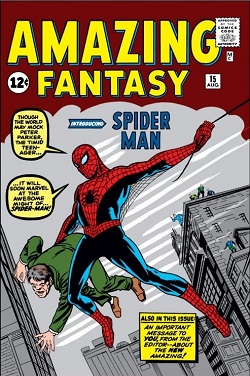
Spider-Man was created by writer-editor Stan Lee and artist Steve Ditko and made his debut in an anthology comic in 1962. The character was an early example of Marvel's approach to superheroes: placing extraordinary people in situations grounded in everyday life. Comic book series such as The Amazing Spider-Man established recurring supporting characters, long-running story arcs, and a gallery of distinctive antagonists. Over the years the title has been relaunched and supplemented by many spin-offs and alternate-universe reinterpretations, reflecting changing social attitudes and storytelling styles.
Supporting cast, villains and notable storylines
Spider-Man's world includes family, friends, and rivals who shape his development: his Aunt May and Uncle Ben are central to his early life; love interests like Gwen Stacy and Mary Jane Watson figure prominently in key arcs; and figures such as J. Jonah Jameson provide public pressure and narrative friction. The rogues' gallery features scientifically themed or psychologically complex adversaries who often mirror aspects of the hero: the Green Goblin, Doctor Octopus, the Vulture, Sandman, Venom, and many others. Some storylines explore marriage, loss, identity crises, and moral compromise, making Spider-Man a vehicle for both action and character study.
Adaptations, actors and cultural impact
Spider-Man has been adapted into animated television, live-action feature films, stage productions, video games, and merchandise. The character has been portrayed by multiple actors in major motion pictures, contributing to several separate film series and crossover events. Different film and television adaptations emphasize varying aspects—youthful humor, scientific curiosity, tragic consequences, or blockbuster spectacle—but the central figure and his thematic conflicts remain consistent. The character is widely regarded as a flagship property for Marvel and a cultural touchstone for successive generations of readers and viewers.
Further resources and references
For readers seeking background, creators, publication records, and adaptations, the following anchor links point to representative sources and related topics:
- Marvel Comics official site and character page
- Overview of the Marvel Universe and key titles
- Information on writer Stan Lee
- Information on artist Steve Ditko
- Biographical notes on Peter Parker
- Aunt May: supporting character profile
- Uncle Ben and his role in the origin
- Context: teenage characters in early comics
- Comparison with other teen sidekicks
- Captain America and the superhero archetype
- Iron Man and corporate-era heroes
- Team appearances such as the Fantastic Four
- Tobey Maguire: film portrayal
- Andrew Garfield: film portrayal
- Notable early film: Spider-Man 2
- Notable early film: Spider-Man 3
- The Amazing Spider-Man film series
Because Spider-Man exists in a long-running, collaborative medium, specific details and continuity vary by era and creative team. Fans and scholars often distinguish between the original Peter Parker continuity and later reinterpretations, alternate identities, or characters who have taken up the Spider-Man mantle. This flexibility has allowed the character to remain relevant while inviting reinterpretation across media and cultures.
Questions and answers
Q: Who created Spider-Man?
A: The character of Spider-Man was created by the writer Stan Lee and artist Steve Ditko.
Q: When did Spider-Man first appear?
A: Spider-Man first appeared in Amazing Fantasy #15 in August 1962.
Q: What are some of Spider-Man's powers?
A: Some of the powers that Spider-Man has include super strength, agility, the ability to cling to almost every surface, the ability to shoot spider webs using a device he invented called "web shooters," and reacting quickly to danger with his "spider sense."
Q: What is the quote associated with Uncle Ben?
A: The quote associated with Uncle Ben is "with great power comes great responsibility."
Q: How has Peter Parker developed over time?
A: Peter Parker has developed from a shy high school student to a troubled but outgoing college student married to a high school teacher. He is also often seen as being a single freelance photographer.
Q: What nicknames does Spider-Man have?
A: Some nicknames for Spider-man include "Spidey," "web slinger," "wall crawler," or "web head." Villains sometimes refer to him as “arachnid” and he calls himself “Your Friendly Neighborhood Spider Man.”
Q: How many live action movies have been made about Spider Man ?
A: Live action movies about Spider Man includeSpider - Man (2002),Spider - Man 2 ,Spider - Man 3 ,The AmazingSpider - Man ,The AmazingSpider - Man 2 ,Spider - Man : Homecoming ,Spider - Man : Far from Home,andSpider - man : No Way Home .
Related articles
Author
AlegsaOnline.com Spider-Man: Origins, Abilities, Publication History and Cultural Impact Leandro Alegsa
URL: https://en.alegsaonline.com/art/92661
Sources
- commons.wikimedia.org : Spider-Man and his cast