
South African rand (ZAR): currency, history, and banknotes
The South African rand (R, ISO code ZAR) is South Africa’s decimal currency. This article explains its units, history, denominations, notable banknote designs and its role in the regional and national economy.
Overview
The South African rand is the official currency of the Republic of South Africa. Its symbol is a capital R placed before the amount (for example, R100). The internationally recognised currency code is ZAR. One rand is equal to 100 cents; the subdivision is commonly referred to as the cent. The word "rand" is used as both singular and plural in English and Afrikaans.
Image gallery
7 Images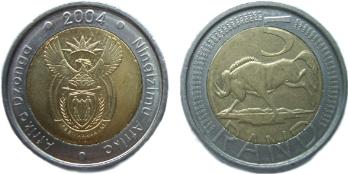


Name and origin
The name derives from the Witwatersrand — commonly shortened to the Rand — a ridge near Johannesburg where extensive gold deposits were discovered in the late 19th century. Those mines and the surrounding metal industries shaped the early South African economy and influenced the currency’s name. The association with mineral wealth is often noted alongside the country’s monetary history and symbols of national identity.
Denominations, design and legal tender
Modern rand money exists in both coins and banknotes. Coins are issued in both cent and rand units, while banknotes cover higher values in commonly used denominations. The reserve bank and mint produce designs that combine security features with national imagery and wildlife motifs. The South African Reserve Bank, which issues and regulates the currency, is an important institution in determining legal tender and monetary policy; see the institution referred to as the central bank in many official summaries.
Commemorative and recent banknote series
Commemorative issues have been released from time to time to mark major national events. In 2018 a special series was issued to mark what would have been Nelson Mandela’s centennial year. That series retained the familiar obverse portrait of Nelson Mandela but replaced the standard reverse animal imagery with scenes linked to his life and legacy. The set includes notes in the common denominations of 10, 20, 50, 100 and 200 rand, each carrying a specific Mandela-related theme.
- 10 rand: landscape and birthplace motifs.
- 20 rand: home and community scenes.
- 50 rand: locations connected to his political struggle.
- 100 rand: references to imprisonment and perseverance.
- 200 rand: symbols of the democratic inauguration and nation-building.
History and development
The rand was introduced in the early 1960s as South Africa transitioned to a decimal currency system and became a republic. It replaced the South African pound and established a simpler base-10 system for everyday transactions. Over subsequent decades the currency’s banknotes and coins have been updated to improve security and to reflect evolving national symbols and historical milestones.
Economic role and regional use
The rand plays a central role in South Africa’s economy and is closely watched by investors and traders because of its sensitivity to commodity prices, domestic political developments and changes in global capital flows. In addition to domestic circulation, the rand is commonly accepted and sometimes pegged in neighbouring or regional economies with close trade links to South Africa. Its value and stability are therefore important both nationally and across parts of southern Africa.
Notable facts and distinctions
Aside from its origin and common symbol, the rand is notable for the way its banknotes combine portraits, historical themes and anti-counterfeiting technology. The currency’s plural form remains "rand," and amounts are normally written with the R symbol preceding the numerals. For further information about monetary policy, collectors’ issues and technical specifications, consult resources from the central bank and numismatic references. Historical and cultural links to the country’s mining past and to national figures such as Nelson Mandela are recurring motifs in the rand’s visual identity and public narratives about the currency.
For authoritative references and official releases, see central bank communications and archival material pertaining to the rand’s issuance and special series. For a general summary and further reading, search for articles about the currency code ZAR, the central bank at South African Reserve Bank, the coin subdivision cent, the Witwatersrand near Johannesburg, and the historical gold mines that inspired the name.
Related articles
Author
AlegsaOnline.com South African rand (ZAR): currency, history, and banknotes Leandro Alegsa
URL: https://en.alegsaonline.com/art/92106