
Sokoto — city and historical capital in northwestern Nigeria
Sokoto is a major city in northwestern Nigeria, historically the centre of the Sokoto Caliphate. It remains an important religious, administrative and cultural hub in a predominantly Muslim region.
Overview
Sokoto is a city in the northwest of Nigeria, located near the confluence of the Sokoto and Rima rivers. It serves as an administrative and cultural centre for the surrounding region and is widely known for its religious history and continuing role as a seat of Islamic leadership.
Image gallery
8 Images



Geography and environment
The city lies in the Sudano‑Sahelian zone, characterized by a semi‑arid climate with a short rainy season and long dry periods. Two waterways, the Sokoto River and the Rima River, shape local agriculture and settlement patterns. Soils and seasonal floods support millet, sorghum and other subsistence crops in surrounding areas.
History
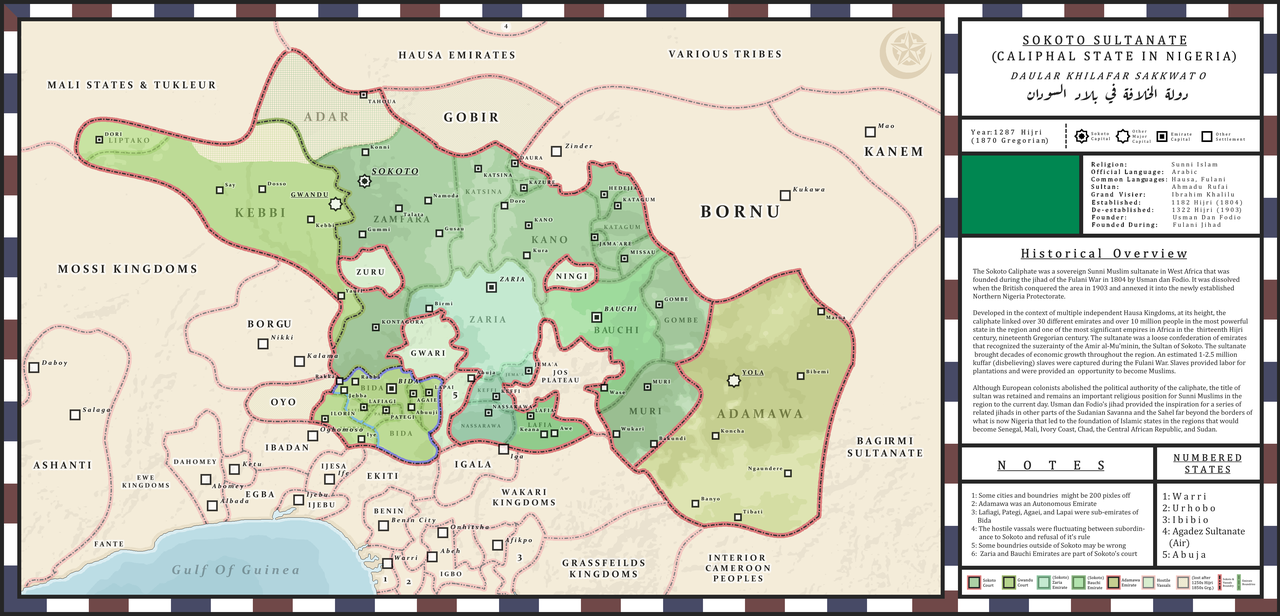
Sokoto’s importance predates the 19th century; it was located within the cultural sphere of the Hausa city‑states and the kingdom of Gobir. In the early 19th century the scholar and reformer Usman dan Fodio led a religious and political movement that established the Sokoto Caliphate, an Islamic state that united many Hausa and Fulani territories under a central caliphate. From the late 19th century into the 20th century Sokoto came under British control and was incorporated as a northern administrative area and later a province within the colonial structure of the British colony of Nigeria.
Culture, religion and institutions
Today Sokoto remains predominantly Muslim and is home to important religious institutions. The Sultan of Sokoto is regarded as a leading spiritual figure for many Nigerian Muslims. The city has a long tradition of Islamic scholarship, Qur'anic schools and Sufi orders, and modern institutions such as universities and research centres continue that scholarly legacy.
Economy and urban life
The local economy is based on agriculture, livestock, craft production and trade. Markets sell textiles, leatherwork and agricultural products. Urban growth and public administration generate services and small industry, while traditional crafts and religious tourism contribute to the city's character.
Notable facts and distinctions
- Religious significance: Sokoto is a major centre of Islamic learning and leadership in northern Nigeria.
- Historical role: Capital of the Sokoto Caliphate that shaped regional politics in the 19th century.
- Administrative center: It functions as both a city and the capital of the wider Sokoto region and state.
- Heritage sites: The Sultan’s palace, central mosques and historic quarters reflect its long history.
For further reading on Sokoto’s geography, history and institutions, consult regional histories and contemporary studies of northern Nigerian society and Islam.
Related articles
Author
AlegsaOnline.com Sokoto — city and historical capital in northwestern Nigeria Leandro Alegsa
URL: https://en.alegsaonline.com/art/91617