
Somerset Island — large uninhabited island in Nunavut's Arctic Archipelago
Somerset Island is a large, uninhabited island in the Canadian Arctic Archipelago, separated from the Boothia Peninsula by Bellot Strait. It features tundra landscapes, Arctic wildlife, and a history of exploration.
Overview
Somerset Island is an uninhabited island in the high Arctic, forming part of the Canadian Arctic Archipelago. It lies off the mainland of northern Canada within the Qikiqtaaluk Region of Nunavut. With an area of roughly 24,786 km² (about 9,570 square miles), it ranks among the world's larger islands and is one of Canada's biggest by area (island rankings).
Image gallery
4 Images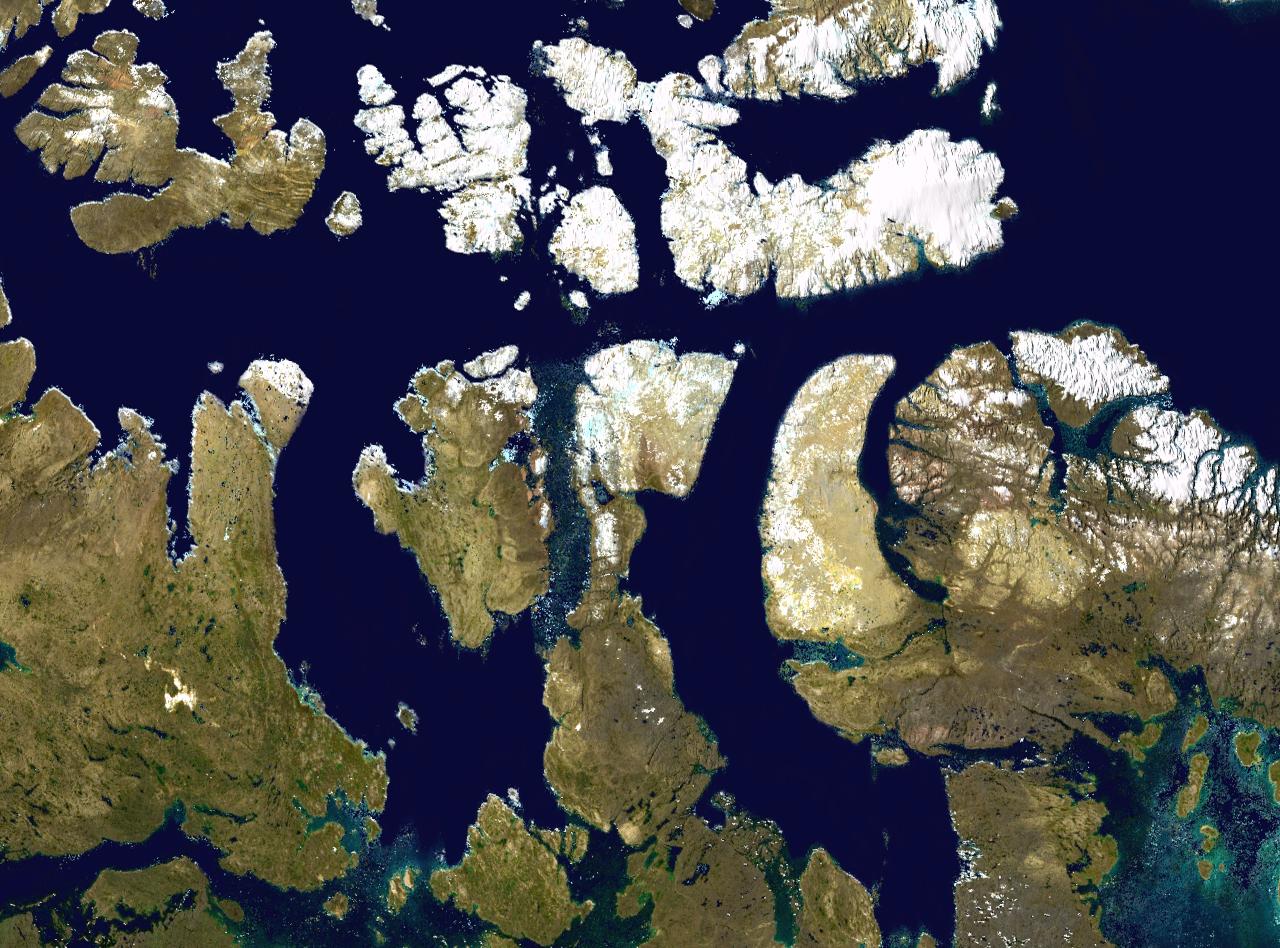


Geography and climate
The island is separated from the Boothia Peninsula by the narrow Bellot Strait, a channel only a few kilometres wide that commonly carries heavy ice and strong tidal currents. Somerset Island's landscape is typical of the Arctic tundra: low relief, permafrost, numerous shallow lakes and wetlands, and a coastline indented by bays and inlets. The climate is polar, with long, cold winters, persistent sea ice for much of the year and a short, cool summer.
History and human presence
Somerset Island was charted during the era of European Arctic exploration in the 19th century and its waters and straits were important navigational features for expeditions searching for Northwest Passage routes. Indigenous Inuit people historically visited islands in the region for hunting and seasonal travel; archaeological traces on Arctic islands often attest to episodic use rather than permanent settlements. Today there is no year-round population on Somerset Island.
Flora, fauna and environment
The island supports the sparse vegetation typical of the high Arctic — mosses, lichens and low shrubs — and provides habitat for a range of polar-adapted animals. Wildlife commonly associated with the area includes:
- marine mammals such as seals and walrus
- polar bears that travel sea ice and shorelines
- various seabirds and waterfowl that nest on coastal cliffs and tundra
These populations are influenced by seasonal ice conditions and long-term climatic shifts that affect sea-ice extent and prey availability.
Access, uses and significance
There are no permanent communities on Somerset Island; access is by air or by sea when ice conditions permit. The island is visited occasionally for scientific research, wildlife monitoring and by Inuit for traditional hunting. Its location near Bellot Strait and other Arctic channels makes it geographically notable for understanding regional oceanography, ice movement and historical navigation routes.
Notable facts
Somerset Island's combination of large area, remote setting and unbroken tundra makes it characteristic of Canada’s high Arctic islands. The Bellot Strait that separates it from Boothia Peninsula is a prominent, narrow waterway that has been significant for explorers and remains a challenging stretch of Arctic water.
Related articles
Author
AlegsaOnline.com Somerset Island — large uninhabited island in Nunavut's Arctic Archipelago Leandro Alegsa
URL: https://en.alegsaonline.com/art/91759