
Software release life cycle
Overview of the stages, models, and practices that guide a software product from initial development through public release, maintenance, and end-of-life.
Overview
The software release life cycle describes the sequence of states a program passes through from initial development to public distribution and eventual retirement. It covers planning, testing, packaging, distribution and post-release maintenance. The concept is used both as a formal project management framework and as a shorthand for the state of a particular build or version.
Image gallery
3 Images

Common stages
Most release lifecycles use a small set of recognizable phases. Exact names vary between organizations, but the typical progression includes:
- Pre-alpha: early development with incomplete features and tests.
- Alpha: internal testing begins; features are being implemented but instability is expected.
- Beta: wider testing with users or customers to find bugs and usability issues.
- Release candidate (RC): a build believed to be production-ready pending final verification.
- General availability (GA) / Stable: official public release recommended for production use.
- Maintenance / Patch: bug fixes, security updates, and minor improvements after release.
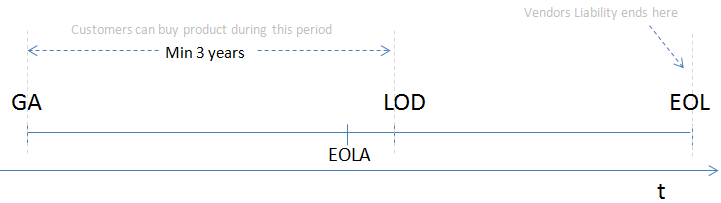
- End-of-life (EOL): product is no longer supported and receives no updates.
Development and release models
The life cycle is shaped by the development model. Waterfall-style projects tend to use distinct, timeboxed releases. Agile teams often ship frequent increments or use continuous delivery to push changes rapidly. Open-source projects commonly publish nightly or pre-release builds and accept public feedback before marking a stable tag. Many projects also maintain parallel release channels such as "stable", "beta", and "nightly" to manage risk and user expectations.
Practices and considerations
Effective release management includes versioning (often semantic versioning), release notes, testing (unit, integration, UAT), automated builds, and deployment pipelines. Teams must plan for rollback, hotfix procedures, security patching, and compatibility guarantees. Communication with users—through changelogs and support channels—is essential during beta and GA stages. For more on terminology and workflows, see related resources.
Importance and distinctions
Understanding the release life cycle helps balance speed with quality. Distinguish between a "release" (the availability of a version) and "deployment" (the act of installing that version in an environment). Release cycles also reflect trade-offs: rapid release cadence enables faster feedback, while longer cycles can prioritize stability and regulatory compliance.
Related articles
Author
AlegsaOnline.com Software release life cycle Leandro Alegsa
URL: https://en.alegsaonline.com/art/91583
Sources
- php.about.com : "Software Development Stages - Alpha Beta Final - Software Life Cycle"
- infolab.stanford.edu : "Alpha and Beta Release Stages"