
Södermanland County (Södermanlands län)
Administrative county in east-central Sweden centered on Nyköping; known for lakes, forests, historic towns, and a mixed economy of industry, agriculture and tourism.
Södermanland County (Swedish: Södermanlands län) is an administrative region in central-eastern Sweden. The county is one of the historic divisions created under the Swedish county system and its seat is located in Nyköping. Administratively it is a county that combines both inland and coastal areas and was established in 1634 as part of a nationwide reorganization.
Image gallery
2 Images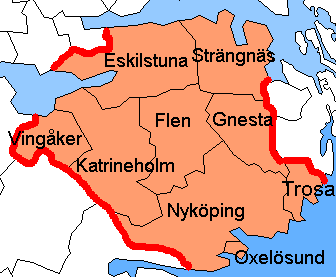

Geography and environment
Södermanland covers a varied landscape of forests, farmland and numerous lakes, with a coastline that gives access to the Baltic Sea and archipelago waters. The region is sometimes referred to by its shorter name, Sörmland, and features many nature reserves, scenic drives and recreational areas. Its proximity to Stockholm influences land use and development along the eastern parts of the county.
Administrative structure
The county is subdivided into several municipalities that handle local services while the county administrative board carries state functions such as regional planning and civil protection. Major population centres include Nyköping and Eskilstuna, and smaller towns provide local services and cultural hubs.
Municipalities (examples)
- Eskilstuna
- Nyköping
- Strängnäs
- Trosa
- Oxelösund
History and development
The area now known as Södermanland has a long history that predates the county: archaeological finds and medieval churches testify to early settlement and farming. The formal county organization from the 17th century brought a new layer of administration; over time the region evolved with industrialization, improved transport links and urban growth while retaining many rural landscapes.
Economy, transport and culture
The local economy is mixed. Industrial centres, small and medium enterprises, agriculture, forestry and port activity contribute to employment. Tourism is important thanks to historic sites such as castles, manor houses and well-preserved towns, plus outdoor recreation in forests and on the coast. Good road and rail connections link Södermanland to Stockholm and other parts of Sweden, making commuting and freight transport common.
Notable features and visitor attractions
Södermanland is known for its cultural heritage—castles, manor houses and museums—along with lively town centres and maritime scenery. The county offers opportunities for boating, hiking and seasonal cultural events. For practical or official information about the county's government services or regional plans consult the relevant municipal authorities and county board pages.
For further reading and official sources see regional portals and government publications: Södermanlands län, county administration, and general regional guides at central Sweden resources. Local visitor information is available from the town offices in Nyköping and other municipalities; historical overviews note the 1634 establishment of the modern county system (1634).
Related articles
Author
AlegsaOnline.com Södermanland County (Södermanlands län) Leandro Alegsa
URL: https://en.alegsaonline.com/art/91506
Sources
- scb.se : "Kvartal 1 2011"