
Snowy Mountains Scheme
A major mid-20th-century Australian hydroelectricity and irrigation project in the Snowy Mountains, notable for dams, tunnels and power stations that transformed water management and post‑war development.
The Snowy Mountains Scheme is a large-scale engineering project in south‑east Australia that combines hydroelectricity generation and irrigation water diversion. Built between 1949 and 1974 under the Snowy Mountains Authority, it altered the region’s water flows to provide renewable power, increase water availability for agriculture, and link inland river systems.
Image gallery
10 Images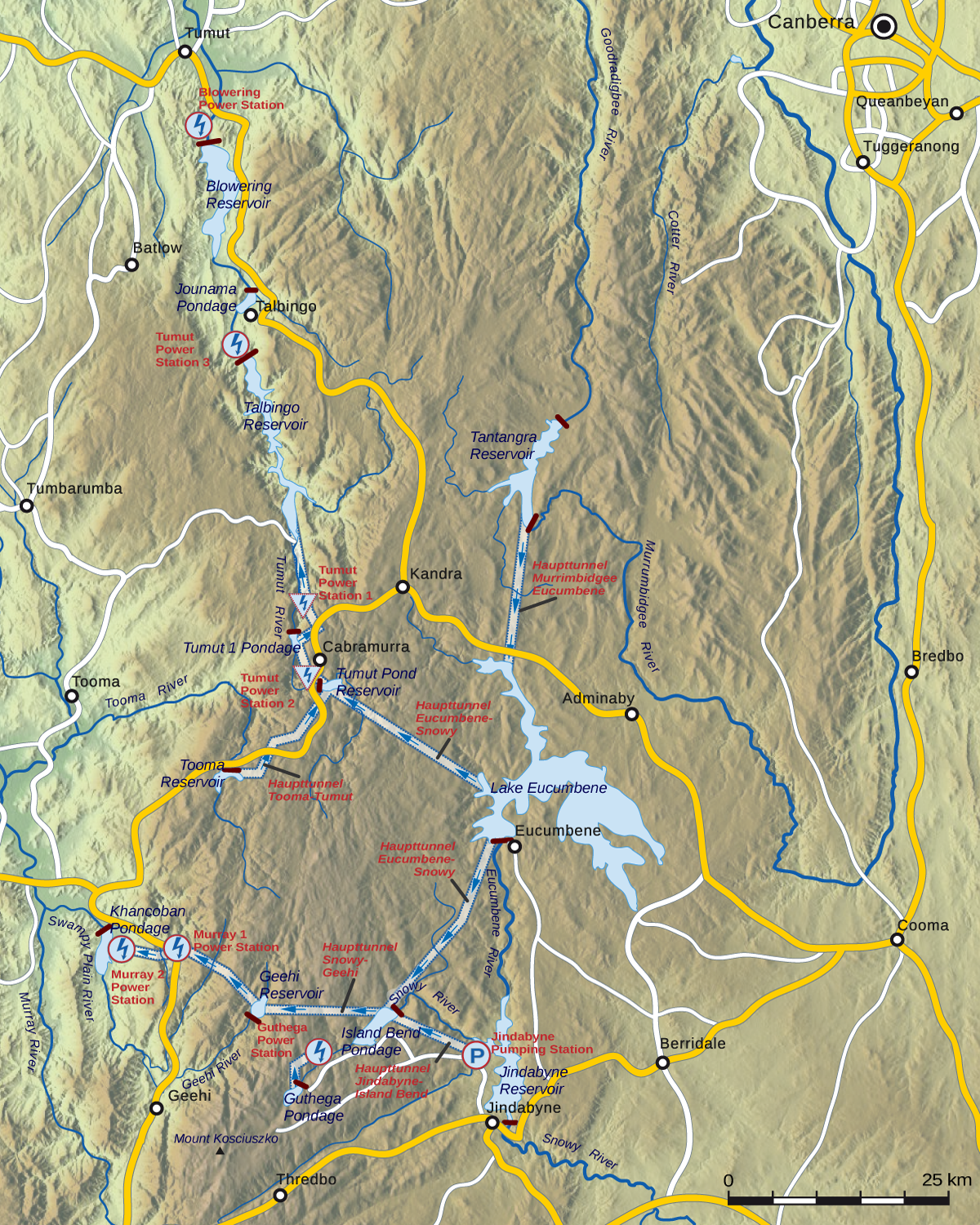




Components and design
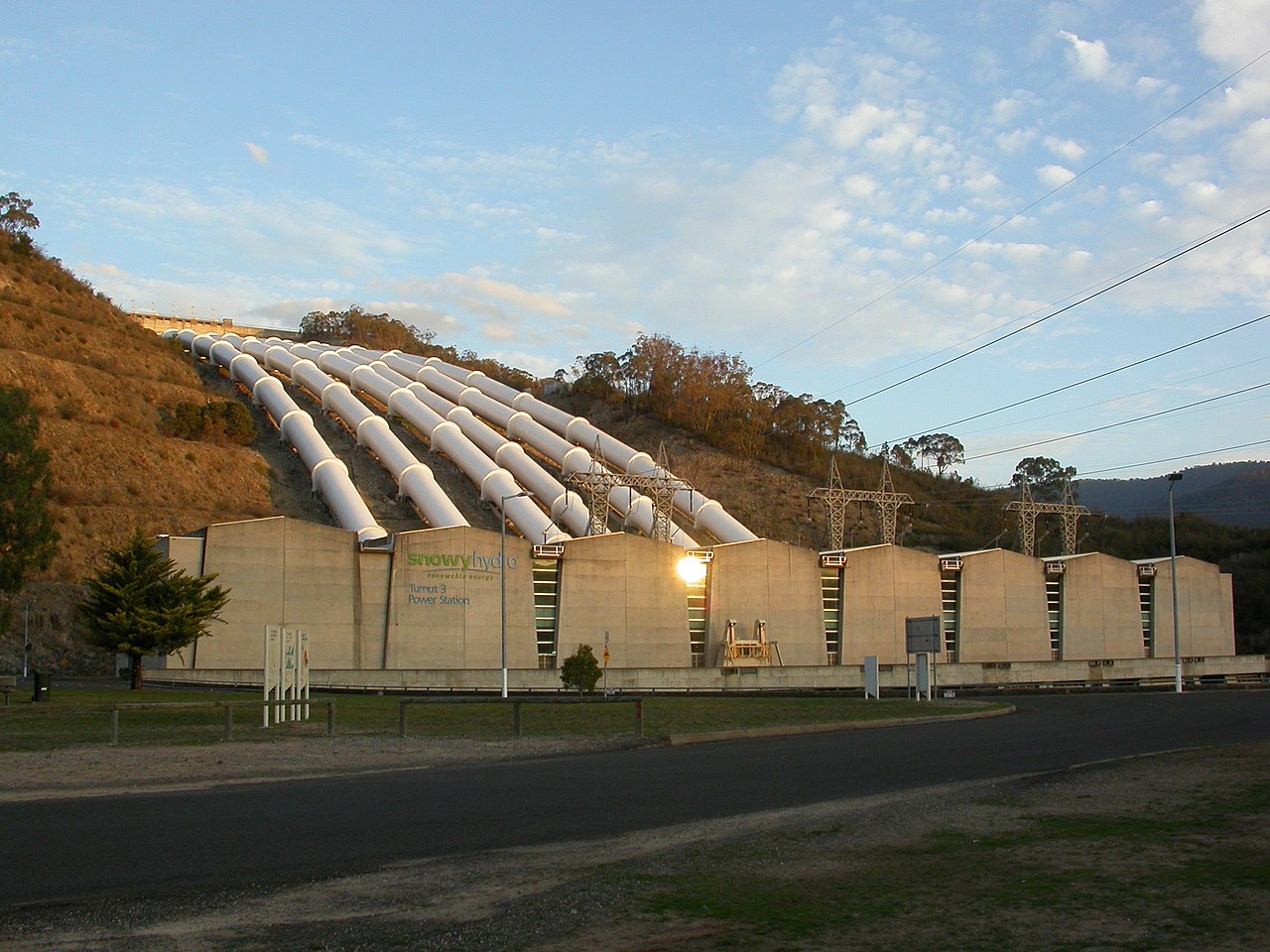
The scheme comprises a network of reservoirs, power stations and conduits engineered to capture, store and move mountain runoff. Its major elements include sixteen large dams, seven major hydroelectric power stations, a pumping station, and some 225 kilometres of tunnels, pipelines and aqueducts. These elements are arranged to divert water from the Snowy River catchment westward into the Murray and Murrumbidgee systems, making use of natural elevation to produce electricity and to supply downstream irrigation.
History and construction
Conceived in the post‑World War II era as both an infrastructure and nation‑building program, construction began in 1949 and continued through 1974. The Snowy Mountains Authority oversaw planning and construction; Sir William Hudson served as the Authority’s first chief engineer and became widely associated with the project’s leadership. The workforce included many migrants and resulted in large-scale, rapid development of remote alpine construction sites.
Uses, importance and legacy
The scheme has provided sustained benefits: reliable peak‑load electricity generation, storage capacity useful for drought buffering, and expanded irrigation for inland agriculture. It is often described as one of Australia’s most significant civil engineering achievements and played a major role in the country’s mid‑century economic growth.
Environmental and social aspects
The project also generated debate about environmental effects, particularly reduced flows in the Snowy River and impacts on alpine ecosystems. In subsequent decades there have been restoration initiatives and ongoing discussion about balancing water use for human needs with river health. Socially, the scheme influenced Australia’s post‑war immigration patterns and left a built heritage of tunnels, dams and service towns still visible today.
- Scale: Sixteen major dams and extensive tunnelling.
- Period: Constructed 1949–1974 under the Snowy Mountains Authority.
- Leadership: Chief engineer Sir William Hudson.
Related articles
Author
AlegsaOnline.com Snowy Mountains Scheme Leandro Alegsa
URL: https://en.alegsaonline.com/art/91356
Sources
- abs.gov.au : Australian Bureau of Statistics 1986 Special Article: The Snowy Mountains Hydro-Electric Scheme
- cultureandrecreation.gov.au : The Snowy Mountains Scheme