
Slave River (Canada): course, history, ecology and uses
The Slave River links the Peace and Athabasca rivers to Great Slave Lake and the Mackenzie watershed. Overview of its course, characteristics, human history, ecology, and navigation challenges.
Overview
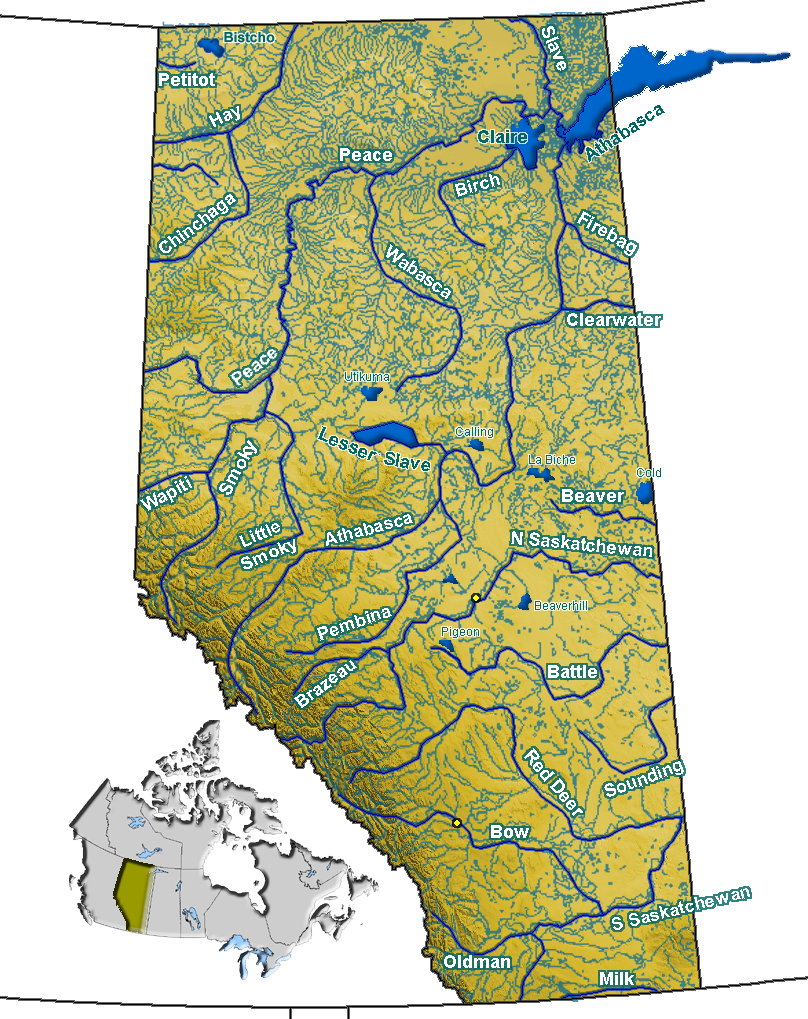
The Slave River is a major northern river in Canada that carries the combined waters of the Athabasca and Peace rivers northward into Great Slave Lake. From there its flow continues through the Mackenzie River system to the Arctic Ocean. It serves as a key connection in the Mackenzie basin and is known for strong currents, heavy sediment loads and a series of rapids that limit continuous navigation.
Image gallery
6 Images



Course and characteristics
The river begins near Lake Athabasca at the confluence of two large tributaries and travels for several hundred kilometres before entering Great Slave Lake. Its channel is braided in places and deposits sand and silt derived from upstream drainage. Seasonal spring melt and summer runoff produce fluctuating water levels and powerful eddies and rapids in constricted sections.
Navigation and notable features
Because of shoals and waterfalls, the Slave River is not fully navigable by large vessels. Historically and today, portage routes bypass major rapids. The river contains stretches of whitewater that have been important obstacles for boat traffic and trade, influencing settlement locations and transport routes.
History and human use
Indigenous peoples have used the river and its shores for millennia for fishing, travel and seasonal camps. European fur traders and explorers adopted river routes into the interior in the 18th and 19th centuries. Communities developed near calmer reaches and at portage points to support trade, supply and later resource activities.
Ecology and conservation
The Slave River supports aquatic and riparian habitats that sustain fish, waterbirds and mammals adapted to northern freshwater systems. Its sediment and nutrient load helps form deltas and wetlands where it meets Great Slave Lake. Conservation attention focuses on preserving fish habitat, maintaining water quality and balancing development with Indigenous rights.
Significance and further information
- Regional link: Canada and northern river networks.
- Terminal basin: flows into Great Slave Lake, then via the Mackenzie River to the Arctic Ocean.
- Important for local transport, history, and ecosystem services.
For maps, hydrology data and cultural history consult regional resources and Indigenous knowledge holders who document the river's role in communities and landscapes.
Related articles
Author
AlegsaOnline.com Slave River (Canada): course, history, ecology and uses Leandro Alegsa
URL: https://en.alegsaonline.com/art/91052