
Sitar — North Indian plucked string instrument
A long-necked, plucked string instrument from the Indian subcontinent, known for sympathetic strings, a gourd resonator and prominent role in Hindustani classical music and global fusion.
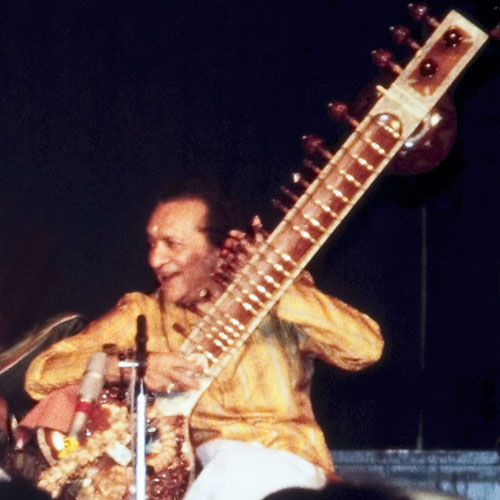
The sitar is a stringed, plucked instrument associated primarily with Hindustani (North Indian) classical music. It produces a complex, shimmering tone by combining played strings with a set of sympathetic strings that vibrate in response. The instrument has a long hollow neck and one or more large gourd resonators; its name and local spellings appear in several languages, for example Punjabi forms are recorded as Punjabi and Urdu forms as Urdu. It is widely used across the Indian subcontinent and beyond; see cultural contexts in India.
Image gallery
10 Images
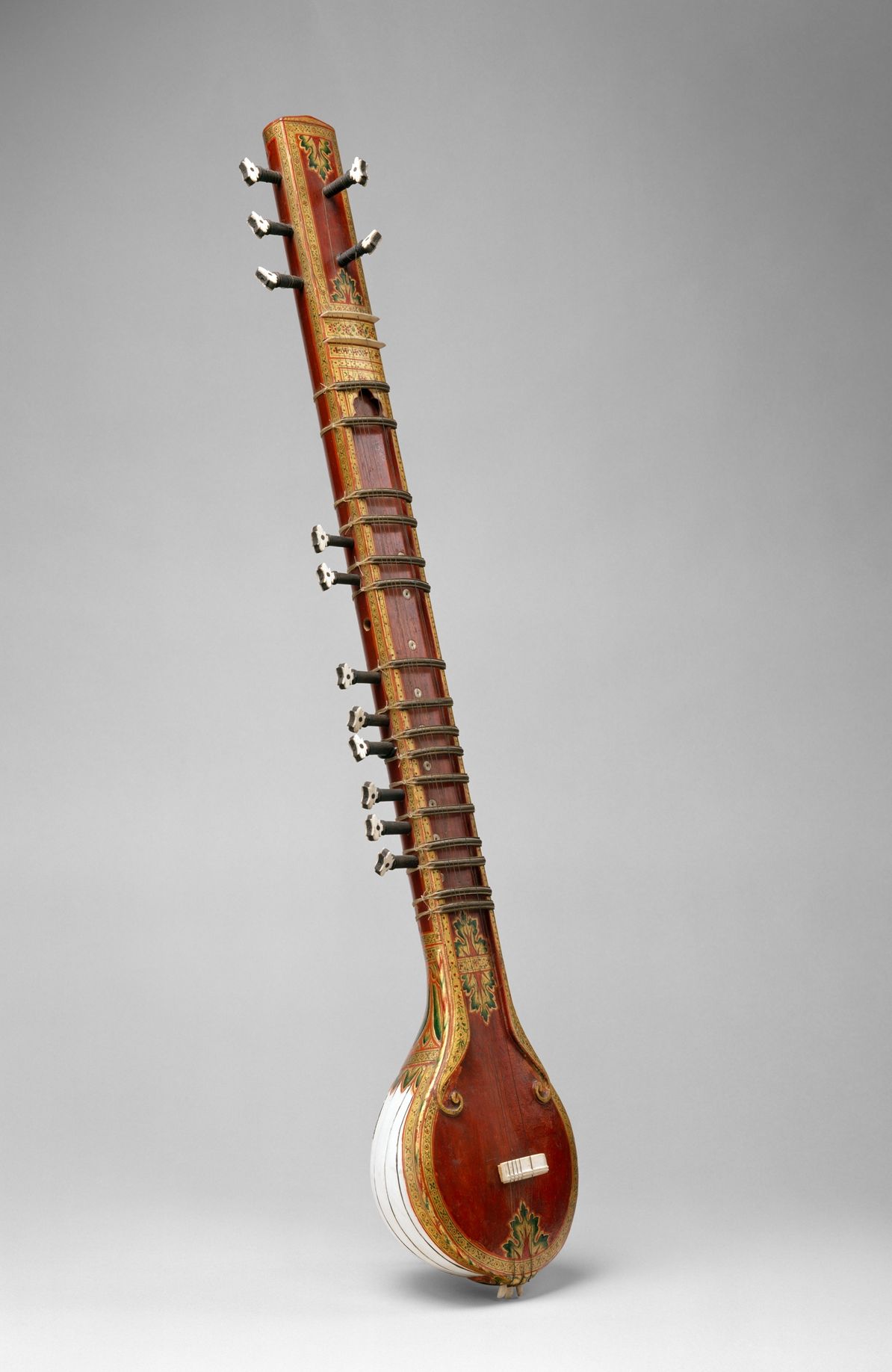


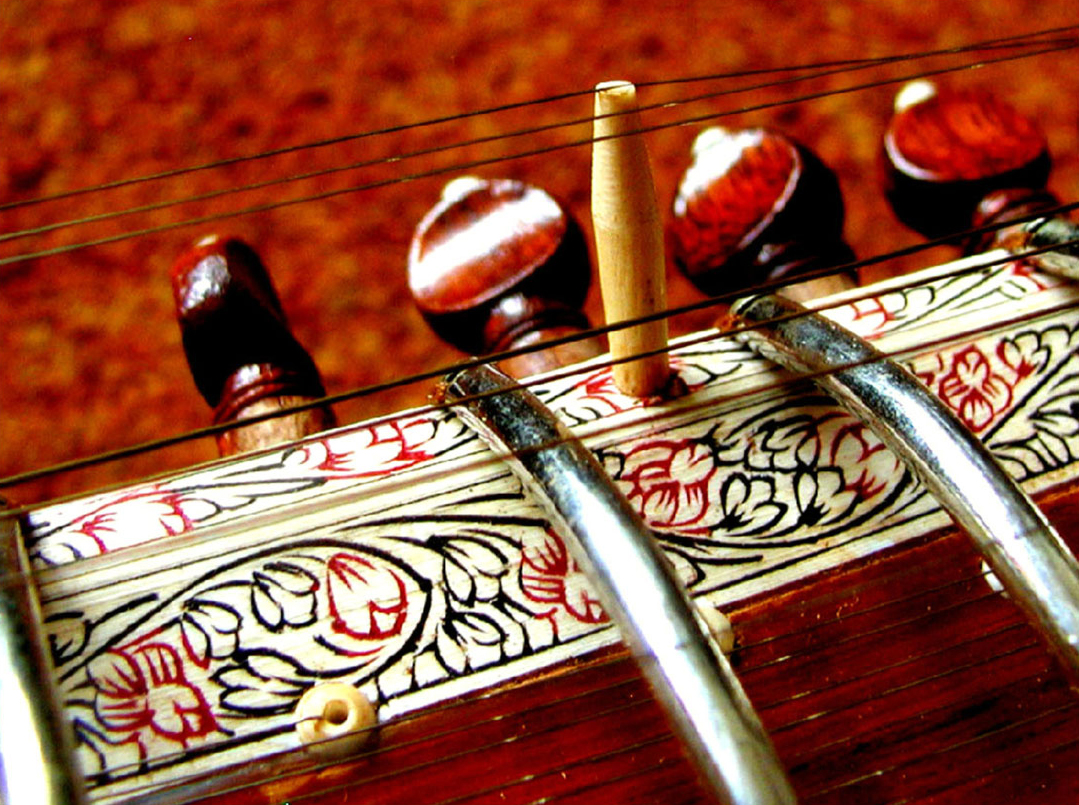


Construction and characteristic features
The sitar's body typically includes one or two gourds (tumba) that act as resonating chambers and a long, hollow neck with curved, movable metal frets. A curved bridge (jawari) shapes the tone and a separate set of sympathetic strings runs beneath the main playing strings, adding sustained overtone resonance. Many modern concert sitars have around 18–21 strings: several are plucked during performance while a larger number of sympathetic strings vibrate beneath them. A small metal plectrum called a mizrab is worn on the index finger to pluck the main strings.
Playing techniques and repertoire
Players exploit slides (meend), ornamented bends, rapid repeated strokes and subtle pitch inflections to realize the microtonal and expressive demands of raga performance. A typical instrumental rendition follows sections such as the slow, improvised opening (alap), the rhythmic development (jor), faster, percussive passages (jhala) and composed or semi-composed pieces accompanied by tabla. The sympathetic strings and the jawari bridge together create the characteristic sustained, ringing quality.
History and development
The sitar developed through centuries of instrument-making in South Asia. Its ancestry links to older Indian plucked instruments such as various veenas and to influences from Persian lute instruments; the exact etymology of the name reflects these layered origins. Over time the instrument evolved in shape, string arrangement and playing technique into the modern concert sitar used today.
Uses, cultural role and influence
- Central to Hindustani classical music and raga performance.
- Adapted for film music, popular songs and cross-cultural fusion projects.
- Introduced to international audiences in the 20th century, impacting Western popular music and classical collaborations.
Notable facts and further reading
Prominent exponents raised the sitar's international profile and helped refine playing schools and instrument design. For more on construction details, see descriptions of the gourd resonator (tumba) and the instrument's resonating chambers. The sitar remains both a symbol of classical tradition and a flexible instrument in contemporary genres.
Related articles
Author
AlegsaOnline.com Sitar — North Indian plucked string instrument Leandro Alegsa
URL: https://en.alegsaonline.com/art/90803