
Silly Symphonies — Disney's musical animated short series
A curated overview of the Silly Symphonies: Walt Disney’s stand‑alone musical shorts from the 1930s, their themes, technical innovations, notable films and influence on animation history.
Overview
The Silly Symphonies were a series of stand‑alone animated shorts produced by Walt Disney and his studio beginning in 1929 and continuing through the 1930s. Unlike character‑driven Disney cartoons, each Silly Symphony told a self‑contained story set to music. Many entries drew on fairy tales, books, and folklore, while others explored original themes or seasonal vignettes.
Image gallery
2 Images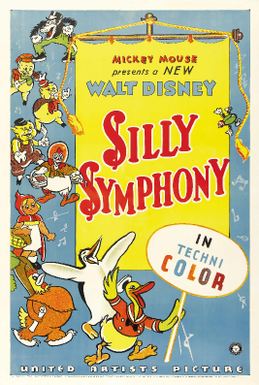

Characteristics and format
Silly Symphonies emphasized musical synchronization, mood, and visual experimentation rather than recurring protagonists. Shorts ranged from comic sketches to lyrical, atmospheric pieces. Directors and animators used them to refine timing, staging and the marriage of orchestral score and animated action. Several episodes introduced technical advances that later became standard in feature animation.
Technical developments
- Early experiments with synchronized sound and musical timing that matched action to score.
- Adoption of three‑strip Technicolor, first showcased in a Silly Symphony and helping to popularize color film.
- Use of the multiplane camera and improved background and lighting effects to create depth and mood.
Notable shorts and recognition
Among the best known are The Skeleton Dance, Flowers and Trees, The Three Little Pigs (which produced a popular song) and The Old Mill. The series earned widespread critical praise and won multiple Academy Awards, helping to establish animation as a respected art form.
Legacy and importance
Beyond individual titles, Silly Symphonies served as a laboratory for techniques and storytelling later used in feature films and in the wider animation industry. They provided training for artists and composers, influenced popular music and merchandising of the era, and remain important historically for their technical milestones and artistic ambition. Collections of these shorts are available in curated home video releases and streaming archives, where they are studied as formative works in American animation history.
Related articles
Author
AlegsaOnline.com Silly Symphonies — Disney's musical animated short series Leandro Alegsa
URL: https://en.alegsaonline.com/art/90433