
SimCity 4 — city-building simulation by Maxis and Electronic Arts
SimCity 4 (2003) is a detailed city-planning simulation from Maxis/EA. Players zone land, build infrastructure, manage budgets and regional networks; an active modding community extended its features and longevity.
SimCity 4 is the fourth major entry in the long-running SimCity franchise. Released in 2003, the game was developed by Maxis and published by Electronic Arts. It places the player in the role of a city mayor and planner responsible for zoning, public services and fiscal policy across individual cities within a regional map.
Image gallery
3 Images

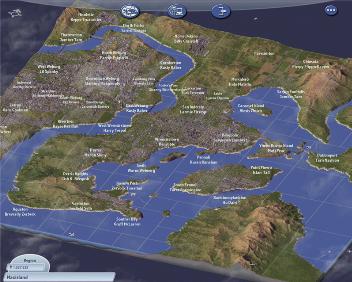
Core gameplay
Players zone areas as residential, commercial or industrial and set density levels that influence building growth and population. Demand for each zone type, commonly called RCI (residential, commercial, industrial), guides expansion. The title models utilities and services — power, water, education, health, police and fire — and requires budget management, taxation and policy choices to maintain growth and quality of life.
Key mechanics and systems
- Zoning and density: zoning determines land use and, with land value and nearby services, shapes building types and population.
- Transportation and traffic: roads, highways, rail and transit shape commute patterns; traffic simulation is central to city performance.
- Regional interaction: cities in a region share commuter flows, trade goods and resources, encouraging coordinated planning.
- Terrain and 3D rendering: the game uses an isometric 3D engine with terraforming tools, day/night lighting and tile-by-tile control.
- Policies and scenarios: ordinances, budget sliders and special projects allow tailored approaches to growth or recovery after disasters.
Expansion, mods and community
An official expansion pack added advanced transportation options and scenario challenges. Beyond the official content, a dedicated modding community produced unofficial improvements and new content: traffic and pathfinding fixes, transit additions and custom buildings are among the most visible enhancements. Well-known community projects have improved network behavior and given players more control over simulation details.
Reception and legacy
Praised for its depth and complexity, SimCity 4 is frequently cited as an influential urban-simulation title. Players and designers value its detailed systems and regional approach, even as the game has recognized limitations in large-scale pathfinding and simulation throughput. Decades after release it remains played and modified by communities interested in simulation, urban design and transport engineering, and it continues to serve as a reference point for later city-building games.
Related articles
Author
AlegsaOnline.com SimCity 4 — city-building simulation by Maxis and Electronic Arts Leandro Alegsa
URL: https://en.alegsaonline.com/art/90501
Sources
- amazon.com : "SimCity 4 (Mac)"
- amazon.com : "SimCity 4"
- store.steampowered.com : "SimCity 4"