
Shah Dara (Shahdara Bagh) — Lahore suburb and Mughal funerary complex
Shah Dara (Shahdara Bagh) is a historic suburb north of Lahore, Pakistan, noted for major Mughal tombs, riverside gardens and a living market and industrial area on the Ravi's banks.
Overview
Shah Dara, often written Shahdara or Shahdara Bagh, is a suburb of Lahore in Pakistan. Located near the banks of the Ravi River, it grew as an outlying funerary and garden precinct for Mughal elites and later became an urban neighborhood and commercial zone. The place-name is traditionally interpreted from Persian-Urdu elements and is associated with royal or gateway imagery; today it combines historic monuments with everyday markets and industry (suburb).
Image gallery
8 Images



Principal monuments and layout
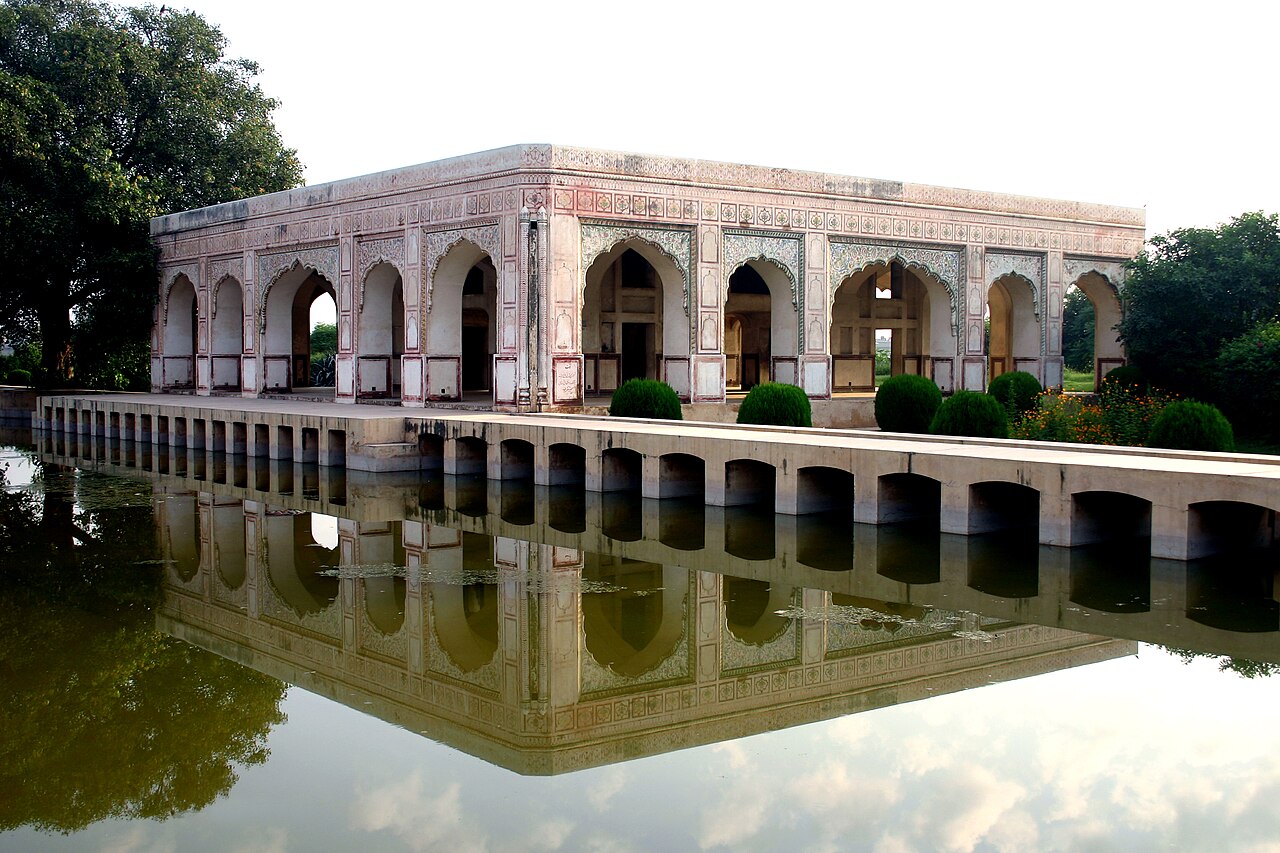
The area is best known for two linked Mughal funerary mausolea and their surrounding gardens, examples of Mughal-era landscape and architectural design. These sites exemplify the charbagh (four-part) garden layout, axial pathways and the use of red sandstone and white inlay typical of Mughal funerary work (Mughal architecture). The most prominent structures include:
- Tomb of Jahangir — the imperial mausoleum of the Mughal emperor.
- Tomb of Nur Jahan — the resting place of Jahangir's influential wife and patron.
- Other contemporary tombs and ancillary buildings associated with the same funerary complex.
These monuments are set within formal gardens and were traditionally approached by gated terraces and processional routes. Nearby there are ancillary structures that once supported pilgrims and visitors, reflecting how such complexes functioned as both memorial and social landscapes.
Historically, Shah Dara rose to prominence in the early 17th century under Mughal patronage when imperial and noble tombs were commissioned outside the urban core, taking advantage of the riverside setting. Over subsequent centuries the complex experienced periods of maintenance and neglect; conservation efforts have been made intermittently to stabilize masonry, restore garden layouts and improve visitor access.
In present-day Shahdara a working market and light industry occupy the surrounding area. Local commerce and manufacturing coexist alongside heritage tourism: traders bring daily trade to the bazaars while workers and visitors pass through streets lined with shops and workshops (market) and small factories (factories). The site remains an important example of Mughal funerary art and a living part of Lahore's northern outskirts.
Related articles
Author
AlegsaOnline.com Shah Dara (Shahdara Bagh) — Lahore suburb and Mughal funerary complex Leandro Alegsa
URL: https://en.alegsaonline.com/art/89360