
Shadow of the Hegemon
A 2001 science fiction novel by Orson Scott Card, the second in the Ender's Shadow sequence. It follows Bean and other Battle School veterans as Earth-bound politics and personal rivalries reshape their futures.
Shadow of the Hegemon (2001) is a science fiction novel by Orson Scott Card. It is the second volume of the Ender's Shadow series (often called the Bean Quartet) and is also counted as part of the broader Ender's Game saga. The narrative shifts from the interstellar focus of some earlier books to concentrate on events on Earth, told principally from the viewpoint of Bean, a highly gifted Battle School veteran.
Image gallery
2 Images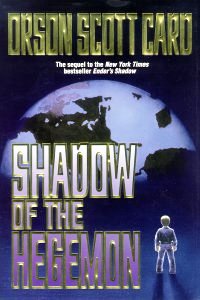

Overview and setting
The novel takes place after the interstellar conflict that defined the original Ender's Game storyline. Many of the child commanders who trained at Battle School return to Earth, where their tactical talents make them desirable assets to national leaders. Instead of space warfare, this book explores the geopolitical tensions, alliances, and manipulations that emerge when brilliant young strategists become instruments in earthly power struggles.
Plot elements and characters
Bean remains the central character and narrator for most of the book. Other returning Battle School students and their mentors play significant roles. Key human dynamics include rivalry between national leaders vying to control or protect these tactical prodigies, the moral dilemmas facing the children who are too young for full autonomy, and the emergence of antagonists who exploit the situation for personal power. The title alludes to the idea of a hegemon — an overarching ruler or dominant political figure whose ambitions shape the global stage.
Themes and tone
The novel blends military science fiction with political thriller elements. It examines leadership and responsibility, the ethics of using gifted children as instruments of state policy, and issues of identity and destiny—especially as Bean confronts his exceptional intelligence and unusual origins. The tone is more earthbound and political than many books in the series, emphasizing strategy, negotiation, and the human consequences of power plays.
Structure and style
Card's approach in this work is character-driven, using Bean's perspective to explain complex strategic situations and interpersonal conflicts. Readers familiar with Ender's Game will recognize continuity in cast and setting, while new readers can still follow the political intrigue and moral questions without detailed prior knowledge. The prose balances tactical description with psychological insight and moral reflection.
Significance and legacy
As part of the Ender's Game universe, Shadow of the Hegemon expanded the series' scope by bringing many consequences of interstellar conflict back to Earth. It deepened the portrayal of supporting characters from the original novel, especially Bean, and set the stage for subsequent books in the Bean Quartet. For readers interested in military strategy, ethical dilemmas about warfare and leadership, or character-focused science fiction, it represents a notable shift in emphasis within Card's larger sequence.
Further reading
- Author information: Orson Scott Card
- Related novel: Ender's Game
Related articles
Author
AlegsaOnline.com Shadow of the Hegemon Leandro Alegsa
URL: https://en.alegsaonline.com/art/89343