
Satellaview: Nintendo's satellite broadcast peripheral for the Super Famicom
Satellaview was a Japan‑only satellite broadcast peripheral for the Super Nintendo (Super Famicom), delivering episodic games, live audio and timed broadcasts via a partnership between Nintendo and satellite broadcaster St.GIGA.
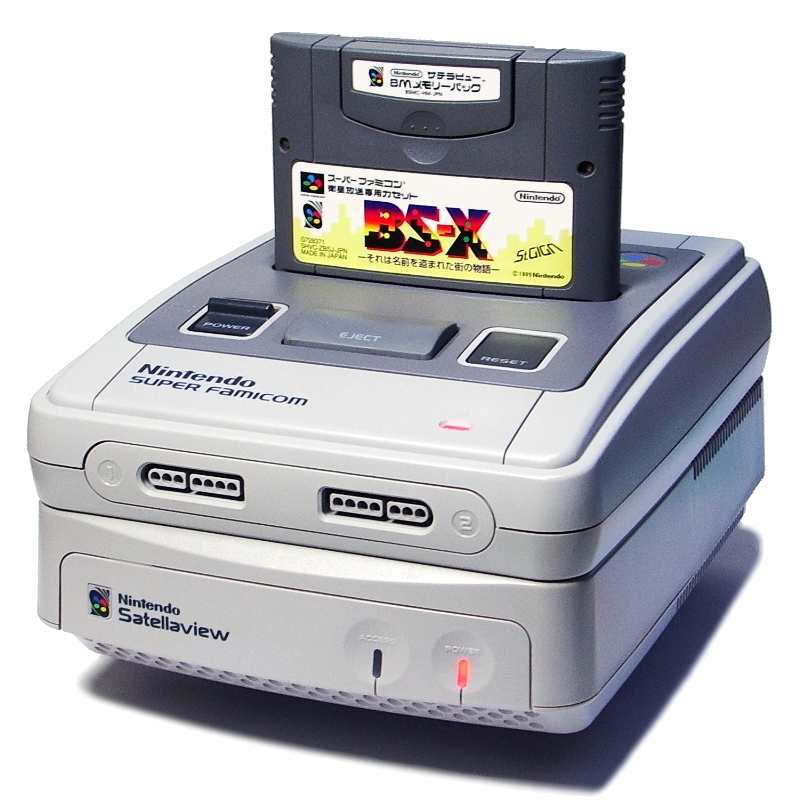
The Satellaview is a satellite broadcast peripheral created for the Super Famicom (the Japanese model of the Super Nintendo Entertainment System) and sold only in Japan. Developed in cooperation with broadcaster St.GIGA and produced under the auspices of Nintendo, the system allowed users to receive game data, magazines and live audio over satellite. Content for the service was identified by a "BS" prefix (for Broadcast Satellite) and included both original titles and specially produced versions of existing games.
Image gallery
6 Images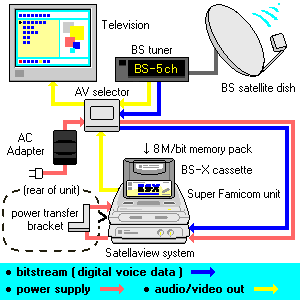



Design and broadcast features
Instead of a traditional cartridge purchase model, Satellaview delivered software in scheduled broadcasts that could be downloaded into memory. Some broadcasts were fully downloadable and playable offline until the memory was cleared, while others relied on time‑synchronized audio streams called "SoundLink" that provided live voice narration, music or events that played in sync with gameplay. This mixture of streamed audio and downloadable code created episodic, radio‑style game shows and limited‑time events unique to the medium.
How it was used
Subscribers used a receiver cartridge and a modem-like add‑on to link the console to satellite broadcasts. The service offered a central interactive hub program (often referred to as BS‑X) that functioned as a menu and virtual town where players could access the day’s scheduled programs. Many titles were remakes or variations with the "BS" prefix; notable examples include broadcast versions of The Legend of Zelda and The Legend of Zelda: A Link to the Past, which incorporated episodic structure and live audio narration during their runs.
Notable titles and third‑party involvement
- BS‑X (the interactive viewer/hub used to select and launch broadcasts)
- SoundLink games that combined gameplay with live voiceovers and radio‑style presentation
- Broadcast remakes produced by Nintendo plus contributions from third‑party developers and publishers
History and service life
The Satellaview launched in the mid‑1990s and operated through a span of years during the Super Famicom's later lifecycle. It remained a Japan‑exclusive experiment in networked console entertainment and episodic broadcasts. Because some content depended on live audio streams and scheduled events, much of the original experience was ephemeral and could not be replayed in full once broadcasts ended.
Legacy and preservation
Satellaview is remembered for pioneering live, time‑based content on a home console and for its unusual hybrid of downloadable data and streamed audio. Preservationists and fans have worked to archive game code, sound archives and recordings of broadcasts, but the dependence on live SoundLink audio means portions of some broadcasts are lost or only partially recoverable. The system influenced later thinking about episodic content, downloadable updates and live events in video games.
Related articles
Author
AlegsaOnline.com Satellaview: Nintendo's satellite broadcast peripheral for the Super Famicom Leandro Alegsa
URL: https://en.alegsaonline.com/art/87438