
Awami League
Major secular political party of Bangladesh, founded before independence; social-democratic orientation and led by Sheikh Hasina. Central role in the country's independence movement and contemporary politics.

Overview
The Awami League is one of Bangladesh's principal political parties, traditionally associated with secularism, Bengali nationalism and a centre-left policy profile. It traces its roots to the late 1940s and became the leading political force behind the movement for Bangladesh's independence in 1971. The party is led today by Sheikh Hasina, daughter of the country's founding leader Sheikh Mujibur Rahman. The party's Bengali name and identity are reflected in its original language designation বাংলাদেশ আওয়ামী লীগ.
Image gallery
10 Images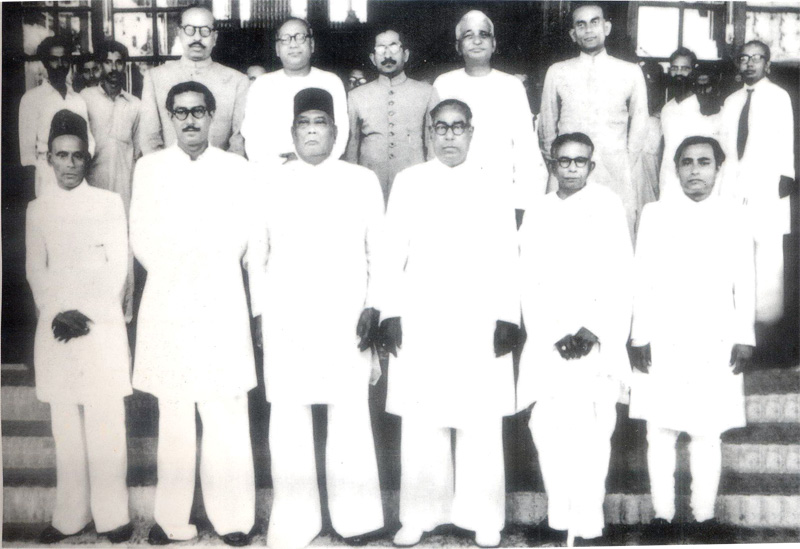


Origins and historical development
The organisation began in the period following the partition of British India, initially formed to represent East Pakistan's interests within Pakistan. Over time it evolved into a broad-based political movement that mobilised public support for greater autonomy and ultimately independence. Under the leadership of Sheikh Mujibur Rahman the party played a central role in the 1971 liberation struggle. Since independence, the Awami League has governed the country in multiple terms and has remained one of the dominant actors in Bangladeshi politics.
Ideology and organisation
Officially, the Awami League espouses secularism, social justice, and democratic socialism in its platform. It supports state-led development initiatives, welfare policies and an emphasis on education and infrastructure. The party is organised through national and local committees, with a central executive that sets policy and coordinates election campaigns. Prominent leaders and a long-standing party apparatus give it substantial institutional reach across Bangladesh.
Role and significance
The Awami League's historical role as a leader of the independence movement gives it symbolic importance beyond ordinary party politics. Its governments have overseen major economic and social programmes and shaped foreign policy choices. The party competes primarily with the Bangladesh Nationalist Party (BNP) and other smaller parties for parliamentary control and public support. Elections involving the Awami League are therefore central to the country's political dynamics and governance outcomes.
Contemporary issues and criticism
Supporters credit the party with economic growth, infrastructure development and social reforms during its recent terms in office. Critics and some international observers have raised concerns about restrictions on dissent, the fairness of certain elections, and the use of security laws against opponents. Debates over media freedom, judicial independence and political pluralism remain part of assessments of the Awami League's record.
Further notes
- The party's modern leadership continues to be linked to the legacy of the founding generation.
- Its policies blend nationalist rhetoric with social-democratic programmes and state-led development priorities.
- For basic reference on the country's political scene see Bangladesh related summaries and profiles.
Related articles
Author
AlegsaOnline.com Awami League Leandro Alegsa
URL: https://en.alegsaonline.com/art/8724