
Sand cat (Felis margarita)
Small desert-dwelling wildcat adapted to arid regions of Africa and Asia. Notable for sandy coat, furry footpads, nocturnal hunting, independence, and specialized desert survival adaptations.
Overview
The sand cat (Felis margarita) is a small wild felid adapted to life in hot, arid landscapes. It belongs to the Felinae subfamily and is one of the few true wild cats that regularly inhabit sandy deserts rather than scrub or rocky terrain. Although sometimes colloquially called a "desert cat," that common name can also refer to other species; the sand cat is a distinct species with a specialized ecology. Readers seeking taxonomic context can consult sources about the Felinae.
Image gallery
9 Images


Physical characteristics and adaptations
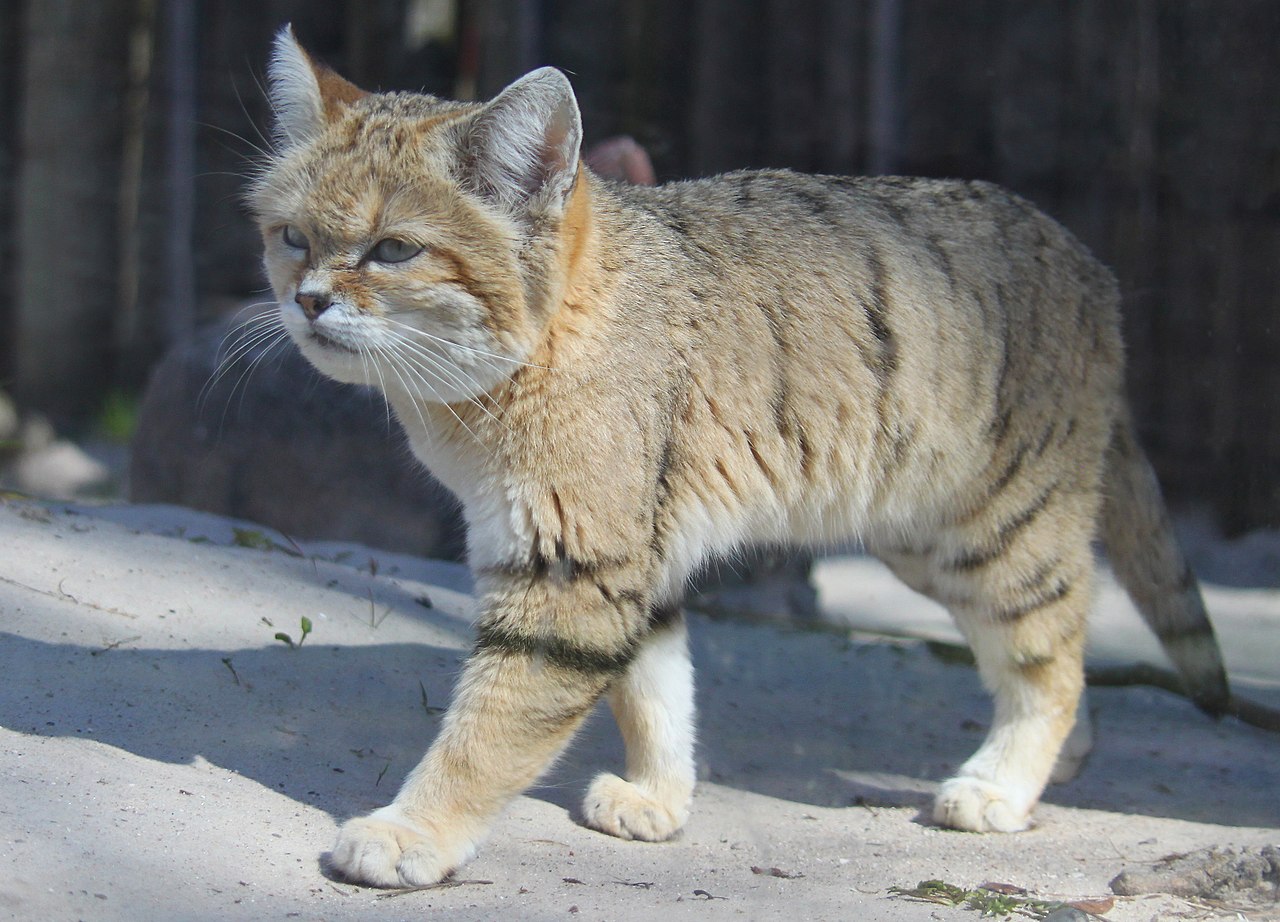
Sand cats are compact, with a relatively broad head, a short muzzle and large ears set low on the skull. Typical measurements reported by naturalists place the head-and-body length at roughly 40–60 cm, with a tail about 20–30 cm long; adults often weigh between 2 and 4 kg. Their coat is a pale sandy or buff color that provides camouflage in dunes and flat desert plains. Distinctive dark markings may appear on the legs and face and the tail often shows faint rings ending in a dark tip.
Several physical traits help the sand cat cope with extreme desert conditions: thick fur covers the soles of its paws to insulate against hot sand and to aid silence while stalking; large ears enhance hearing to detect rodents underground; and a compact body reduces water loss. Unlike many other mammals, sand cats obtain most or all of their moisture from prey and rarely drink free water in the wild.
Distribution and habitat
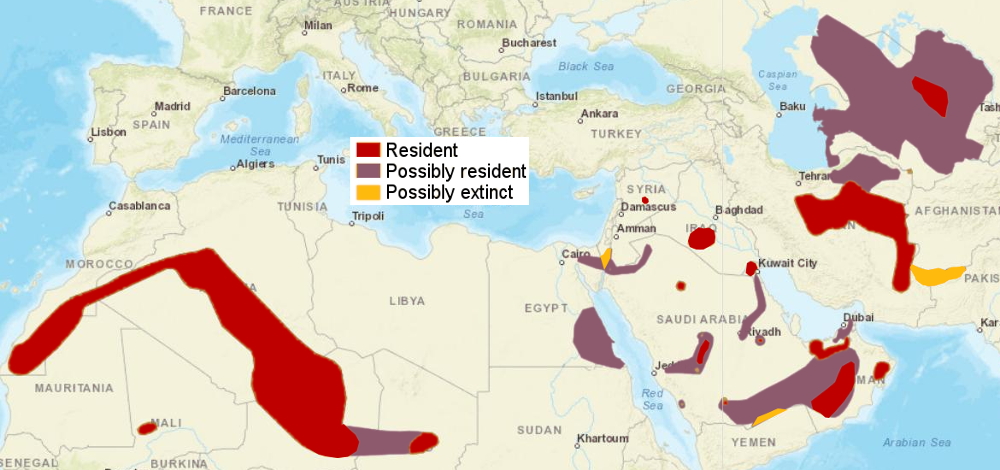
Sand cats occupy scattered populations across Saharan and Arabian deserts and other arid regions of North Africa and Central and Southwest Asia. Well-known parts of their range include the Sahara Desert and the Arabian Desert, and populations have been recorded in countries such as Iran and Pakistan. For regional information see entries on the Sahara, the Arabian Desert, Iran and Pakistan.
Behavior, diet and hunting
Primarily nocturnal, sand cats spend the hottest daylight hours in shade or inside burrows they dig or appropriate from other animals. They are solitary except during brief mating periods and when females raise kittens. Sand cats are opportunistic predators that feed mainly on small mammals such as gerbils and other rodents, as well as reptiles, birds and large insects. They will attack venomous snakes and use stealth and agility to capture prey. Their hunting technique relies heavily on acute hearing and the ability to detect prey beneath surface sand.
Reproduction and social structure
Breeding follows seasonal or resource-related patterns depending on location. Females raise litters alone and provide extended care until kittens are independent. Adults are generally territorial in the sense of individual home ranges, but they show little aggressive territorial defense compared with some larger felids; individuals may use the same burrow at different times rather than sharing it concurrently.
Conservation and notable facts
Sand cats face threats from habitat disturbance, vehicle traffic, direct persecution, and declines in prey caused by human activity. Because they live in remote and sparsely populated areas, many populations are poorly studied and their status can be uncertain. In captivity they can live into their early teens, and captive breeding programs and field studies contribute to understanding their needs. The sand cat is remarkable for its extreme desert specialization — a small cat that survives without regular surface water and hunts across dunes where few similar predators persist.
- Key adaptations:
- Furred paw pads for insulation
- Excellent hearing and low-set ears
- Camouflaged sandy coat
- Typical diet: rodents, lizards, insects and occasionally birds and snakes.
Related articles
Author
AlegsaOnline.com Sand cat (Felis margarita) Leandro Alegsa
URL: https://en.alegsaonline.com/art/86949