
Sandfly (Phlebotomine flies): biology, medical importance, and prevention
Small blood-feeding flies (Phlebotominae) that transmit parasites such as leishmaniasis; overview of their biology, distribution, life cycle, bites, public-health impact and control measures.
Overview: The term "sandfly" commonly refers to small, hairy flies of the subfamily Phlebotominae. Many species feed on blood and act as disease vectors for parasites and pathogens. Notable human infections associated with sandflies include leishmaniasis, bartonellosis and pappataci (phlebotomus) fever. Two genera dominate medical and ecological discussions: Phlebotomus in the Old World and Lutzomyia in the New World.
Image gallery
10 Images


Taxonomy and geographic distribution
Sandflies belong to the subfamily Phlebotominae within the family Psychodidae. The group is broadly separated by geography: Old World sandflies (genus Phlebotomus) are found across Africa, southern Europe and Asia, whereas New World sandflies (genus Lutzomyia) occur in the Americas. In the New World some species occupy specialized habitats such as caves, where primary hosts can include bats and other mammals; these roosting associations are important for local parasite cycles and wildlife reservoirs (New World, bats).
Physical characteristics and lifecycle
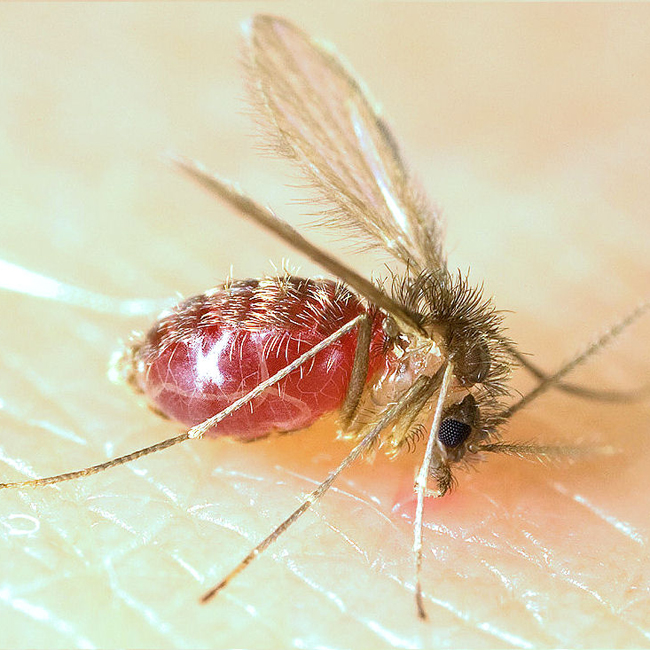
Adult sandflies are very small, typically around 2–4 mm long, with hairy wings and a delicate build that allows them to go largely unnoticed. Their life cycle includes egg, larva, pupa and adult stages. Females require a blood meal to develop eggs: proteins and other vital proteins and nutrients from blood support egg production. Females usually lay eggs in humid, organic-rich soil, leaf litter, rodent burrows or other sheltered microhabitats.
Feeding behavior and transmission of disease
Only female sandflies take blood meals, and feeding preferences range from host-specific to opportunistic; some species will feed on mammals, birds or reptiles depending on availability (host selection varies). Their mouthparts cut the skin to produce a small pool of blood, and saliva contains compounds that prevent clotting and modulate the host's immune response. Those biochemical actions include effects on mast cells and histamine release—salivary factors can stimulate mast cells to release histamine, dilating capillary vessels and enhancing blood flow. Pathogens taken up with the blood may develop in the fly and be transmitted during subsequent feeds.
Clinical signs and public-health importance
Bites are often painless at the time but can later swell, itch and form small red bumps. More serious consequences arise when sandflies transmit parasites. Leishmaniasis, for example, ranges from self-limiting skin ulcers to potentially fatal visceral disease, depending on the parasite species and host factors. Control of sandfly-transmitted disease relies on surveillance, vector control and case management.
Prevention, control and notable facts
- Personal protection: insect repellents, long clothing and bed nets can reduce bites.
- Environmental: reducing organic debris, sealing entry points, and insecticide spraying in endemic areas help lower sandfly populations.
- Biology: a single blood meal may provide enough resources for a female to produce an entire clutch of eggs, which makes blood sources critical to reproduction.
- Taxonomic distinction: remember the broad Old World vs New World split—different genera are responsible for local transmission patterns (Old World, New World).
Understanding sandfly ecology, seasonal activity and human behavior is essential for targeted interventions. For further reading consult entomology and tropical medicine resources, and local public-health guidance when traveling or residing in regions where sandflies are present.
vector information • leishmaniasis overview • New World context • bat associations • Old World context • host selection • salivary proteins • nutrient requirements • mast cell interactions • histamine effects • capillary dilation
Questions and answers
Q: What is the scientific name for sandflies?
A: The scientific name for sandflies is Phlebotominae, a subfamily of flies.
Q: What diseases are spread by sandflies?
A: Sandflies can spread parasitic diseases such as leishmaniasis, bartonellosis and pappataci fever.
Q: In which regions do Lutzomyia live?
A: Lutzomyia often live in caves, where their main hosts are bats.
Q: How do sandflies feed on blood?
A: Sandflies use their mouthparts to start the host bleeding and then suck up the exposed blood. They also inject biochemicals that inhibit blood clotting and stimulate host mast cells to produce histamine in order to promote blood flow.
Q: How many eggs can one blood meal support?
A: One blood meal can support the production of about 100 eggs.
Q: Where do females lay their eggs?
A: Females lay their eggs in humid soil rich in organic matter.
Q: What is the typical body size of a sandfly?
A: Sand flies are small; a body size of about 3mm in length is typical.
Related articles
Author
AlegsaOnline.com Sandfly (Phlebotomine flies): biology, medical importance, and prevention Leandro Alegsa
URL: https://en.alegsaonline.com/art/86969
Sources
- sciencedirect.com : sciencedirect.com/science/article/pii/S0738081X99000462