
San Joaquin Valley
A major agricultural and geographic region of California's Central Valley, home to diverse crops, cities like Fresno and Bakersfield, and notable environmental and water-management challenges.
The San Joaquin Valley (pronounced SAN whah-KEEN) is the southern portion of California's Central Valley, lying south of the Sacramento–San Joaquin River Delta and drained primarily by the San Joaquin River. It is a broad, flat valley of great agricultural productivity and complex water infrastructure. The valley's boundaries are defined by the Coast Ranges to the west and the Sierra Nevada to the east, and it forms a distinct region within the state of California and the wider area often called Northern California in some contexts while its southern reaches approach Southern California.
Image gallery
10 Images


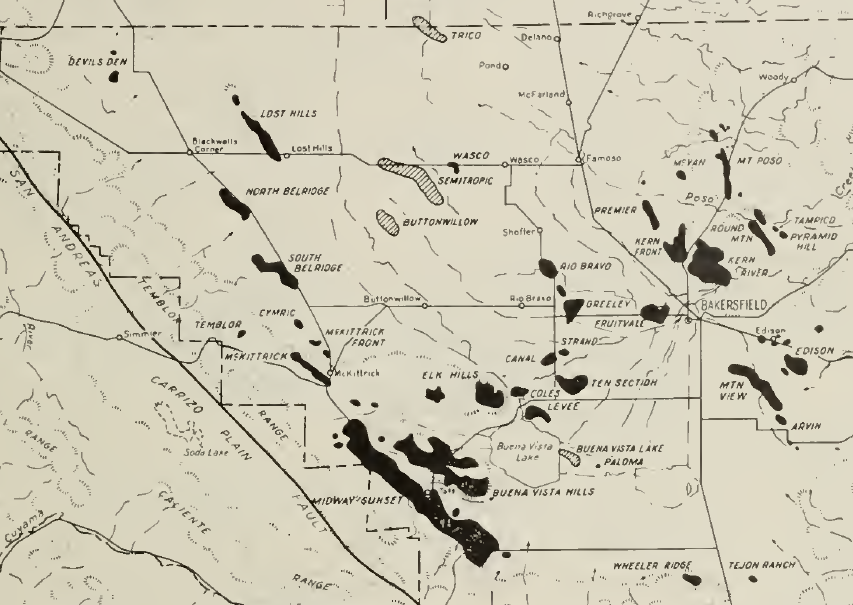

Geography and political divisions
Administratively the San Joaquin Valley includes whole counties and parts of others. Major counties either wholly or largely in the valley include:
- Kings County
- Fresno County (majority)
- Merced County (majority)
- Stanislaus County (majority)
- Madera County (segment)
- Tulare County (segment)
- Kern County (majority)
The valley is defined hydrologically by the San Joaquin River and its tributaries. Its soils, elevation and climate—hot, dry summers and cool, wet winters—make it ideal for irrigated farming when water is available.
Economy and agriculture
The San Joaquin Valley is one of the most productive agricultural regions in the United States. It supplies a large share of the nation’s fruits, vegetables, nuts and other specialty crops. Major commodities include grapes, almonds, citrus, cotton, dairy and a wide variety of vegetables. Agriculture depends on an extensive network of reservoirs, canals and groundwater; both state and federal water projects have shaped modern irrigation there. Energy production, especially oil extraction, is significant in the southern valley around Kern County.
History and development
Before European contact the valley was inhabited by Indigenous peoples who managed local resources. Spanish and Mexican periods introduced mission ranching and land grants, followed by American settlement and large-scale agriculture in the 19th and 20th centuries. Construction of irrigation works, roads and railroads accelerated development. Federal projects and canal systems redistributed water from northern sources to valley fields, enabling the rise of commercial farming.
Environmental issues and notable facts
The region faces environmental challenges: groundwater overdraft, water-quality concerns, habitat loss, and some of the nation’s worst air quality in certain cities. Restoration efforts for river flows and wetlands have been undertaken to improve ecosystems. The valley’s role as a food-producing backbone for the country, combined with these environmental pressures, makes it a focal point for water policy and land-use debates in the state and nationally. For additional regional context see general resources on the state and its rivers, including links about the central valley and the river networks at California, the San Joaquin River and broader regional pages such as Northern California and Southern California.
Relevant organizations and local agencies provide data and planning information; readers may consult county resources for Fresno, Kern, Merced and other county pages to explore demographics, land use and conservation programs. Historical records and water management plans are available through state and federal archives and specialist publications on the valley’s development and ongoing restoration efforts.
Related articles
Author
AlegsaOnline.com San Joaquin Valley Leandro Alegsa
URL: https://en.alegsaonline.com/art/86838
Sources
- valleycan.org : "San Joaquin Valley Fact Sheet"