
San Joaquin River
Major California river flowing from the Sierra Nevada to San Francisco Bay; central to Central Valley agriculture, water supply, native fisheries, and ongoing restoration efforts.
Overview
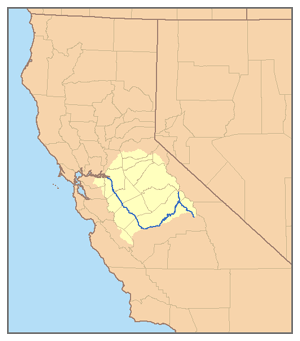
The San Joaquin River is one of the two principal major rivers of California in the United States. Roughly 330 miles long, it is the state's second-longest river after the Sacramento River. The San Joaquin originates on the western slopes of the Sierra Nevada and travels west and north to empty into San Francisco Bay through the Sacramento–San Joaquin Delta. Its watershed covers tens of thousands of square miles and includes large areas of farmland that shape the regional economy.
Image gallery
10 Images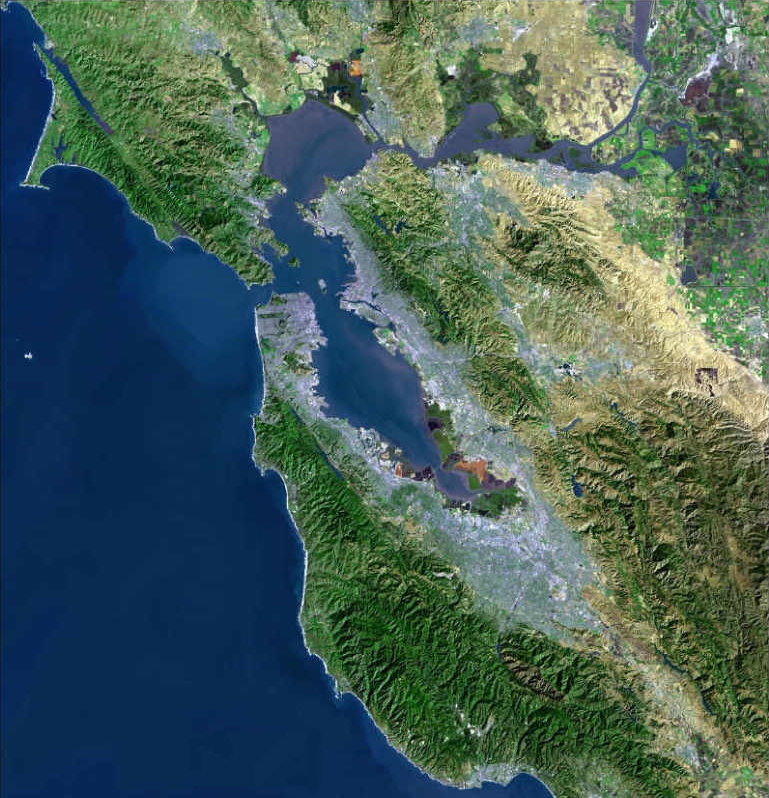


Course and basin
The river's main stem receives several major tributaries, most notably the Merced, Tuolumne and Stanislaus rivers, which drain much of the western Sierra foothills and provide seasonal flows. The basin's pattern of reservoirs, canals and irrigation districts redistributes snowmelt and runoff for agricultural and urban use. The delta where the San Joaquin meets tidal waters is a complex network of channels and levees that supports commerce, wildlife and water exports.
Ecology and wildlife
Historically the San Joaquin supported one of California's richest native river ecosystems, including extensive riparian forests and runs of Pacific chinook salmon. Over the 20th century, dams and diversions combined with agricultural runoff and industrial discharges to alter habitats and water quality. Sections of the river suffer from pollution and contaminants such as pesticides and elevated selenium concentrations, impairing fish and bird populations and reducing native biodiversity.
Water use and human impact
The river is a backbone of Central Valley irrigation and supplies drinking water to millions of residents. Large storage projects, notably Friant Dam, capture spring runoff for dry-season use, but they also divert substantial proportions of the natural flow, producing long dry stretches below the dam during normal years. Water removed for irrigation and other uses has reshaped seasonal flows and sediment transport, with downstream consequences for the delta and estuary.
Restoration, management and policy
Efforts to restore a more natural flow regime and recover fisheries have been underway for decades. In 2006 environmental groups reached an agreement with dam operators and the U.S. Department of the Interior to reintroduce flows and support habitat rehabilitation below Friant Dam. Restoration involves complex trade-offs among agriculture, municipal water supplies, ecosystem recovery and flood management; planning continues at federal, state and local levels.
Notable facts
- The San Joaquin is often paired with the Sacramento River as the two principal rivers of California.
- Its headwaters in the Sierra Nevada provide seasonal runoff that sustains summer flows for the Central Valley.
- The basin's extensive farmland is a major source of the state's produce but also a source of return flows and contaminants.
- Major tributaries such as the Merced, Tuolumne and Stanislaus have their own dam projects and management issues tied to fisheries and recreation.
Questions and answers
Q: What is the San Joaquin River?
A: The San Joaquin River is one of the two major rivers of California in the United States. It is 330 miles (530 km) long and is the second longest river in California, after the Sacramento River.
Q: Where does it begin and end?
A: The San Joaquin River begins on the west Sierra Nevada Mountains and flows west and north to its end at San Francisco Bay, at the Sacramento-San Joaquin Delta.
Q: How large is its basin?
A: The basin of the San Joaquin River is about 32,000 square miles (82,879 square kilometers) in size.
Q: What are its three largest tributaries?
A: The three largest tributaries of the San Joaquin River are the Merced, Tuolumne, and Stanislaus rivers.
Q: How much of it has been taken away for irrigation?
A: Over 60 miles (97 km) of the river has been taken away for irrigation so that now 95 percent of its flow below Friant Dam is dry except during floods.
Q: What kind of pollution affects it? A: The San Joaquin River suffers from pollution caused by pesticides, selenium, and many other toxic materials which are carried into San Francisco Bay.
Q: What project has been started to restore it? A: One of the largest projects in the American West has been begun to restore the San Joaquin River - an agreement signed between Friant Dam users and US Department Of Interior which would reduce pollution below Friant Dam.
Related articles
Author
AlegsaOnline.com San Joaquin River Leandro Alegsa
URL: https://en.alegsaonline.com/art/86837
Sources
- sanjoaquinbasin.com : "San Joaquin Basin: San Joaquin River"
- nrdc.org : "Restoring the San Joaquin River"
- geonames.usgs.gov : "North Fork San Joaquin River"
- geonames.usgs.gov : "Middle Fork San Joaquin River"
- geonames.usgs.gov : "South Fork San Joaquin River"
- usbr.gov : "Friant Dam"
- adsabs.harvard.edu : "Mixing and Transport in the Stockton Deep Water Ship Channel"
- commons.wikimedia.org : San Joaquin River